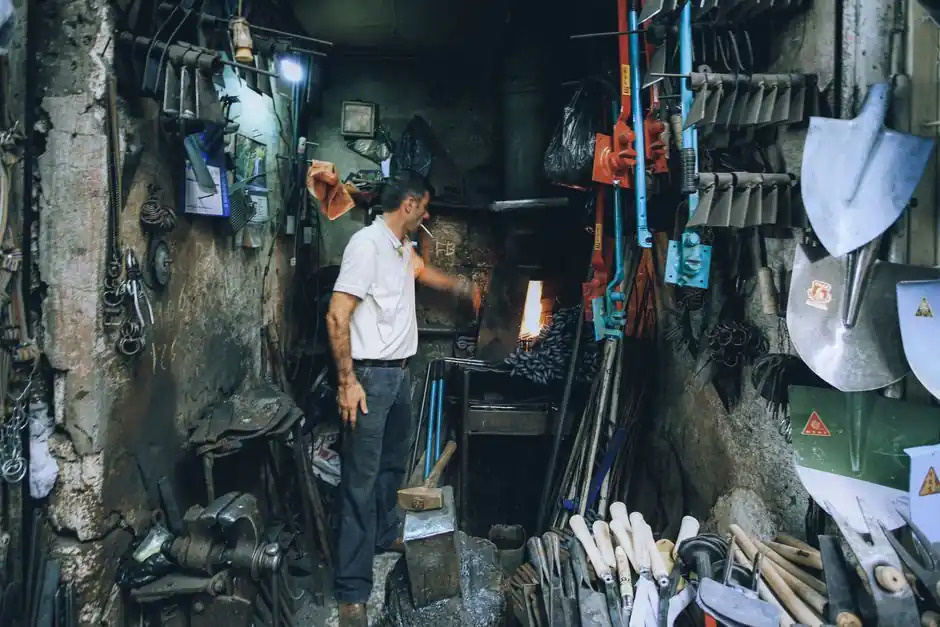
A 100–350 kg hydraulic-tilting coreless induction furnace is the smallest practical unit for a working small job shop foundry, with a published power range of 50–10,000 kW spanning laboratory, medium and large production classes [S1].
Below that band, compact manual-tilting furnaces rated roughly 10–100 kg cover laboratory, jewelry and trial-batch duties, while a 5 kg melt of steel requires a minimum of about 25 kW of input power to run a stable cycle [S2][S5].
Where the small-shop floor actually starts
The compact manual-tilting class starts at about 10 kg and stops near 100 kg of charge, and its selling points are simple batch control and a small footprint, not throughput [S5]. The next step up, a hydraulic-tilting coreless furnace, sits at 100–350 kg of ferrous or non-ferrous metal and is sold for repeat copper-alloy and non-ferrous foundry batches where controlled remote pouring matters [S4][S5]. Above 350 kg, the catalog crosses into industrial coreless systems in the 0.2–5 t range, which assume a real transformer, a harmonics strategy and a refractory program that a job shop rarely owns [S5]. For a job shop weighing the move into steel, the working range is therefore 100–350 kg for production or 25–100 kg for prototyping, not the multi-ton industrial class.
Power input drives the real decision
Rated capacity in kilograms is a poor proxy for what the furnace will actually do, because melt rate is set by power, starting temperature, charge density and the full tapping cycle, not by crucible volume [S5]. For a 5 kg steel melt, forum engineering data puts the minimum useful rating near 25 kW, and at 2–3 kg the cycle becomes a serious test of the shop electrical service rather than the furnace [S2]. Industrial steel-melting systems span 50 kW to 10,000 kW at 0.5–50 kHz medium frequency, with a power factor above 0.96 under normal conditions, so the small-shop question is really whether the building can deliver and cool the 50–250 kW a 100–350 kg furnace will draw on demand [S1]. Sizing the furnace without sizing the transformer, cooling tower and DM-water loop together is the most common procurement error in this class [S5].
What induction does and does not fix for a small shop
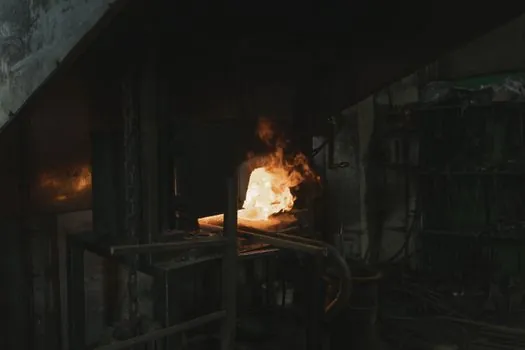
Induction heats the charge directly through induced current in the metal, which gives faster thermal response, lower external heat loss and tighter alloy control than a fuel-fired crucible furnace for small batches [S1][S6]. It also removes combustion gas handling at the melt point, which simplifies shop ventilation, but it does not remove the refractory program, the cooling system, or the electrical service. Compared with a small cupola furnace or a gas-fired melting furnace, induction's main economic edge at low capacity is flexibility, not energy cost per kilogram, and the case for it weakens if the shop only runs one alloy and one pour size.
The comparison a buyer has to make
Across the four main small-shop directions, the selection criteria are capacity range, pouring method, melting speed, and infrastructure burden. Compact manual-tilting covers 10–100 kg with manual handling and a small crucible; hydraulic-tilting coreless covers 100–350 kg with controlled remote pour, a hydraulic station and a real cooling loop; industrial coreless starts near 0.2 t and needs a transformer, harmonics mitigation, and a refractory program; channel induction holding is project-specific and assumes a maintained molten heel [S5]. A job shop running 100–500 kg batches of copper alloys one shift fits the hydraulic class; a shop doing five short prototype pours of steel a week fits the compact class; a jobbing iron foundry running two 8-hour shifts needs the industrial class whether the owner wants one or not.
Maintenance, not hardware, is the small-shop killer
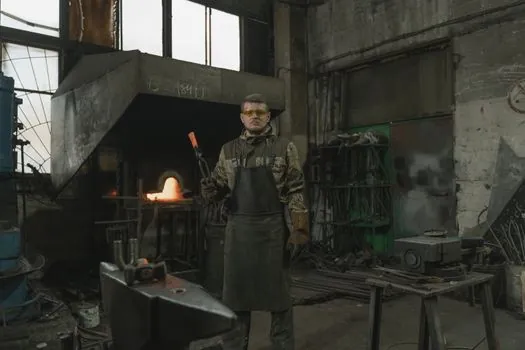
Small foundries have a documented harder time finding and keeping qualified people to work on these systems, and the maintenance work cannot be compressed without raising the risk of a ground fault or a refractory run-out [S3]. The most dangerous omission on a small induction furnace is skipping frequent refractory inspection, since lining life can drop to a few days on aggressive alloys, and a run-out of molten metal into the coil is a write-off event [S3]. Lockout/tagout, PPE for arc flash, and a working earth-leakage detector are non-negotiable even on a 100 kg furnace, and bypassing the ground-fault detection system is what OEM service technicians describe as the worst deliberate error they see in the field [S3]. For a one or two-person job shop, this usually means a service contract with the furnace OEM rather than in-house electrical work.
Decision rules for the actual purchase
Match the furnace class to the dominant pour weight, not to the largest possible casting, and confirm the available transformer kVA, cooling-water temperature and floor loading before the quotation is written [S5]. For steel, plan on a power supply in the IGBT medium-frequency class with DSP control, because packed scrap, a partly molten bath and a fully molten bath present three different electrical loads and the supply has to track all three [S1]. If the shop cannot commit to a refractory inspection schedule every shift, a holding furnace for steady-state work or a smaller manual-tilting unit run less hard is safer than a hydraulic class pushed to its limit.
Where this leaves a small job shop
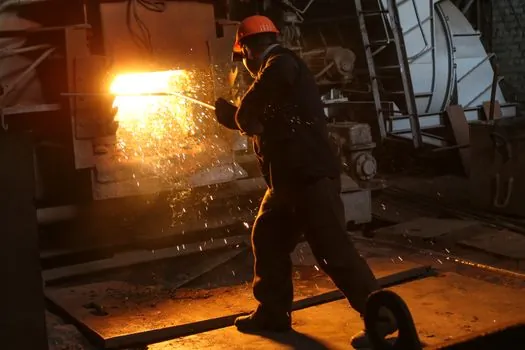
A small jobbing foundry can be sized into induction melting, but the realistic entry point is a 100–350 kg hydraulic-tilting coreless unit at 50–250 kW, with a compact 10–100 kg class reserved for prototyping and alloy trials [S4][S5]. Watch the next two signals before ordering: a published melt-rate figure in kg/h at the specific alloy and starting temperature, and a refractory-life statement in campaigns, not in years, from the OEM.
See also our earlier report, Gland Packing Installation: Dimensions, Finish, Break-In.