
Carrying cases split into four practical families — soft, hard, ATA-rated transit, and custom foam-lined equipment cases — and the right pick is driven by payload value, impact class, temperature exposure, and any ATA 300, MIL-STD, or ISO-13485 requirement on the build sheet [S3][S4][S8].
Hard cases dominate the industrial segment, built from molded plastic, aluminum, veneered or laminated wood, and engineered composites, while soft cases layer double-stitched ballistic nylon over foam or plastic padding for trade-show, sales-demo, and field-service mobility [S4][S5]. Resin choice — HDPE, ABS, polypropylene, polycarbonate, fiberglass-reinforced polyester, carbon fiber composites, or rotationally molded polyethylene — sets impact strength, weight, and chemical resistance before any foam or hardware is added [S3].
Soft Cases, Hard Cases, and the Hybrid Middle Ground
Soft carrying cases typically pair 1680 denier nylon with a water-repellent coating and open-to-use openings for cables and accessories, with the DT Research rugged-tablet case listing 1680 denier as the spec floor for daily field abuse [S9]. Pip Global's half-mask cartridge bag (style 77BAG) shows the consumable-protection end of the range: nylon with Velcro closure, belt loops, OS sizing, 12.74 lb case weight, and 15.80 × 10.80 × 11.50 in case dimensions shipped 100 per case from China [S10].
Hard cases split into injection-molded, blow-molded, and rotomolded constructions. Injection-molded shells (ABS, polypropylene, polycarbonate) deliver tight tolerances and repeatable foam fit; blow-molded shells target ATA 300 transport-container duty; rotomolded polyethylene shells — Pelican's Hardigg single-lid and rack lines, for example — are the benchmark for MIL-SPEC and heavy-impact shipping [S2][S6]. Heavy-duty cases fold in reinforced metal corners, double-stitched seams, and integrated padding to protect fragile, sensitive, or high-value equipment under harsh handling [S4].
ATA 300, MIL-STD, and ISO-13485: Which Spec Actually Applies
ATA 300 class transport containers must hold temperature exposure between -40 °F and 130 °F, forbid buckles and straps, and restrict hardware to designs that survive the spec's drop, vibration, and humidity cycles — Category I and II are reusable, Category III is disposable [S6].
Medical-device carrying cases that touch regulated hardware typically require ISO-13485 build discipline, with documented design control, lot traceability, and validated cleaning — a non-negotiable when the case ships sterile-loaded or ships to a clinical trial site [S8]. Defense, aerospace, and field-deployed electronics lean on MIL-SPEC and IP-rated rotomolded cases (Pelican Storm, Vault, Hardigg, plus EIC's Defender clamshell line for extreme-environment military ops) rather than the ATA-only tier [S1][S2].
Resin and Shell-Material Comparison for Industrial Specifiers
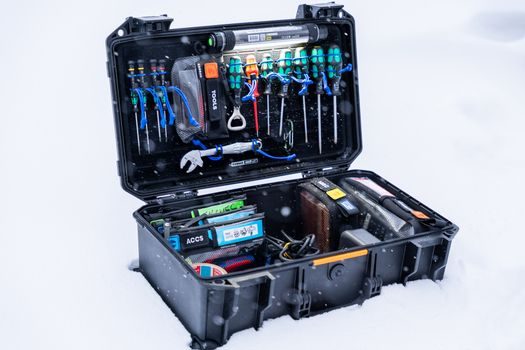
Resin choice sets the protective envelope before any foam is cut: HDPE delivers chemical resistance and low cost for chemical-plant kits; ABS and polycarbonate trade higher cost for higher impact strength and cleaner cosmetic finishes on demo and presentation cases; FRP and carbon fiber composites target the lightest possible rigid shell for high-value optics and test instruments; rotationally molded polyethylene is the default for drop-and-stack shipping and Mil-spec transport [S3].
Soft-shell ballistic nylon cases weigh less and fold flat, but offer no crush protection — for sensors, instruments, and tooling that need crush resistance, a hard shell with custom foam is the only defensible spec [S4][S9]. For applications that demand equipment protection comparable to the industrial valve and flow meter categories on a plant floor — where field transit exposure is constant — a hard rotomolded or aluminum case with custom foam is the only tier that holds calibration after a real-world drop.
Foam Inserts, Hardware, and the Custom-Fit Tier
Custom-cut foam — typically layered polyethylene, polyurethane, or anti-static EVA — is what turns a generic shell into a usable equipment case. Pick 'n Pluck foam, adjustable dividers, padded dividers, and CNC-routed cavities are the four common insert patterns, with the divider approach favored for kit-style cases and the routed cavity approach favored when the payload is a specific instrument [S2].
Hardware options on the same shell include TSA locks, armoured clasps, shackle locks, telescopic rails, pressure-equalization valves, humidity control, deployable leg kits, and rivet nuts for lifting eyes — all of which let one shell platform serve telecom, medical, and military customers with different certification stacks [S2]. R. P. Luce & Company has run this model for more than 50 years, supplying stock and custom-engineered cases across camera, firearms, travel, and technical-equipment categories from the same facility [S2].
Typical Applications and the Right Case Family for Each
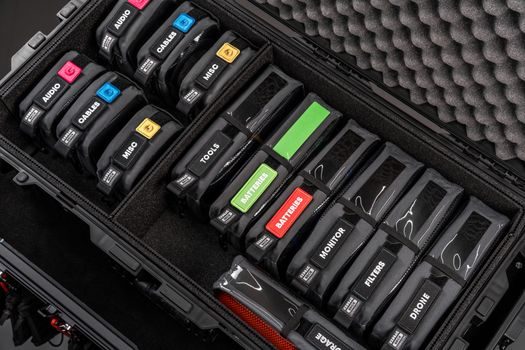
Music and instrument cases are built for travel, touring, and frequent handling; lightweight carrying cases serve field service, commercial travel, and portable systems where mobility beats crush protection; ATA 300 blow-molded cases cover general transport; custom foam-lined cases serve medical, measuring, optic, and AV equipment; clamshell Defender-style cases handle military and defense operations in extreme environments [S1][S7].
Sales and demo cases for industrial flow and pressure instrumentation — see pressure transmitter and pressure sensor reference specs — almost always specify a hard shell with CNC-routed foam cavities, while a PLC programming kit or case packing machine spare-parts set will pair an ATA-rated shell with configurable Pick 'n Pluck or padded dividers so the same case can be re-cut as the kit evolves.
Trackable signals to watch: any 2026 refresh of the Pelican Air, Storm, Vault, and Hardigg lines, and any new ISO-13485 audit cycle by custom-case builders serving medical-device OEMs — both will reshape the quote sheet for engineers sourcing cases alongside their instrument packages [S2][S8].
For related coverage, see Manganese Ore Supply Chain 2026: Producers, Grades, Ports, and Sourcing Realities.