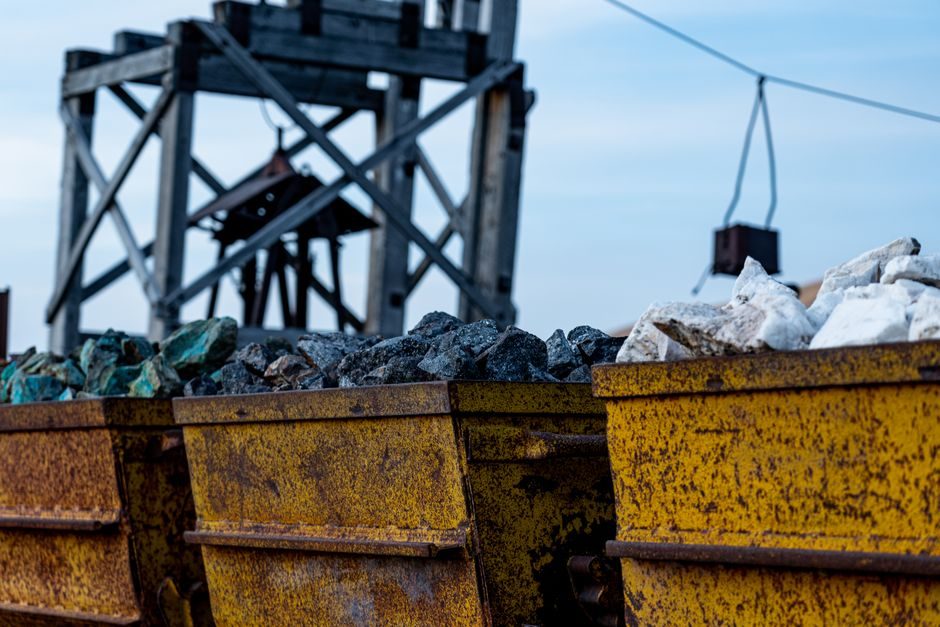
MOIL Ltd. recorded manganese ore production of 18.02 lakh tonnes in FY25, a 2.7% year-on-year increase, with sales of 15.87 lakh tonnes up 3.3% YoY, and the Nagpur-headquartered miner ran 1,07,530 metres of exploratory core drilling, up 22% on the prior fiscal year [S1].
The certified reference material GBW07262 reports Mn at 36.99 mass fraction (×10⁻²), MnO₂ at 54.38 mass fraction (×10⁻²), and SiO₂ at 22.24 mass fraction (×10⁻²) [S2], and recent weekly Chinese port surveys indicate that the domestic manganese ore spot market remained largely stable [S7].
Producer Output and Reserve Pipeline
Indian state miner MOIL posted a 2.7% production rise and a 3.3% sales rise for FY25, while ferro manganese output reached 12,000 tonnes, an 18% YoY increase [S1]. The October-December 2024 quarter was MOIL's best-ever third quarter, with 4.6 lakh tonnes of manganese ore produced and sales up 13% on the same quarter a year earlier [S1].
The 22% jump in core drilling to 1,07,530 metres is the load-bearing fact for forward supply, because that footage underwrites expansion of existing mines and the development of new manganese properties nationwide [S1]. Capacity additions of this size matter when benchmark concentrates typically fall in the 35-48% Mn range; the GBW07262 reference ore at 36.99% Mn with 22.24% SiO2 and 0.081% P represents a mid-grade metallurgical spec against which new tonnage can be benchmarked [S2].
Reference-Grade Chemistry and What It Means for Buyers
GBW07262, issued under China's National Sharing Platform for Reference Materials by the National Institute of Metrology, ships as 100 g units and carries certified values for Mn 36.99 ± 0.07, MnO2 54.38 ± 0.20, Fe 2.24 ± 0.02, SiO2 22.24 ± 0.10, Al2O3 3.00 ± 0.04, CaO 3.60 ± 0.05, MgO 1.44 ± 0.03, K2O 0.46 ± 0.02, Na2O 0.048 ± 0.003, S 0.013 ± 0.001, and P 0.081 ± 0.002, all in mass fraction (10^-2) [S2].
Trace and penalty elements matter as much as headline Mn: TiO2 sits at 0.10%, Cu at 0.014%, Zn at 0.029%, Ni at 0.019%, and BaO at 0.47% — the level of phosphorus (0.081%) and sulphur (0.013%) is the band steelmakers and SiMn smelters actually contract against [S2]. Manganese is consumed overwhelmingly as manganese ore, high-manganese slag, spiegeleisen, and downstream compounds such as manganese sulphate, manganese carbonate, and manganese dioxide, so the ore spec has to fit a downstream lattice, not just a headline Mn number [S3].
Mid-2026 China Port Inventory and Price Behaviour
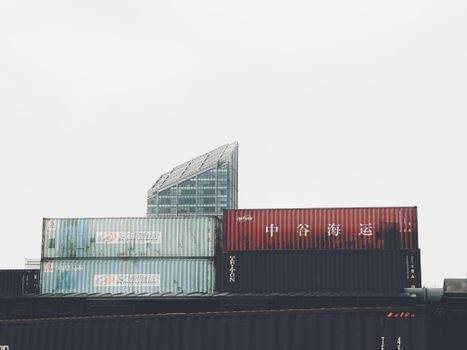
The weekly CBCIE inventory and trend analysis through 2026-05-15 shows the domestic manganese ore spot market remained largely stable, with arrivals matching downstream mill demand at the surveyed ports [S7]. Stockpiles at the major southern trans-shipment hubs function as the buffer that absorbs South African, Gabonese, and Australian cargoes before they enter the SiMn and FeMn furnace lines [S7].
Stable headline pricing masks a two-tier reality on the ground: high-grade lumpy ores above 44% Mn for direct-charge SiMn smelters continue to clear faster than fines for sintering, and the gap between the two has widened in periods of port destocking. Procurement teams sourcing from United States-based resellers on go4worldbusiness can purchase direct-from-mine lots with no middlemen, which the supplier listing of Jan-01-24 flagged as the prevailing commercial model for one U.S. trading desk [S6].
Supply Chain Risk and Cost Layers
Manganese is treated as both a steel alloying element and a battery-grade precursor, which exposes a single ore flow to two very different downstream shocks. In the steel and ferroalloy chain, the ore moves mine → rail/port → bulk carrier → Chinese port → SiMn/FeMn smelter → steel mill, with the SiMn 3rd-quarter contract price cited at 7000 (units as published) in an example transaction [S3].
Lean supply-chain practice — defined in the Sogou Baike entry on 精益供应链 as an integrated, system-wide view built on selecting tools, defining principles, and eliminating non-value-adding activity — is increasingly applied to manganese flows so that stockpile-to-furnace visibility can be matched with weekly port data [S8]. For 2026, supply chain analyst compensation is itself rising per the Coursera 2026 guide, reflecting the broader labour-market signal that logistics and risk roles are commanding higher pay as firms try to professionalise procurement around volatile bulk commodities [S5].
Comparison of Sourcing Routes and Risk Profile
Four sourcing routes dominate the 2026 manganese ore flow, and they line up differently against cost, Mn grade, lead time, and counterparty risk. South African ore from the Kalahari basin typically lands in the 35-48% Mn band, with low phosphorus and a 25-40 day ocean leg to Chinese ports; Gabonese and Australian concentrate sit in a similar Mn band with shorter or longer transit depending on port pairings; Indian domestic production from MOIL scaled to 18.02 lakh tonnes in FY25 with sales of 15.87 lakh tonnes [S1] and bypasses ocean freight entirely; resold lots from U.S. trading desks ship direct from mine with no middleman margin layer, but at smaller lot sizes [S6].
On cost, ocean-freight-exposed routes carry the volatility of Cape-size and Panamax charter rates, while Indian domestic ore is shielded from seaborne freight but exposed to rail rakes and domestic royalty revisions. On grade, the GBW07262 mid-grade reference at 36.99% Mn with 22.24% SiO2 is the calibrated benchmark [S2] against which any commercial certificate of analysis should be cross-checked. On lead time, mine-to-mill for Indian ore is weeks, whereas trans-ocean cargoes run 4-6 weeks port-to-port. On counterparty risk, state-major supply from MOIL is publicly filed [S1], while U.S. reseller flows are smaller and require more documentation discipline per the Jan-01-24 product listing [S6].
Standards, Verification, and Downstream Uses
No specific standard designation is named in the research for the manganese ore certificate of analysis itself, but the GBW07262 certificate, hosted on China's National Institute of Metrology sharing platform with PDF traceability [S2], is the kind of CRM-based reference laboratories use to validate XRF and ICP-OES calibrations for Mn, Fe, SiO2, Al2O3, CaO, MgO, K2O, Na2O, S, P, Cu, Zn, Ni, TiO2, BaO, and MnO2. Downstream, manganese flows into high-manganese steel, austenitic manganese steel, silicon-manganese, ferro-manganese, spiegeleisen, manganese dioxide, manganese sulphate, manganese carbonate, manganese acetate, and potassium permanganate — the vocabulary of the standard chemical-process and steel-alloy chain [S3].
Industrial buyers reading the 2026 supply picture should anchor on three trackable signals: the next quarterly MOIL production and sales release (FY26 figures will recalibrate the Indian state-miner baseline set by 18.02 lakh tonnes production and 15.87 lakh tonnes sales in FY25 [S1]); Chinese port inventory trends from the weekly CBCIE series [S7]; and the next round of certified reference-material values for higher-Mn grades to widen the calibration ladder above the current 36.99% Mn reference point [S2]. For adjacent industrial context, the cobalt sulfate supply chain 2026 spec map follows a similar producer-port-mill pattern, while steel rebar 2026 demand outlook frames the downstream pull on SiMn and FeMn that the manganese ore flow ultimately feeds.
The underlying component specifications are covered under dc power supply, switching power supply, and industrial ups.