
A wrap-around case packer erects a flat corrugated blank around a product collation and seals it with hot-melt adhesive, removing the need for pre-glued manufacturer's joints and cutting blank material versus an RSC [S1][S5]. A regular case packer (top-load or side-load) loads product into a pre-formed case, accepting a wider mix of case geometries at the cost of upstream blank storage and an extra forming step [S3][S4].
Throughput bands in published 2024–2026 specifications range from 25–30 cases/min on soft-container wrap-around PET lines to 30 cases/min on walking-beam high-speed wrap-around systems and up to 140 cartons/min on rotary collation wrap-around packers, with top-load regular packers sitting at the slower end of the comparison set [S2][S7][S8].
Operating Principle and Case-Formation Difference
Wrap-around packers feed flat wrap-around, harness, or tray blanks from a magazine, erect the blank in a set-up station, load product by servo cross-push, gantry, or robotic pick-and-place, fold major and minor flaps, and seal with a hot-melt system before squaring and discharging [S1]. The opposing-vacuum walking beam on the P320 high-speed wrap-around packer runs up to 30 cases/min and is one of the published benchmarks for the format [S7].
Regular case packers require a pre-formed case, normally produced upstream by a case erector using tape or glue, and then load that case from the top (pick-and-place, drop, or gravity) or from the side (continuous or intermittent push), which is why top-load is preferred for fragile, irregular, or wide-SKU products even though it is generally slower than wrap-around or side-load [S3][S4].
Throughput and Equipment Footprint
Published 2024–2026 throughput figures place wrap-around at 25–30 cases/min for PET bottle lines using side-push or wrap-around technology, 30 cases/min on a servo walking-beam architecture, and up to 140 cartons/min on a rotary collation wrap-around packer such as the HCP-20 for small-format cartons [S2][S7][S8]. Top-load regular packers are described as "generally slower than side load or wrap-around systems" in the August 2026 Aagard buyer's guide, with the trade-off being format flexibility rather than cases-per-minute [S4].
Wrap-around systems also collapse the line footprint: by eliminating the pre-glued manufacturer's joint and the pre-formed case magazine, blank storage volume drops and pallet stability improves, while upstream erector stations are removed from the line layout [S1][S5][S6]. Material savings on the blank side are a recurring vendor claim because a wrap blank uses less corrugate than an equivalent RSC for the same internal volume [S1][S3][S5].
Selection Criteria: Product, SKU Mix, and Material
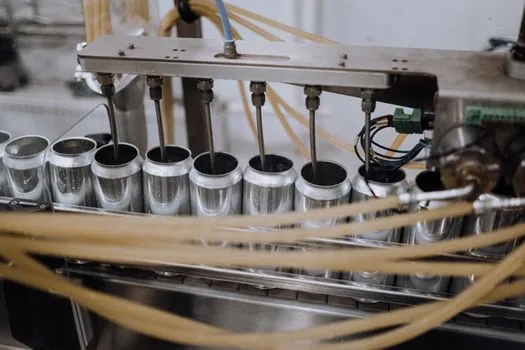
Product geometry drives the first decision: soft PET bottles need a gentle side-push or wrap-around architecture (25–30 cases/min) because drop-packers crush the containers; glass bottles need partition insertion such as CPI to prevent bottle-to-bottle contact; rigid metal cans suit a tight-wrap collation; and 30–100 mL high-value vials demand a partition-equipped packer for cosmetic-grade protection [S2]. Top-load regular packers are the natural fit when fragile, irregular, or wide-format products dominate, including personal care, food, and pharmaceutical SKUs [S4].
High-Mix Low-Volume (HMLV) production is the second decision gate. Full-servo control with HMI recipe recall and modular guide swaps lets one packer handle 8-, 10-, 12-, and 30-pack formats on a single machine, which is now the standard answer to a biotech or co-packer format portfolio [S2][S4]. A single-format mechanical-cam packer remains defensible only when SKU count is locked for the line's life and a changeover penalty of an hour or more is acceptable.
Line Integration: Packer as the Hub
The case packer sits between the filler/cartoner and the palletizer, and its cycle time is the heartbeat of the line: if the packer stutters, the upstream filler stops; if the packer lags, the downstream palletizer sits idle [S2]. A modern 2024–2026 specification therefore treats integration capability as a first-class requirement, not an accessory, and vendors now offer end-of-line integration with cartoners, palletizers, and WMS/MES hooks under one controls layer [S4][S6].
Conveyor and sortation staging is the practical weak point. A wrap-around line needs collation-stable spacing and a low-level magazine sensor with a 3' or 6' power-feed magazine, while a top-load regular packer needs accurate case-spacing and overhead clearance for the pick head, both of which feed back into the conveyor sorting line layout and the upstream case packing machine selection [S1][S4]. Safety integration is now specified at Category III safety circuits with IP67-rated sensors on heavy-duty wrap-around builds, and sanitary washdown construction is a default option for food and beverage duty [S1].
Total-Cost and Material Trade-Offs

The wrap-around format is materially cheaper per case because the blank uses less corrugate than an RSC and removes the pre-glued manufacturer's joint, which is the largest single piece of glue on a standard case [S1][S3][S5]. That converts directly into higher blank magazine capacity, fewer reel changes on the hot-melt unit, and lower freight cost per pallet because case density improves [S1][S3].
Against that, a regular top-load packer lowers the cost of format change, accepts a wider library of pre-formed case sizes (including RSCs, HSC, and display trays), and avoids the partition-insertion tooling that wrap-around glass lines require [S2][S4]. The break-even between the two architectures is therefore a function of SKU count, case geometry, and changeover frequency, not raw cases-per-minute. A useful sizing rule from 2026 vendor guidance: a wrap-around line earns its premium back inside 18–36 months on single-SKU high-volume SKUs in food, beverage, and metal-can plants, while multi-SKU personal-care or pharmaceutical lines stay on top-load regular packers for flexibility [S2][S4][S5].
Failure Modes and Commissioning Gates
The recurring wrap-around failure modes are blank-feed jams at the magazine, hot-melt pattern drift on the major flap, and walking-beam vacuum loss that leaves the blank mis-squared at discharge; top-load regular packers instead fail on pick-head misalignment, drop-impact damage on fragile SKUs, and side-load pusher timing on tall cases [S1][S2][S4]. A pre-defined commissioning sequence, from site prep through to acceptance-test rates, is what separates a 30 cases/min acceptance from a real-world 22 cases/min; the case packer installation and commissioning checklist captures the eight gates a controls engineer should sign off before the first pallet leaves the cell.
For hazardous-area or ATEX-classified duty (solvent-based coatings, distillery lines, or any cell with flammable vapor), the controls and enclosure specification is governed by ATEX/IECEx zone selection rather than the packer type itself, and the right way to write that line item is the ATEX vs IECEx zone-classification decision map. Standards naming on this article is kept to the published controls architecture (Category III safety, IP67 sensors, washdown) and to the regulatory framework, not invented per-component standard numbers.
Trackable signals to watch: a fresh round of vendor announcements at PACK EXPO 2026 (September) on higher-rate wrap-around servo indexing above 50 cases/min, and a co-packer-driven shift toward full-servo HMLV top-load cells with recipe-driven changeover under 10 minutes, both of which will re-set the comparison table above by Q4 2026.
For component-level specifications, see molding line.