
A case packer installation and commissioning checklist has eight sequential gates, and the cost ratio between them is brutal: a defect caught at the vendor's Factory Acceptance Test (FAT) costs 1× to fix, the same defect at Site Acceptance Test (SAT) costs 10×, and the same defect found in live production costs up to 100× [S2]. On a modern FMCG line running 8 high-speed filling halls, structured digital commissioning workflows have been reported to cut cycle time by 40% and reach 100% documentation completeness across all acceptance stages [S4].
Commissioning succeeds when the machine, the utilities, the packaging materials and the acceptance method are prepared as one project, not as four parallel workstreams that meet on the install day [S1]. The case packing machine category itself covers top-load, side-load, wrap-around and robotic pick-and-place configurations, and the right checklist for each depends on whether the case is erected on-machine, fed as a blank, or dropped from above [S5]. For engineers evaluating full construction machinery and equipment scopes, case packers sit at the secondary-packaging stage and tie into upstream fillers, cappers, labelers and downstream palletizers [S5].
Gate 1: Site-Readiness Review Before Shipment
Site-readiness verification must be closed before the machine ships, not after it lands on the dock [S4]. The review confirms door, lift and aisle access; machine footprint; conveyor elevations; operator, maintenance and cleaning space; and the position of upstream and downstream interfaces against the approved line layout [S1]. If site conditions differ from the quotation or the factory test setup, document the deviation in writing before release for dispatch [S1].
Utilities need to match the data sheet, not a rounded-up estimate. Approved voltage and frequency, grounding, compressed-air requirement (typical case packers run on 6 bar / 90 psi shop air), product transfer method, and any drainage or cleaning connection must each be physically present at the install point before the truck arrives [S1][S3]. The same container, closure, label and product definitions used for the FAT should be the ones waiting on site; if the sample or specification changed after FAT, treat the new format as a controlled engineering change rather than assuming the original setup still applies [S1].
Gate 2: Arrival Inspection and Mechanical Installation
Receiving checks package condition, machine identity against the packing list, loose parts, tooling and visible damage; every exception is photographed and logged before unpacking continues [S1]. The site coordinator then positions the machine on the approved layout, marks any deviation, and verifies final access clearance, conveyor direction, operator side, and the interfaces with existing equipment [S1].
Level and alignment is where most downstream headaches start. Machine support, conveyor height, transfer gaps, rails and a stable bottle or carton flow between modules must each be measured and recorded; a controlled manual run through every handoff catches misalignment that a spirit level alone will miss [S1]. Anchor bolt torque values, electrical termination verification and piping connection integrity all get signed off by a certified installation technician before power is energized [S4]. EHS risk assessments, permit-to-work verification and contractor induction records are part of the same gate, not a separate paperwork stream [S4].
Gate 3: Dry Commissioning Without Product
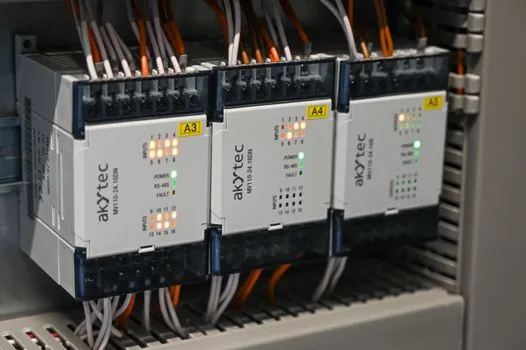
Dry commissioning is the first time the line moves under its own power, with no product, no cases and no glue. Operators walk through every control mode, every interlock, every light curtain and every E-stop while the line runs empty [S2][S4]. HMI/PLC communication checks confirm that recipes, fault logs and diagnostics route to the correct node before anything real is at risk [S4].
Functional testing at this gate should follow the ISPE Baseline commissioning framework for regulated plants and the IEC 62381:2024 automation lifecycle for the control system itself [S2]. Verification covers all critical dimensions within drawing tolerance, all connection locations matching the site layout drawing, and nameplate data matching the spec [S2]. Any missing certificate or unchecked interlock is a hold point; do not release the line for product commissioning until the dry-run sign-off is complete and recorded against the asset record [S2].
Gate 4: Product Commissioning With Real Cases and Real Product
Once dry runs are clean, real bottles, caps, cases, glue or tape, and labels go in. This is the first time the packer sees the actual primary package, the actual corrugated case, and the actual production environment together [S1]. Speed is ramped gradually from a crawl to rated capacity, with reject rates and case-quality checks logged at each step [S4].
Load testing at rated capacity is the single most important acceptance datapoint on a case packer, because top-load, side-load and wrap-around architectures behave very differently once the case magazine is full and the flight bar is indexing at nameplate speed [S5]. Mis-pack detection, flap-closure squareness, glue pattern, tape overlap and case squareness at discharge are each measured against OEM acceptance criteria with a pass-fail disposition [S4]. For FMCG lines targeting 95% OEE, a structured baseline here is what the next ten years of reliability data will be measured against [S4].
Gate 5: Site Acceptance Test (SAT) and Performance Baseline
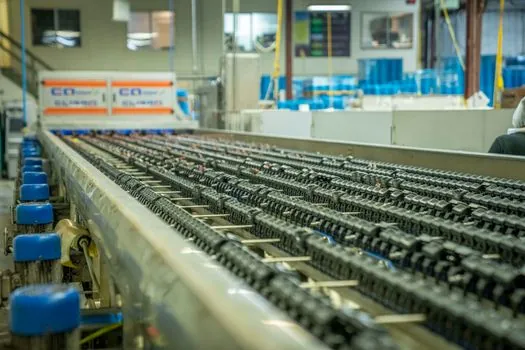
SAT is the contractual gate that converts the line from "vendor asset" to "buyer asset," and the documentation is what auditors will ask for first [S2]. The SAT protocol references the original User Requirements Specification (URS) line by line and records objective evidence, throughput, reject rate, changeover time, noise level and utility draw, against the URS value [S2].
The OEE baseline and the preventive maintenance (PM) schedule are both built from the SAT data, not from a generic OEM template. One reported FMCG rollout generated PM tasks, frequencies and spare-part lists 85% faster by deriving them directly from commissioning data rather than re-keying them from PDFs [S4]. Audit readiness improved 3× in the same programme because the structured digital checklist replaced fragmented paper trails and spreadsheet tabs [S4]. The SAT is also the gate where the case packer is matched to its upstream and downstream modules under real line dynamics, which is why end-of-line lighting equipment and electric lamps status indicators, reject bins, and lane-diverters must be live before SAT starts [S1].
Gate 6: Training, Documentation and Handover
Operator and maintenance training has to be scheduled, not improvised; ask every vendor up front what training is included, whether it is on-site or remote, and how many shifts it covers [S5]. Documentation handover includes P&ID drawings, electrical schematics, mechanical drawings, data sheets for all major components, material certificates, weld inspection records, pressure test certificates and CE/UL compliance documentation, every item reconciled against the Purchase Order [S2].
Buyer and supplier responsibilities should be split on paper before commissioning starts, not negotiated at handover. Typical splits: the buyer owns site readiness, utilities, product and packaging materials, and the acceptance authority; the supplier owns machine identity, mechanical installation, functional testing and operator training [S1][S3]. For plants running multiple case packer SKUs across lamps and light fittings and other consumer-goods lines, the training matrix needs to cover both changeover for new SKUs and recovery from common faults (case magazine empty, glue temperature low, flight-bar jam) [S1][S10].
Comparison: What Each Checklist Source Actually Covers

The four strongest reference checklists differ in scope, and a buyer should not treat them as interchangeable. Aagard's 2026 buyer's guide is the only one that explicitly addresses case-packer-specific vendor questions (installation timeline, training scope, remote diagnostics) [S5]. iFactory's FMCG checklist is the only one with quantified commissioning KPIs (40% cycle-time reduction, 100% documentation completeness, 85% faster PM generation, 3× audit-readiness gain) [S4]. Oxmaint's checklist is the only one that anchors the cost-of-defect ratio (1× / 10× / 50× / 100×) and ties commissioning to FAT/SAT under IEC 62381:2024 and the ISPE Baseline framework [S2]. ZXSMART's packaging-line checklist is the only one that includes a full eight-stage pre-shipment to handover sequence with a buyer/supplier responsibility split [S1].
Economy Corp's 2024 checklist is lighter and more general (review specs, assess site, set up utilities, permits, coordinate vendors, prepare the team, safety, backup plan) and is best used as a pre-shipment sanity check rather than a full commissioning protocol [S3]. For tradeshow and PMMI ProSource content, the focus is on buying criteria (product, primary package dimensions, throughput, case style) rather than the commissioning workflow itself [S6].
Common Failure Modes and When to Escalate, Not Repair
Three failure modes show up repeatedly on real case packer commissioning jobs. First, case magazine timing drifts after the first 30 minutes of run, producing intermittent mis-loads; root cause is almost always worn timing belts or a loose drive chain, both of which are visual-inspection items on the standard PM checklist [S10]. Second, vacuum cups and vacuum filters lose grip on corrugated cases after a shift, leading to dropped cases at the flight bar; root cause is a clogged filter or a hardened cup seal, both of which are clean-and-replace items, not adjust-and-keep-running items [S10]. Third, glue temperature alarms on wrap-around packers during cold-weather startups; root cause is a cold glue tank and an undersized hopper preheater, and the corrective action is to size the heater to the tank volume and ambient, not to override the alarm [S1].
Each of those is a hold point under standard commissioning practice; signing past them converts a vendor liability into a buyer liability, and the next ten years of PM data will reflect that handoff. For plants standardising across multiple line types, reading the comparison of AGV guidance methods helps frame how upstream material flow interacts with the case packer discharge, and the spec map for digital spare parts inventory vs physical stock is the natural follow-on for what the SAT baseline actually drives after handover. For hazardous-area packaging lines, the relevant cross-reference is ATEX vs IECEx for process equipment, which determines what documentation must be in the FAT package before shipment.