
An automatic labeling machine is sized by three hard numbers: containers per minute, label placement tolerance in mm, and the maximum label web width the dispenser will accept, with selection logic layered on top around container geometry and adhesive type [S1].
Buyers who skip the geometry step and jump straight to throughput are the ones who end up returning equipment: a wrap-around round-bottle labeler cannot handle a square carton, and a flat-surface applicator will smear on a tapered cylinder [S1][S4]. The first 30 minutes of any labeling line project should be spent on container shape, label substrate, and the upstream/downstream machines the labeler must handshake with.
Define the Container, Label, and Throughput Envelope First
Before quoting a model, lock down eight inputs: product type and shape (round, flat, square, pouch, irregular), label type and material (self-adhesive / pressure-sensitive, shrink sleeve, glue-applied; paper, clear film, BOPP, PE), throughput in pieces per minute, placement accuracy requirement in mm, label size range in mm, product size range in mm, motor/drive preference (stepper vs servo), and any environmental duty (humid, dusty, corrosive, cleanroom, explosion-proof) [S1].
Semi-automatic labelers typically cap out near 30 bottles per minute and are sized for runs under roughly 5,000 units per day; fully automatic rotary and linear systems cover the 60-400 BPM band, and high-speed servo rotary machines push past 400 BPM on standardized round containers [S1][S6]. Label face material choice (paper, polypropylene, polyester, vinyl, PE) and adhesive chemistry (water-based, hot-melt, rubber, acrylic) are not afterthoughts, since chill-grade acrylics, freezer-grade hot-melts, and removable formulations drive both dispenser tension settings and the peel-edge geometry the machine must hold [S3].
Match Machine Architecture to Container Geometry
Six architectures dominate the spec sheet, and each is bound to a container family rather than a brand [S1][S6]. Round-bottle labelers (single-side or double-side wrap) target beverage, pharma, and daily-chemical lines running cylindrical or lightly tapered bottles. Flat-surface labelers cover boxes, caps, pouches, and electronics housings. Side labelers handle square and flat formats where the label sits on a single face. Paging labelers feed cards, leaflets, and instruction sheets, common in pharma secondary packaging. Corner/sealing labelers place tamper-evident or anti-counterfeiting seals at box corners. Sleeve/shrink-film labelers drop a cut polyester or PET sleeve over the full body and pass it through a heat-shrink tunnel for 360° coverage on irregular containers [S1].
A practical rule from integrator playbooks: if your container is round and your label wraps, a wrap-around round-bottle machine is the default; if your container is square or your label is a single face, a flat-surface or side labeler wins; if you need 360° graphics on a contoured bottle, the sleeve route is the only one that will not leave a seam gap [S1][S4]. Production-stage framing reinforces this: hand semi-auto for prototyping and sub-5,000-batch runs, automatic inline for 5,000-50,000 batches, and rotary servo for sustained 50,000+ runs where changeover time starts to dominate labor cost [S6].
Read the Spec Sheet Like a Process Engineer
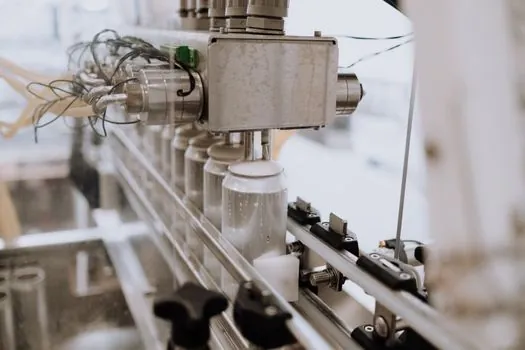
Five numbers separate a workable labeler from a paperweight: labeling speed in m/min or pcs/min, accuracy tolerance in ±mm, applicable label size range, applicable product size range, and motor type [S1]. Stepper motors are the economical default on semi-auto and entry-level auto machines; servo motors enter the spec at higher speeds and where placement tolerance tightens to ±1 mm or better [S1][S3].
Pressure-sensitive (self-adhesive) labels are the most common format and pair with a peel-and-place dispenser head, so the label web width, outer roll diameter, and core inner diameter (typically 76 mm / 3 in) must be matched to the machine's label reel holder [S3]. Shrink-sleeve systems add a heat tunnel after the sleeve is cut and slipped over the container, and tunnel length, heater kW rating, and conveyor speed through the tunnel become the binding constraints, not the dispenser head. The label orientation (top, wrap-around, front-back) also constrains the physical machine footprint and the orientation of the conveyor infeed, which is why upstream integration with a linear guide or conveyor must be planned before the labeler is ordered [S1][S3].
Criteria-Based Comparison of the Main Labeler Types
For a buyer comparing options against decision criteria, the four most common architectures stack up as follows. Round-bottle wrap labelers deliver the highest accuracy (±1 mm typical) and the highest speed (60-400 BPM depending on configuration) but are limited to cylindrical or lightly tapered containers; flat-surface labelers trade some speed for the widest container compatibility but cannot wrap a label; sleeve/shrink labelers handle irregular and contoured containers with full 360° coverage at the cost of added floor space, heater power, and film cost; semi-automatic labelers win on capex and changeover flexibility but cap throughput near 30 BPM and depend on operator placement consistency [S1][S3][S6].
A wrap-around round-bottle machine is the wrong choice for square cartons, pouches, or flat-faced containers, because machine type must match product shape and a machine designed for jars and bottles may not be appropriate for non-round or flexible packages [S1][S4]. Conversely, a flat-surface labeler is the wrong choice for full-body 360° graphics on a tapered bottle; only a sleeve system will deliver that requirement, at the price of a heat tunnel and shrink film [S1].
Integration, Environments, and Hidden Costs
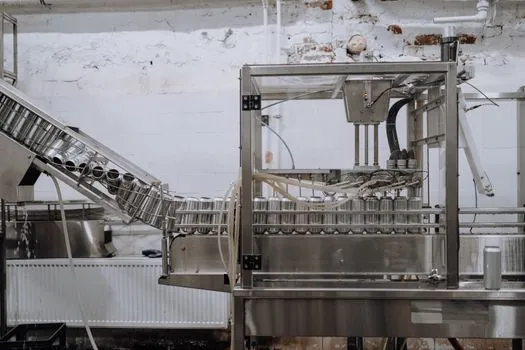
Line integration is where most projects slip: the labeler must communicate with the upstream filler/capper and downstream coder or case packer, and the conveyor height, spacing, and orientation must be matched before installation, not after [S1][S4]. Standalone semi-auto machines are forgiving here because the operator stages each container; fully automatic inline systems require a fixed-height, paced infeed and a stable back-pressure or star-wheel metering at the dispense point.
Environmental duty narrows the vendor list quickly. Cold-chain and freezer lines need chill-grade acrylic adhesives and a dispenser that does not ice up; cleanroom and pharmaceutical lines need stainless contact parts and validated wash-down ratings; ATEX/IECEx zone-rated lines need explosion-proof enclosures and a label material that does not build static charge [S1][S3]. Lifecycle numbers from manufacturer literature place a well-maintained industrial labeling machine in the 10-year service band, so the right capex decision is the one that survives your next three SKUs, not just the one you ship next quarter [S5]. Sourcing plays into this: minimum order quantities on label stock and the lead time on custom-printed rolls can exceed the machine lead time, so lock the label vendor in parallel with the machine vendor [S4].
Shortlist Logic and Buyer Checklist
A defensible shortlist follows this order: (1) container geometry rules in or rules out 4 of the 6 architectures; (2) throughput band narrows the remaining candidates to semi-auto, inline auto, or rotary servo; (3) label substrate (pressure-sensitive, shrink-sleeve, glue-applied) selects the dispense head and, for sleeves, the heat tunnel; (4) accuracy and motor class close the spec; (5) environment and integration close the vendor list [S1][S3][S6]. For buyers running mixed-format lines, the practical shortlist is one wrap-around round-bottle machine for the cylindrical SKUs plus one flat-surface labeler for cartons and pouches, shared via a changeover conveyor, rather than a single compromise machine that does both jobs poorly.
Trackable signals to watch through 2026: servo-motor price compression on entry-level automatic labelers, which keeps pushing the semi-auto-to-auto crossover downward into the 30-60 BPM band, and the spread between pressure-sensitive and shrink-sleeve total cost per label as BOPP and PET film pricing moves. Buyers should also confirm that any shortlisted supplier publishes a validated ±mm accuracy figure on a specific container, not a generic brochure number, and that the label reel holder accepts the actual outer diameter and core size of the labels you will run in production [S1][S3].
For component-level specifications, see crossed roller guide.
This topic is covered further in Magnetic sensor suppliers 2026: silicon leaders, niche industrial builders, and.