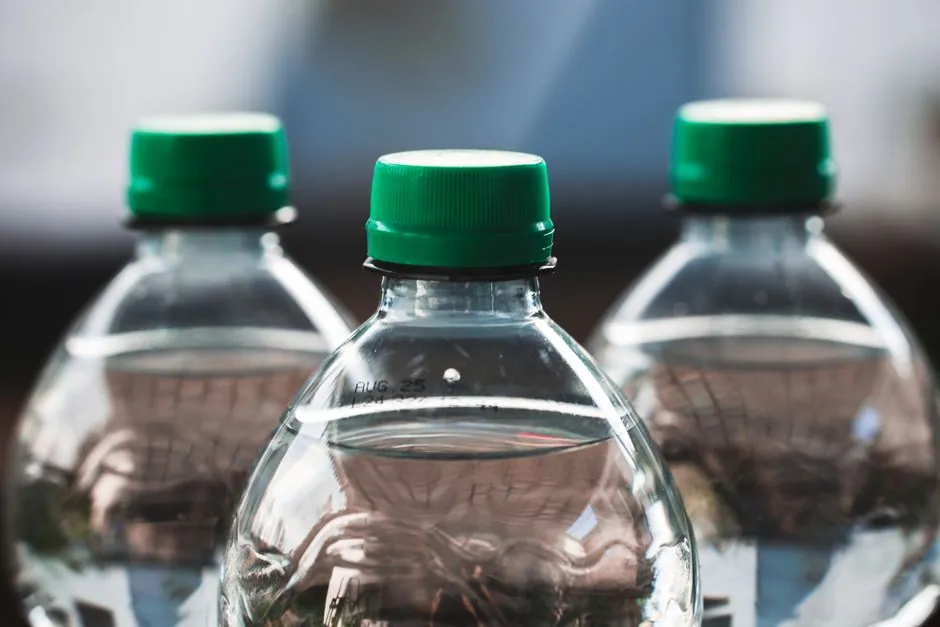
For water-bottling operations, the most widely specified automatic labeling machines run between 100 and 350 bottles per minute, with the Quadrel TechLine PET system rated at up to 175 bottles per minute and the Quadrel high-speed non-stop zero-downtime line at 350 containers per minute, both built around servo-driven product handling, Allen-Bradley PLC control and stainless-steel contact surfaces [S1].
Selection turns on bottle format (round PET vs flat/jug), required throughput, label technology (pressure-sensitive, BOPP shrink sleeve, hot-melt wrap), and the hygienic duty cycle of the water treatment plant upstream that feeds it; aligning these four variables before the quote request eliminates 80% of the spec churn that hits mid-size bottlers.
Automatic Wrap-Around Labeling: The Default for Round PET
Wrap-around labeling machines are described as the most common solution for round PET water bottles, delivering high placement accuracy, simple operation and the lowest cost-of-entry versus twin-side or sleeve formats [S5]. Standard machine anatomy consists of a conveyor-fed bottle handling section, sensors for position detection, a servo-driven label dispenser, and either brush, belt or wrap-around applicator heads [S5].
Quadrel's TechLine PET platform aligns and squares thin-walled containers, which limits label skew even at high line speeds, and supports up to 175 bottles per minute; the related EconoLine stepper-driven, stainless-steel craft-bottle unit is rated at up to 120 bottles per minute and uses microprocessor control [S1]. The stepper-versus-servo distinction matters on water lines: servo drives hold label tension constant under bottle surge, while stepper units drift in registration when conveyor back-pressure varies.
Throughput Tiers: 120, 175 and 350 Containers/Min
Production capacity for water-bottle lines falls into three practical tiers: entry automatic at 100-120 bottles per minute (EconoLine-class, stepper-driven, stainless-steel construction) [S1], mid-range automatic at 150-200 bottles per minute (TechLine-class, servo registration, touchscreen HMI) [S1], and high-speed zero-downtime at 300-350 bottles per minute (servo product handling, overhead electronics, Ethernet diagnostics, Allen-Bradley PLC) [S1].
For 5-gallon jug lines, the labeling machine selection logic shifts: those lines run at 60-120 jugs per hour, not per minute, and demand heavier-gauge label reels plus 304/316 stainless contact parts for washdown. First-time buyers should map the line's nameplate fillers output to the labeler's rated capacity, with a 15-20% headroom for changeover losses, before any capex decision.
Label Technology Comparison: Pressure-Sensitive vs BOPP Shrink Sleeve vs Hot-Melt Wrap
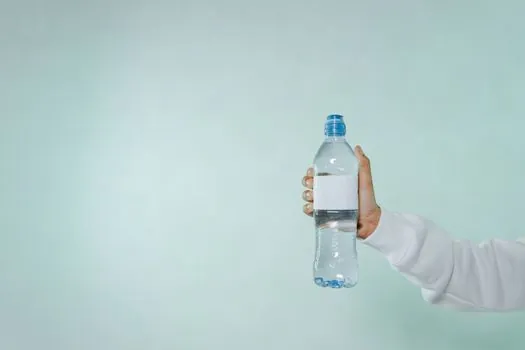
Three label technologies dominate water bottling, each with a distinct cost-accuracy-throughput profile. Pressure-sensitive (self-adhesive) labels are the workhorse for PET, applied by the wrap-around, front-back or three-panel machines listed in the Acuapuro catalog (round, flat, double-side, top-bottom, neck, candy-jar configurations) [S4]. BOPP shrink-sleeve labels give 360-degree graphics and tamper-evidence but add a shrink tunnel and steam or electric heat stage. Hot-melt wrap-around labels, common on legacy 5-gallon lines, cut label cost per bottle but require precise glue temperature control (typically 160-180 degrees Celsius at the pot).
Selection rule for water lines: specify pressure-sensitive wrap-around for standard 330-2000 ml PET at 120-200 bottles per minute; specify BOPP shrink sleeve when full-body graphic coverage, matte-finish branding, or anti-counterfeit tamper bands are required; specify hot-melt wrap only for high-volume 5-gallon operations where label film cost dominates and an existing glue pot infrastructure is already on-site. A first-time buyer who tries to run a single machine across all three technologies will inherit changeover time that wipes out the throughput advantage.
Selection Criteria: Bottle Format, Hygienic Construction, PLC and Vision
Five criteria separate a working water-line labeler from a chronic source of downtime. First, container geometry: confirm round, flat, tapered or handleware compatibility before pricing. Second, contact-surface material: 304 stainless is acceptable for purified water lines, 316 stainless is required for mineral/spring water with higher chloride exposure and for any washdown zone. Third, drive architecture: servo drives are mandatory above 150 bottles per minute, stepper drives suffice only at 100-120 bottles per minute on stable conveyor feed [S1]. Fourth, control platform: Allen-Bradley PLC with color touchscreen HMI is the de-facto standard on Quadrel high-speed lines, with Ethernet connection providing real-time system status [S1]. Fifth, inspection: vision systems that verify label presence and position after application are increasingly the difference between a passing and failing audit on private-label retail contracts [S5].
Reliable shortlisting for a typical 500 ml purified-water line at 150 bottles per minute: a pressure-sensitive wrap-around unit, 304 stainless contact parts, servo drives, Allen-Bradley or equivalent PLC, and integrated vision rejection; budget envelope typically lands at one-third the cost of a BOPP shrink-sleeve line of equivalent throughput. Buyers evaluating used or trade-in units should treat the PLC HMI and servo amplifiers as the first inspection items, since obsolete controls (no longer supported by the manufacturer) make a used line unsupportable within five years.
Integration with Water Treatment and Filling Lines
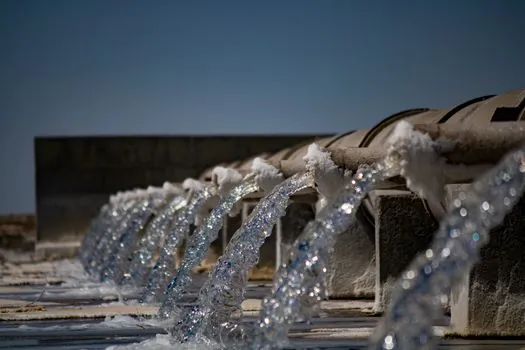
Modern water-bottle labeling machines are designed to handle various bottle sizes, shapes and label materials while integrating seamlessly with filling, capping and packaging lines [S5]. In practice this means matching the labeler's conveyor height, lane pitch and control handshake (typically Ethernet/IP or PROFIBUS) to the upstream bottle filling machine and downstream shrink-wrapper, so a single stop signal cascades without buffering faults.
For a water treatment plant feeding its own bottling hall, the cleaning cycle of the upstream system dictates the labeler's washdown rating: an RO + UV line that runs CIP (clean-in-place) daily pushes the labeler into IP65 enclosure class, while a mineral-water line with periodic chlorine sanitization typically accepts IP54. The most common integration failure is a mismatch between the filler's star-wheel pitch and the labeler's infeed screw, which causes back-pressure and label skew long before the rated throughput is reached.
Limitations and Failure Modes Specific to Water Lines
Water bottles are deceptively hard to label: thin-walled PET flexes under applicator pressure, condensation from cold-chain supply water lifts pressure-sensitive adhesive, and transparent or soft-touch films register poorly on standard vision systems. Quadrel's TechLine specifically addresses the thin-wall skew problem by aligning and squaring containers before label application [S1], but that hardware does not solve adhesive wet-out on cold bottles, which is a label-stock specification problem, not a machine problem.
Operational failure modes to specify against: label skew above plus/minus 0.5 mm at 175 bottles per minute (typical high-speed line tolerance), label wrinkle on tapered or handleware bottles (drives the need for a coding machine positioned upstream to add batch/date marks before the label is applied), and static-induced mis-feed on BOPP film in low-humidity plants. The first-time buyer who treats the labeler as a standalone asset and ignores upstream bottle temperature, downstream shrink-tunnel heat balance, and ambient humidity inherits all three failure modes on day one.
Semi-Automatic and Small-Scale Options
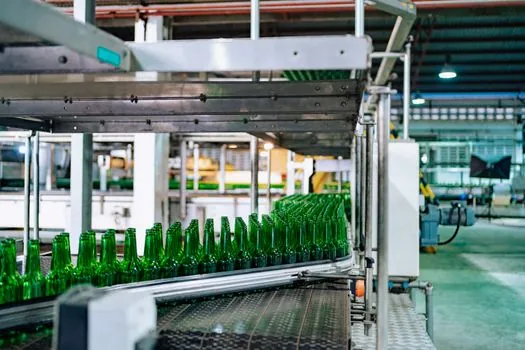
For micro-producers, test batches and pilot lines, semi-automatic applicators handle cylindrical and many tapered containers without full-line integration. Primera's AP360 and AP380 Label Applicators are positioned as semi-automatic units suited to cylindrical containers as well as many tapered containers [S3]. These units make economic sense below approximately 30 bottles per minute, where the labor cost of a semi-automatic station is lower than the depreciation of a full-automatic line.
For desk-top water-bottle label printers (not the line applicator), compact units such as the Brother P-touch Cube Plus-class devices print at up to 4.5 inches per second, support Windows, macOS, iOS and Android, store 30 labels in memory, and print in up to six colors [S2]. These are a separate equipment class from the labeling machine on a bottling line, and confusing the two categories in a purchase spec is a common first-time buyer error.
Standards, Sourcing and Trackable Signals
Water-bottle labelers that touch food-grade contact surfaces should be sourced against 304/316 stainless documentation, food-grade conveyor belt certification, and CE/UL electrical compliance; bottle-handling wear parts (belts, brushes, star wheels) should carry lot-traceable material certificates. For buyers comparing OEM datasheets, a credible spec sheet lists rated throughput with the actual container size and label dimensions, not a generic "bottles per minute" number; Quadrel's 175 bottles per minute rating, for example, is tied to a defined PET container geometry [S1].
Two signals to track over the next buying cycle: servo-drive price erosion continues to push the 150-200 bottles-per-minute tier down toward the historical 120 bottles-per-minute price band, which compresses the entry-automatic segment; and vision-inspection modules that were optional five years ago are now shipping as standard on mid-range wrap-around units, which is a useful proxy for next year's spec baseline. Buyers evaluating labeling machine selection criteria should treat integrated vision and Ethernet diagnostics as mandatory, not optional, on any line rated above 150 bottles per minute [S5].
Related analysis: RV Reducer Market 2026: Japanese Incumbents, Chinese Catch-Up, and the Humanoid Catalyst.