
Case packers and coding machines are commonly confused by procurement teams because both sit on the same end-of-line conveyor, but they perform completely different functions: a case packing machine groups finished product into shipper cartons or wraparound cases, while a coding machine deposits batch codes, dates, barcodes or 2D Data Matrix marks onto product or carton surfaces.
Throughput bands differ by a factor of 3-5x. Case packers on Chinese OEM data sheets quote 30-120 cases per minute for top-load or wraparound formats, while continuous ink-jet (CIJ) and laser coders run 100-600 units per minute on individual packs, with thermal-transfer overprinters (TTO) capping near 300 prints/min on film [S1][S5].
Function and Scope: What Each Machine Actually Does
A case packer takes oriented consumer units (bottles, cans, cartons, pouches) and collates them into a corrugated or wraparound case, then closes the case with tape or hot-melt glue. Yespack lists its case-packer range as 12 years of case-packing equipment experience with CE and EMC global quality marks and a 2-year warranty [S5]. Clearpack positions its case packers as part of a full end-of-line packaging and bottle-filling line, including auto depalletizing of empty rigid plastic containers [S1].
A coding machine does not move or group product. It marks surfaces. Technologies include continuous ink-jet (CIJ) for non-contact marking on bottles/cans, laser coders for high-contrast ablation on cartons/films, thermal-transfer overprinters (TTO) for flexible packaging, and drop-on-demand (DOD) ink-jet for case-marking. Istarpack's product family shows that the same vendor often sells case packers, vertical cartoning machines, overwrappers, and stretch banders as a coordinated end-of-line [S4] — coding machines typically come from a separate specialty supplier.
Operationally, the case packer owns the format change and mechanical format-parts set, while the coding machine owns the print-head consumables, ink viscosity control, and substrate changeover. Both are tied to line throughput, but the case packer is the throughput bottleneck; the coder must be sized 1.2-1.5x the packer cpm to allow for legitimate stops, rejects, and product-starved gaps [S2].
Selection Criteria: Drives, Format Range, and Substrate
For a case packer, the key spec block is format range (single product vs family-pack), pack pattern (2x3, 3x4, 4x6 etc.), case type (RSC, HSC, wraparound, tray+hood), closure method (tape, hot-melt, glue), and frame material. Climax Packaging Machinery positions itself as a custom end-of-line supplier and explicitly invites "free quote" RFQs for case-packing machinery, signalling engineer-to-vendor format work [S2].
For a coding machine, the spec block is print technology (CIJ / laser / TTO / DOD), resolution in dpi, print area dimensions, message storage, supported 1D/2D codes, ink type (MEK-based, food-grade, UV-curable, ketone-free), and environmental rating. IP rating matters on washdown lines — IP54 minimum for splash zones, IP65 for direct wet-clean, per typical hygienic-line OEM guidance. Laser coders avoid ink consumables entirely and produce no VOC, but require a contrast-amenable substrate.
Drive architecture overlaps with both: servo-driven case packers using VFD/servo blends for cam profiling track changeover faster than mechanical-cam machines, and CIJ coders use closed-loop solvent viscosity control. Engineers sizing both should reference servo and drive guidance such as VFD vs Servo Drive: 2026 Spec Cut for Motor Control Engineers when comparing energy and positioning tolerance.
Decision Matrix: Pack vs Code vs Both

The four decision criteria a process engineer should weigh are: (1) required line throughput, (2) substrate and code durability, (3) regulatory marking load, and (4) changeover frequency. The comparison below is drawn from OEM data sheets and standard FMCG line practice [S1][S2][S3][S5].
On throughput, a case packer sized 60 cpm matches a CIJ coder at 100+ units/min and a laser coder at 200+ units/min. If the line runs below 30 cpm, a semi-automatic case packer with a hand-fed coder is the economic fit. On substrate, corrugated cases and BOPP-laminated film both accept TTO and laser; untreated HDPE bottles need a CIJ with a specific ink family, not a TTO (TTO requires a ribbon-receptive film). On regulatory load, food/pharma lines typically require both a batch/date code on the unit AND a shipping-case code for traceability — this means one of each, not one or the other. On changeover, pack format changeover on a servo case packer is typically 10-15 minutes; coder message changeover is under 60 seconds via HMI.
Who Each Machine Is For — And Who It Is Not For
A case packing machine is for any operation that ships multiple consumer units inside a corrugated shipper: beverage, food, pharma, personal care, e-commerce fulfilment. It is NOT for primary-pack producers who sell individual units without a shipper (a yogurt single-serve line ships in trays and shrink-bundles, not cases). It is also a poor fit for very low SKU counts at low volume — a hand-erect-and-tape station beats a $150k automatic case packer below ~10 cpm. [S1]
A coding machine is mandatory on any consumer-goods line subject to traceability regulations, including FDA 21 CFR Part 11 (electronic records), EU 1169/2011 (food information to consumers), and GS1 barcode grading at retail acceptance. It is NOT for bulk industrial product that ships in tankers or supersacks with no individual unit marking — that product takes metal tags, not ink-jet. It is also not the right tool for shipping-case traceability marks if the case material is wet or wax-corrugated; those need a DOD large-character ink-jet or a label applicator, not a CIJ aimed at the case.
Integration, Sourcing, and Standards
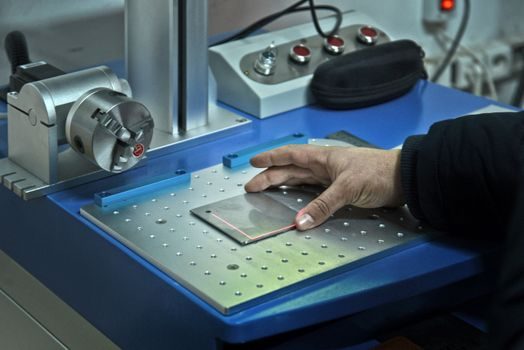
Integration is the forgotten spec. A case packer must hand off a square, dimensionally consistent case to the sealer/labeler downstream, and a coder must trigger off the same line-encoder pulse that drives the conveyor. Xinyuan Packing markets itself as a "Total Packaging Solution Supplier" covering pre-sales to after-sales, illustrating that Chinese OEMs now routinely bundle case packers, cartoning, and downstream marking [S3]. Yespack similarly positions CE + EMC + 2-year warranty as the global quality bar [S5].
Standards that touch these machines include the CE Machinery Directive (2006/42/EC) for safety, EMC Directive 2014/30/EU for electrical noise, IEC 60204-1 for machine electrical equipment, and for coding/marking specifically GS1 General Specifications for barcode symbology and ISO/IEC 16022 for Data Matrix. ATEX/IECEx ratings apply if the line handles solvents or operates in a classified zone. Sourcing checks for a process engineer should always include: serial-numbered CE Declaration of Conformity, test reports against IEC 60204-1, and ink Safety Data Sheets (SDS) — and a list of installed lines at named reference customers [S1][S3][S5].
Failure Modes and Operating Constraints
Case packers fail primarily at the format-changeover (wrong change parts installed), at the glue/tape application (temperature drift, tape misalignment), and at the pick-and-place head (vacuum loss on a dirty gripper). Wrapping failures (torn wraparound blanks) usually trace back to corrugated storage humidity outside 40-60% RH. Throughput is a hard limit — trying to push a 60 cpm-rated machine to 75 cpm causes consistent case-seal failure, not a slow decline. [S2]
Coding machines fail at the printhead (clogged nozzle on CIJ, scratched lens on laser), at the ink/ribbon supply (out of ink, ribbon break, viscosity drift), and at the trigger (encoder-belt slip, photoeye misalignment). The most common regulatory defect is a missing or unreadable code on a rejected unit — this is not a coder reliability problem, it is a placement problem, and it is fixed by a vision verification station downstream, not by buying a more expensive coder.
Watch on the next sourcing cycle: Chinese case-packer OEMs are moving to servo-cam formats with recipe-driven changeover in 5 minutes or less, and CIJ/laser coder vendors are pushing IP66-rated washdown heads to meet dairy and meat-line sanitation standards. Track the next round of OEM release notes for case-packing and coding equipment lines to confirm servo-cam adoption and IP66 head rollout on production units, and cross-check against your own line's CIP/cleaning cycle before specifying the higher environmental rating [S1][S5].
For component-level specifications, see coding machine, and gland packing.