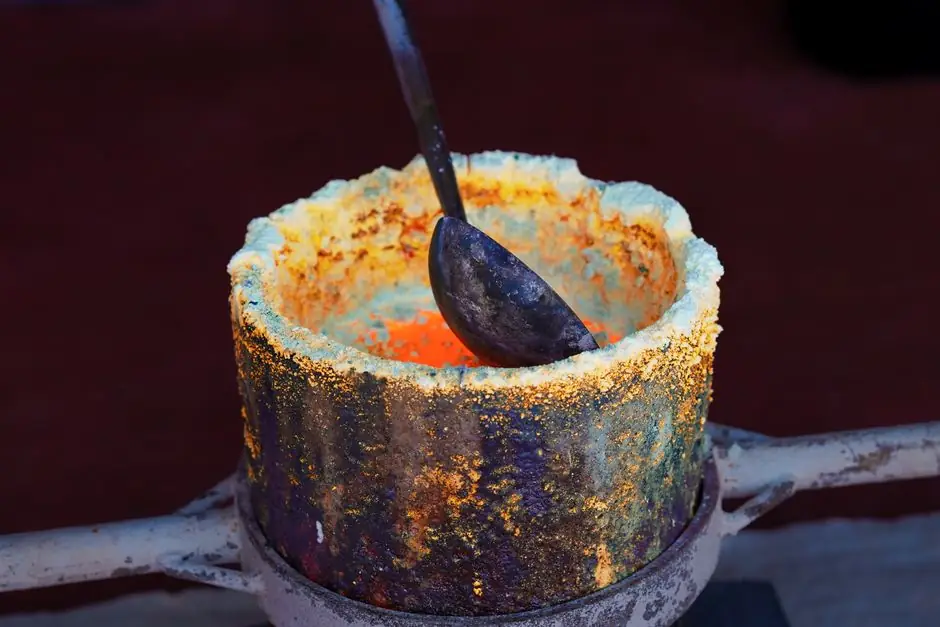
Gray, white, and ductile cast iron together cover the bulk of ferrous castings used in defense hardware, from mortar bodies to engine blocks and armor backings, because each family offers a different balance of compressive strength, damping, and cost [S5].
The same material that drives 4.5–7.5 lb cast-iron skillets on the consumer market, including 10.5" to 13.5" pans from Lancaster and a 10" Lodge at roughly $20, is also referenced in self-defense forums as a household impact tool and a casting substrate for military hardware [S1][S3][S4]. For engineers, the material's value in defense is set by its carbon form, graphite morphology, and the resulting mechanical behavior under shock, heat, and wear.
Cast Iron Families and Their Defense Relevance
Cast iron is a family of iron-carbon-silicon alloys with carbon typically above 2 wt%, and the form the carbon takes after solidification drives the mechanical profile of each grade [S6]. Gray iron forms flake graphite during slow cooling, which gives the alloy high compressive strength, good vibration damping, and a self-lubricating wear surface, but the flakes also act as crack initiators so tensile ductility stays low. White iron freezes carbon as iron carbide (Fe3C) and is extremely hard and abrasion-resistant, which is why it is the standard material for mortar bodies and for the working surfaces of crusher and grinding parts used in defense infrastructure. Ductile (nodular) iron is produced by adding magnesium or cerium to convert graphite into spheroids, raising tensile strength and impact resistance while keeping the castability advantage of the cast-iron family. Malleable iron, made by heat-treating white iron, sits between white and ductile in toughness.
Compressive strength matters more than tensile strength for many defense parts because the loading is rarely pure tension. Gray iron's compressive-to-tensile strength ratio commonly runs near 3.5:1 to 4:1, which is exactly why it is used in machine tool bases, diesel engine blocks, and armor backings where it absorbs recoil and dampens vibration [S6]. For the cast-iron skillet market, that same compressive strength and heat mass is what gives a 4.5 lb Lancaster No. 8 its even heat retention and makes it a viable impact object in a home-defense scenario [S1][S4]. Engineers selecting a grade should treat graphite morphology as the primary decision variable: flakes for damping, carbides for wear, spheroids for ductility.
Grade Selection Criteria for Defense Castings
Defense part selection starts with three questions: what is the dominant load, what is the operating environment, and what is the acceptable cost per kilogram of finished casting [S5]. For mortar bodies and high-impact wear parts, white or chilled iron is specified because the iron-carbide network resists deformation; for housings, gearboxes, and armor backers, gray iron is preferred because the flake graphite dampens vibration and the casting cost per kilogram is low; for components that need real tensile elongation and impact resistance, such as suspension knuckles and certain track components, ductile iron is the right call, with typical grades in the 60-40-18 to 100-70-03 family.
Hardness, tensile strength, and elongation data must be tracked per ASTM A48 (gray), ASTM A532 (white), and ASTM A536 (ductile), because vendors across the cast-iron supply chain grade their melt on these standards [S5]. Cooling rate, section thickness, and inoculation practice also matter, since a thin section cooled fast can shift a gray iron toward a white-iron rim, which then has to be annealed back if a softer, machinable surface is required. For defense procurement, the practical sequence is: define the failure mode (wear, shock, vibration, corrosion), match a family to it, then pin the ASTM grade and required minimum tensile strength on the drawing.
Material Comparison Across the Three Main Cast-Iron Families
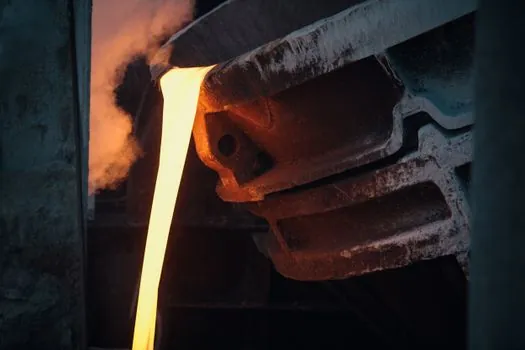
Gray, white, and ductile iron line up against four decision criteria in a way that mirrors how foundries actually quote defense work: [S1]
Cost per kilogram: gray iron is the cheapest, ductile iron carries a magnesium-treatment premium of roughly 10–25 percent over gray, and white or chilled iron falls in between depending on section size and alloy content [S5]. Hardness: white iron leads with Brinwell hardness typically above 450 HB, ductile iron covers 130–300 HB depending on grade, gray iron sits at 150–280 HB. Damping capacity: gray iron wins because flake graphite interfaces convert vibration into heat, which is why machine tool beds and engine blocks are still almost exclusively gray iron; ductile iron damps less, white iron damps least. Castability and machinability: gray iron is the easiest to cast in complex shapes and the easiest to machine; white iron is hard to machine and usually ground; ductile iron is castable but needs controlled magnesium treatment to avoid fading.
That matrix drives a simple rule of thumb: pick gray for housings, backers, and engine components; pick white for wear surfaces and explosive or projectile-adjacent parts where you can grind instead of machine; pick ductile where impact resistance is non-negotiable [S6]. For broader material selection work on armor and composites, Defense Glass Fiber Selection: Spec-Anchored Criteria, Threat Levels, and 2026 Material covers the laminate side of the same system.
Real Use Cases From Mortar Bodies to Engine Blocks
Cast iron is named as a go-to material for mortar bodies and for the cast parts of defense and military equipment where high compressive strength, damping, and low cost all matter at once [S5]. In diesel and heavy-fuel engines that power tactical vehicles and generator sets, the cylinder block, head, and gear housing are routinely cast in gray iron for the same reason: the alloy absorbs combustion shock and dampens noise, and the foundry yields per heat are high. White iron is used for the liners and wear rings in pump housings and for the crushing surfaces in equipment that processes defense-related mineral feedstock. Ductile iron appears in tow hooks, suspension arms, and track shoes where tensile impact loads would crack a gray iron part.
The cookware crossover is worth a sentence because it confirms the same mechanical logic at a smaller scale. A 10.5" Lancaster No. 8 at 4.5 lb, a 12" at 6 lb, and a 13.5" at 7.5 lb are all sand-cast gray iron, and the mass plus rigidity that lets a home user treat a skillet as a household impact tool is the same property set that lets gray iron damp a 5.9 L diesel block [S1][S4]. For procurement engineers, that consumer market also signals supply-chain depth: cast iron foundry capacity is large, qualified melt sources exist in most regions, and lead times for rough castings in standard grades are typically measured in weeks rather than months. See the broader material-economics picture in Industrial Rubber TCO: Cost Drivers, Service-Life Math, and 2026 Buyer Trade-offs, which uses the same total-cost-of-ownership lens on elastomers used in the same defense platforms.
Limitations, Failure Modes, and When Cast Iron Is the Wrong Choice
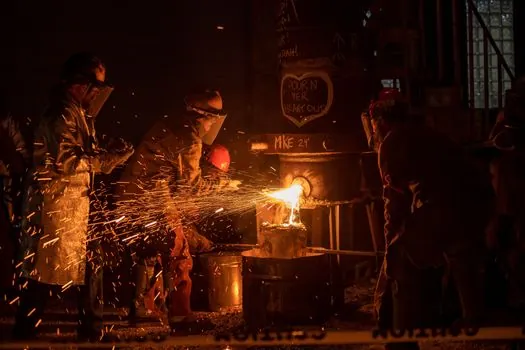
Cast iron's failure modes are well documented: gray and white iron are brittle in tension, with low elongation to fracture, and they can shatter under a sharp impact rather than deform; this is why armor on modern light vehicles has moved to rolled homogeneous steel or composites, while cast iron remains the backer and structural material, not the primary ballistic barrier [S5]. Corrosion resistance is also a limit, since unprotected cast iron rusts readily and many defense environments, including marine and tropical, demand paint, plating, or a coating system on top of the casting.
Weight is a third constraint. A 7.5 lb skillet feels manageable in a kitchen, but the same density at vehicle scale, roughly 7.2 g/cc for gray iron, means cast-iron structural parts are heavy compared with aluminum or magnesium alternatives, which is why modern armor and airframe decisions often trade cast iron for lighter alloys even when the casting cost is higher [S6]. Cast iron is also a poor conductor compared with copper or aluminum, so for thermal management where heat must move fast, designers step away from cast iron and toward the materials in Copper Material TCO: Cost Drivers, Lifecycle Savings, and Engineering Trade-offs. For polymer-based wear and sliding parts that replace some cast-iron components, POM Types and Classifications: Homopolymer vs Copolymer, Filled Grades, and Selection Map is a useful comparator.
Sourcing, Standards, and Trackable Next Steps
Defense-grade cast iron is specified against ASTM A48 for gray, ASTM A532 for white, and ASTM A536 for ductile, with hardness, tensile strength, and microstructure called out on the drawing rather than left to the foundry [S5]. NACE MR0175 is the reference for sour-service environments where H2S exposure is a concern, and any casting that sees a marine or refinery duty should be checked against that standard. For machinable finishes, foundries also quote against ISO 185 for gray iron grades, which lines up with the ASTM A48 class system.
Two trackable signals for the next procurement cycle: (1) confirm whether your supply base is quoting to ASTM A48 Class 30/40/50 for gray, A536 60-40-18 through 100-70-03 for ductile, and A532 Class II or III for white, and (2) require Brinwell hardness and microstructural graphite rating on the certification, not just tensile bars, because graphite flake size and distribution drive real-world damping and wear behavior more than a single tensile number does [S6]. Where the casting interfaces with sealing or gasketing systems, the installation geometry is covered in UHMWPE Installation Guide: Bolt Layout, Thermal Gaps, and Pipe Joining.
The underlying component specifications are covered under cast iron, pressure transmitter, and flow meter.