Lighting-fixture foundries pour predominantly aluminum alloys (A356, A380, ADC12) and zinc die-casting alloys for decorative housings, heat sinks, and mounting brackets, and they typically operate a casting ladle in the 50-500 kg nominal-capacity band rather than the 5-30 t vessels used in steel mills [S1][S3].
The application differs from structural casting: optical-grade surface finish, thin-wall sections down to 2-3 mm, and tight dimensional repeatability for lens seats and driver cavities drive the ladle choice more than raw thermal mass [S4].
Nominal capacity and pour-rate gates for decorative luminaire work
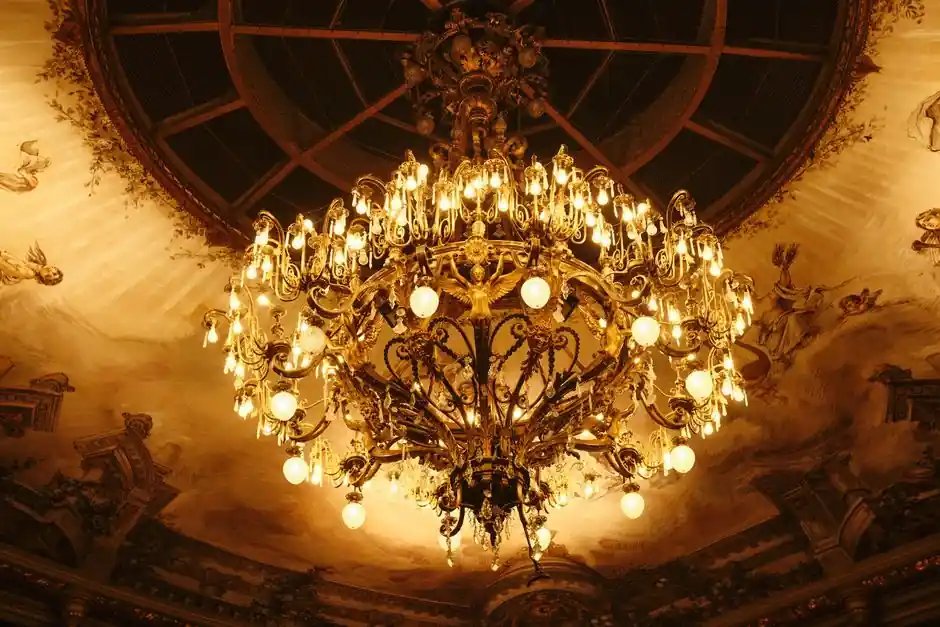
For decorative chandeliers, sconces, bollards, and highbay fixtures in the 0.3-8 kg finished part range, a 50-150 kg hand-pour or geared-tilting ladle delivers 1.5-3.0 kg/s controlled pour rates that match the filling profile of thin-wall sand or permanent-mold lines used by boutique lighting manufacturers [S1][S3].
For larger highbay and floodlight housings, road-lighting poles, and landscape fixtures where finished castings run 10-40 kg, the 200-500 kg geared-ladle class is the practical floor; capacities below 200 kg force multi-pour cycles that raise inclusion risk on optical surfaces, while capacities above 500 kg are rarely justified outside dedicated highbay-housing production [S4].
Refractory lining class: silica-alumina vs. magnesia-carbon vs. insulating castable
Magnesia-carbon linings, standard in ductile iron and steel ladles, are not appropriate for lighting-fixture work: MgO reacts with aluminum melt to form spinel inclusions and accelerates refractory wear at aluminum pouring temperatures, so they are excluded from this duty class [S3].
Lifting and tilting geometry: hand-ladle, geared-tilting, or crane-ladle
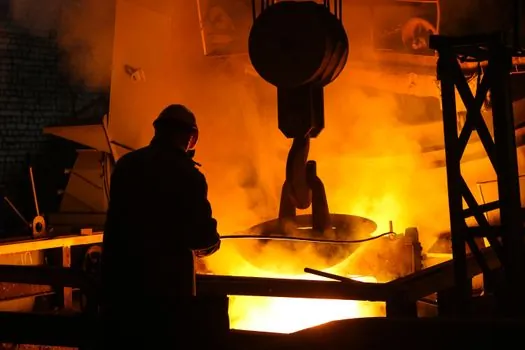
Hand-pour 50-150 kg ladles suit bench-scale permanent-mold lines where a single operator controls pour rate manually; the trade-off is pour-rate repeatability, which typically varies ±10-15% between operators and shows up as surface ripple on polished decorative rings and lens collars [S1].
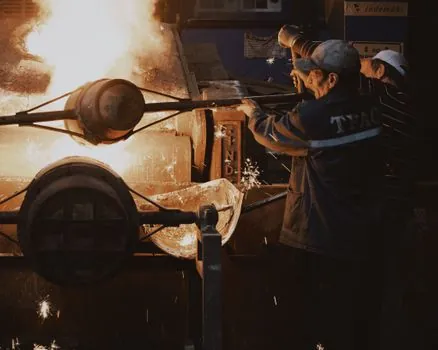
Geared-tilting 150-500 kg ladles add a handwheel or rack-and-pinion mechanism that holds pour rate to within ±5% across an 8-hour shift, which is the typical repeatability gate for casting mold lines running A380 thin-wall floodlight bodies where cosmetic surface is billable [S3][S4].
Crane-ladles above 500 kg are only justified for foundries running batch pours above 5 t/day, which is uncommon in lighting-fixture work outside the largest highbay-housing producers; over-specifying here adds dead weight, refractory mass, and preheat time without improving surface quality [S1].
Preheating and melt-handling discipline for optical-grade parts
Lighting-fixture foundries treat preheat as a non-negotiable gate: ladle linings are conditioned to 200-300 °C over 2-4 hours before first pour to drive off absorbed moisture, because steam-driven hydrogen pickup causes gas porosity that shows as pinholes on polished A356 lens housings and decorative covers [S3][S4].
Skim and dross handling differs from steel-mill practice: aluminum dross is skimmed with a slotted spoon at 680-720 °C, and transfer time from casting aux holding furnace to ladle is kept under 90 seconds to limit oxide-skin formation on the pour stream, which is the most common cosmetic-defect root cause in decorative castings [S1].
Reference data on emergency-lighting luminaire design notes that evacuation luminaires require instantaneous-ignition sources such as incandescent or fast-start fluorescent lamps, with Ni-Cd battery backup typically rated 90 minutes, and the cast housings for these units are usually A380 or ADC12 thin-wall parts where ladle pour-rate stability gates cosmetic acceptance [S7].
Supplier landscape and product families relevant to lighting-fixture duty
Industrial lighting catalogs at the OEM level bundle induction, LED corn, and highbay fixture families, with typical wattage classes running 100-480 V LED and induction highbays in the 80-400 W range for lighting equipment and electric lamps at the end-product level [S3].
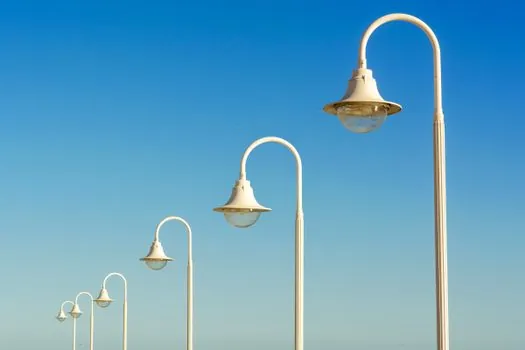
Stanley Electric's LEDSFOCUS and LEDSHIGHMAST outdoor lines ship floodlights up to 460 W (LLF0059A) and 340 W (LLF0011A) units, with housings specified for harsh-environment and high-vibration sites such as harbors, ports, and bay-front roads; these high-power luminaires often rely on cast aluminum heat-sink bodies that come from a die-casting or permanent-mold line fed by 200-500 kg ladles rather than hand-pour vessels [S4].
Whole-fixture suppliers in the U.S. wholesale channel include family-run distributors stocking landscape, ceiling, wall, and exterior categories for builders and designers, with most decorative-luminaire OEM castings still sourced from regional aluminum foundries operating 100-300 kg ladle fleets [S1][S2][S6].
Standards and traceability gates
ISO 9001 quality systems are the typical compliance floor for lighting-fixture OEM castings, with first-article inspection (FAI) reports tied to a specific ladle and shift so that surface-defect traceability runs back to the pour vessel and the operator on duty [S3][S4].
ASTM B26/B26M covers aluminum-alloy sand castings and ASTM B179 covers aluminum alloy die-casting feedstock, both of which intersect with ladle-pour melt-handling practice for decorative-luminaire parts; lighting OEMs increasingly demand material certificates that include the ladle or furnace ID used for the production heat, and this requirement is the most common audit finding raised during supplier qualification at major U.S. and Japanese lighting brands [S4].
Comparable specification discipline for hardware castings is laid out in the casting ladle spec gates for hardware manufacturing reference, which applies the same 50-500 kg capacity, refractory-class, and FAI-traceability framework across hardware, sanitary, and decorative-aluminum duty classes.
For heavier agricultural and ground-engagement castings, a wider capacity range and longer preheat cycles are typical, as detailed in the casting ladle selection gates for agriculture machinery reference, which runs 500 kg to 5 t for plow, tine, and gearbox-housing work; lighting-fixture duty sits well below that envelope because finished-part mass rarely exceeds 40 kg.
Selection checklist for a lighting-fixture foundry
Match nominal capacity to finished-part mass first: 50-150 kg for parts under 8 kg, 200-500 kg for parts in the 10-40 kg range, and 200 kg minimum for any cosmetic-grade A380 or A356 pour where surface ripple is billable [S1][S3].
Specify refractory class second: 60-70% Al2O3 silica-alumina or insulating castable for aluminum, 45-55% Al2O3 fireclay for zinc, and exclude magnesia-carbon entirely for non-ferrous decorative work [S3][S4].
Verify lifting geometry third: hand-ladle for 50-150 kg bench work, geared-tilting for 150-500 kg production, and crane-ladle only above 500 kg with daily pour volume above 5 t [S1][S4].
Lock preheat and skim discipline fourth: 200-300 °C lining preheat for 2-4 hours, dross skim at 680-720 °C, and transfer time under 90 seconds from holding furnace to ladle to keep oxide-skin defects off polished decorative surfaces [S3][S4][S7].
For complementary duty-class guidance on smaller-batch hand-pour tooling, the rebar bender selection for interior finishing reference illustrates how the same capacity, power, and cycle-time discipline applies to bench-scale shop equipment adjacent to the foundry line.
Trackable signal: ASTM B26/B26M revision activity, plus any tightening of FAI traceability language from major U.S. or Japanese lighting OEMs that would force a re-spec of the 60-70% Al2O3 refractory class currently standard for A380 thin-wall decorative pours. Watch the September 2026 NEMA Lighting Systems Committee meeting notes for any cross-reference to casting-supplier qualification language in the next revision cycle.