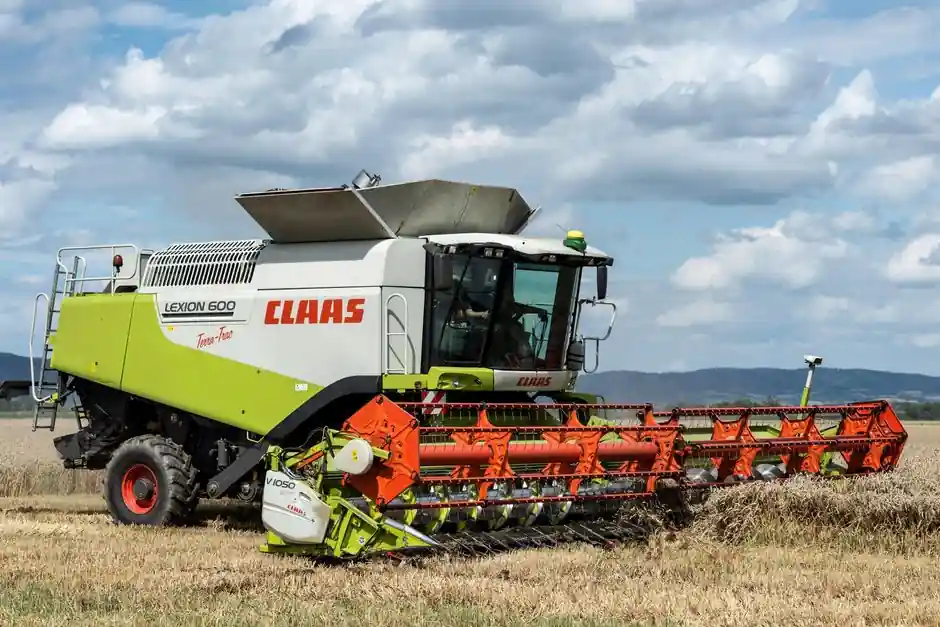
Chinese foundries supplying agriculture machinery castings listed a 2017 baseline price band of US$0.60–200.00 per piece, MOQ 100 pieces, and 10,000 t/yr output, paid via L/C, T/T, or Western Union, with wooden pallet, wooden case, plywood, and waterproof packaging [S2].
JW Machinery (Ningbo Jiwei Melt Mould Casting Co., Ltd), established 1999, runs an 18,000 t/yr low-alloy and high wear-resistant foundry with 120+ employees shipping to 40+ countries, and dedicates an Agricultural Machinery Parts line within its catalog covering railway, construction, and auto castings [S1].
What counts as a casting ladle in the agriculture machinery context
A casting ladle in this segment is not the workshop transfer ladle used at the melt shop; it is the finished cast steel or iron component that handles molten or hot material downstream, such as ladle bodies, lip rings, trunnion brackets, and pouring spouts that feed sand moulds for plough shares, harvester sprockets, and trailer wheel hubs [S1][S2].
The agriculture machinery family adds a few hard constraints not seen in die casting cells: heavy section thickness (often 20–80 mm), direct abrasive contact with soil and crop residue, and exposure to manure, urea, and water during storage, so the wear-resistant low-alloy grade families that JW casts are the default, not the exception [S1].
Investment casting (lost wax) is a separate route from sand casting and is commonly used where the agriculture part needs tighter tolerances and a smoother surface, with custom tolerance OEM/ODM runs routed through dedicated investment casting suppliers on Made-in-China [S3].
Selection criteria: geometry, alloy, batch, tolerance
Four gates decide the ladle route for an agriculture part: (1) part outline and section transitions, (2) alloy family, (3) annual batch volume, and (4) the as-cast tolerance the casting tooling can hold [S1][S3].
JW's agricultural line specifies low-alloy and high wear-resistant steel and iron grades, paired with shell moulding, precoated sand, automatic wax injection for investment-cast inserts, box-type and vertical pit furnaces for heat treatment, and shot blasting for surface prep, which sets the rough machining allowance typically expected on harvester and trailer castings [S1].
For sprocket, wheel, and chain parts, the supplier's MOQ of 100 pieces and 10,000 t/yr capacity put sand and investment casting comfortably in the same procurement envelope; the deciding factor is tolerance, not volume [S2][S3].
Sand cast steel vs investment cast iron vs die cast aluminum
The three viable families for agriculture ladle-type components compare as follows on the four selection criteria above. Sand cast low-alloy steel suits large, thick, abrasive-wear parts; investment cast iron or steel suits small, intricate, tight-tolerance inserts; die cast aluminum suits thin-wall, high-volume brackets where weight and corrosion matter more than wear life [S1][S2][S3].
On tolerance, investment casting is tighter than sand casting, while die casting of aluminum parts holds the tightest of the three but caps section thickness; on wear life, low-alloy sand cast steel leads; on unit cost at MOQ 100, sand cast steel is the lowest, investment cast is mid, and die cast aluminum climbs as section size grows [S1][S2][S3].
If a buyer crosses the boundary into die casting for thin-wall aluminium brackets, the die-casting die cost and lead time overtake the per-piece savings below roughly 5,000 pieces per year, so most agriculture sprocket and chain parts stay in the steel sand or investment family [S2][S3].
Standards, specifications, and what to write on the RFQ
A clean RFQ for an agriculture ladle-style casting should list material grade (e.g. low-alloy high wear-resistant cast steel, or equivalent), heat treatment condition (as-cast, normalized, quenched and tempered), critical surface roughness, key dimensional tolerances, and required annual quantity with packaging (wooden pallet, wooden case, plywood, waterproof) and payment terms (L/C, T/T, Western Union) [S2].
JW's process chain covers precoated sand moulding, automatic wax injection for investment-cast inserts, and pit or box-type furnace heat treatment followed by shot blasting and horizontal machining, so the RFQ can also fix the surface prep state and the post-casting machining allowance to avoid re-quoting [S1].
For shared support equipment that touches the ladle path, buyers often pull a casting mold and casting auxiliary spec from the same supplier to keep the line of responsibility single-source, which mirrors how JW bundles mould, pour, heat-treat, and machining in one factory [S1].
Who this is for, and who should look elsewhere
This procurement path fits OEM and Tier-1 buyers of harvester, tractor, plough, and trailer parts who need 100 to 10,000 t/yr of low-alloy wear-resistant castings, can accept the standard wooden pallet and case packaging, and are happy to pay via L/C, T/T, or Western Union on cross-border terms [S1][S2].
Buyers who need single-piece or low-volume prototype runs under 100 pieces, or who need aerospace-grade traceability, should not use this route; the aerospace casting ladle selection gates map covers higher qualification, lining, and alloy requirements that do not apply to soil-engaging farm parts [S1].
Buyers shopping for non-cast adjacent categories should also not route through this guide; rebar bender selection for steel construction and steel plate grades for industrial facilities are separate spec maps with their own gates.
Common failure modes and how to spec against them
Three failure modes dominate field returns on agriculture castings: abrasive wear at the soil-engaging edge, brittle fracture from cold-work or impact, and corrosion pitting from urea, manure, and stored moisture. Specifying a low-alloy high wear-resistant grade, a normalized or quenched-and-tempered heat treatment, and a shot-blasted or machined surface directly counters all three [S1].
Geometry-level mitigations include generous fillet radii at section changes to avoid hot-tear initiation, uniform section thickness to limit shrinkage porosity, and machining datums that keep the wear surface in the cast skin rather than exposing sub-surface porosity [S1].
Packaging and logistics also drive warranty cost: wooden pallet, wooden case, plywood, and waterproof packaging per the supplier's standard pack is the minimum to keep sea-freight corrosion off the casting surface on multi-week routes to the EU, North America, and South America [S2].
Trackable signals and next nodes
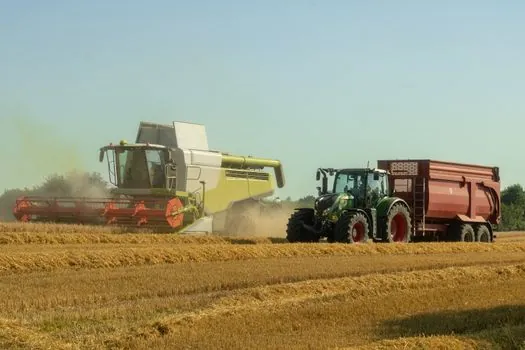
Watch for: any 2026-Q3 update from JW's news line on new agricultural machinery part launches (the news feed on the supplier site carries Aug 05, 2026 entries), and any new MOQ or price-band revision on the Made-in-China listing for harvester and trailer cast steel wheel and chain sprocket parts [S1][S2].
Cross-check the next round of RFQs against the four gates above (geometry, alloy, batch, tolerance) and confirm heat treatment condition, packaging, and payment terms in writing before release.