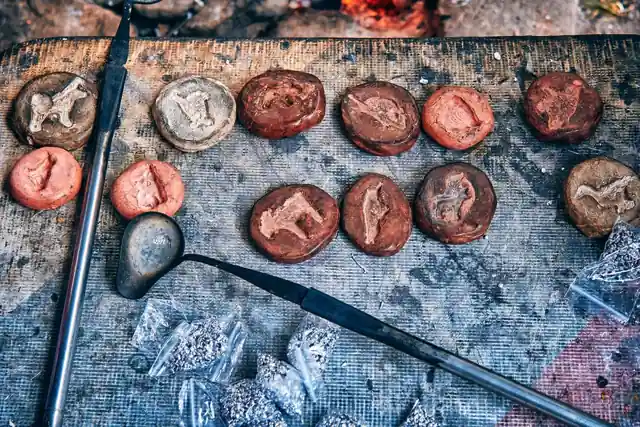
Choosing a casting ladle for pump and valve production is not a single-product decision; it is a system decision linking furnace pour rate, alloy chemistry, and the downstream casting mold feed. As of 2026-08, Chinese suppliers operating in the pump and valve foundry segment run capacities from single-piece prototyping to 8,000 tons of casting per year [S5].
The selection gates that drive a ladle spec are: alloy family (carbon steel, duplex, Hastelloy, Inconel, titanium, zirconium), pour weight per heat, holding temperature window, and the valve or pump class (chemical process, slurry, API petrochemical). Three independent supplier profiles published between 2026-07 and 2026-08 map directly onto these gates and form the comparison baseline for this article [S2][S4][S5].
Three supplier profiles define the capacity spectrum
Zhejiang Shidai Casting Co., Ltd. reports an annual 8,000-ton casting capacity and 3,000-ton machining capacity on a 44,800 m² site, with 50% of sales exported to Europe, America, and Japan; certifications listed on its site include ISO 9001, DNV, BV, LR, AD2000, and PED-TUV-CE (PED-2019) [S5]. Hichine Industrial (Beijing) Co., Ltd., established 1998, consolidates 14 ISO-certified pump factories and lists process technology licensed from Ebara, Dresser, KSB, Sulzer, Byron Jackson, and Warman, with main markets in North America, South America, and Eastern Europe [S4].
Xi'an Pump & Valve Plant Co., Ltd. positions itself as a special-material manufacturer, with published product lines in titanium, zirconium, nickel, Hastelloy, Inconel, duplex steel, and No. 20 alloy, alongside valves, pumps, and a separate casting product line [S2]. The smallest tier, represented by pump-valve part listings on B2B catalogs, runs MOQ of 1 piece with FOB price ranges quoted around US$32.00-39.00 per piece for mixed machining and die-casting parts [S1].
Process routes determine ladle size and metallurgy
Three casting routes dominate pump and valve production: investment casting (lost-wax), sand casting, and centrifugal casting, all three of which Zhejiang Shidai lists as in-house capabilities [S5]. Investment casting is the default for valve internals, pump impellers, and small chemical-process parts with tight dimensional tolerance; sand casting handles larger pump casings and valve bodies; centrifugal casting is reserved for cylindrical bores, sleeves, and pipe-type components.
Lost-wax investment casting for pump and valve parts is offered by Dalian Hayashi Lost-wax Industries, a Japan-owned operation, which serves as a benchmark for surface finish and dimensional accuracy in this segment [S3]. Each process route imposes a different pour-rate demand on the casting auxiliary equipment feeding the mold, and therefore a different ladle sizing logic. Investment casting typically needs small ladle payloads (10-100 kg) with precise temperature trim; sand casting pulls larger payloads (200 kg to multi-ton) and tolerates wider thermal bands; centrifugal casting feeds a rotating mold, so the ladle must meter flow against a moving target.
Special-alloy pump and valve production raises the ladle specification
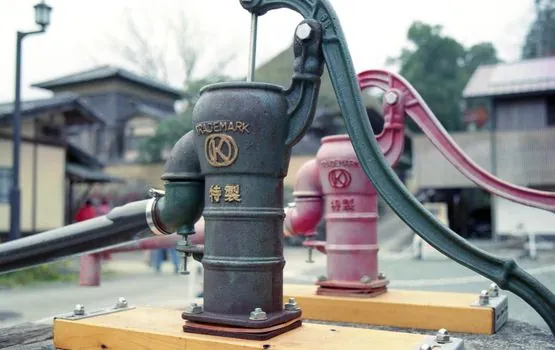
Xi'an Pump & Valve Plant's published specialty alloys are titanium, zirconium, nickel, Hastelloy, Inconel, duplex steel, and No. 20 alloy [S2]. Titanium and zirconium react aggressively with oxygen and nitrogen above 400 °C and require inert-atmosphere or vacuum ladle transfer; Hastelloy and Inconel grades (Ni-Cr-Mo family) need holding temperatures above 1,300 °C and tight chemistry trim, which forces ladle refractory selection toward high-alumina or magnesia linings.
Duplex stainless steels (commonly 22% Cr / 5% Ni / 3% Mo variants) and No. 20 alloy (a high-nickel austenitic grade for sulfuric acid service) are sensitive to sigma-phase formation if held in the 600-900 °C range, so ladle transfer time and pre-pour holding must be short. For the EU-bound chemical and petrochemical pump market, AD2000 and PED-TUV-CE pressure-equipment directives govern the casting itself, not the ladle, but the ladle's cleanliness (slag-free pour, controlled nitrogen pickup) directly determines whether the casting passes the downstream casting tooling and weld-repair requirements [S5].
Comparison: casting route vs. ladle payload vs. typical pump/valve part
The four decision criteria that line up the options are: ladle payload (kg/heat), alloy flexibility, surface finish achievable, and unit-cost band. Investment casting with small ladles (10-100 kg) suits valve internals, small impellers, and lost-wax pump parts; surface finish is best (Ra 1.6-3.2 µm typical for this route) and alloy flexibility is highest, but tooling cost per part is high [S3].
Sand casting with medium-to-large ladles (200 kg to multi-ton) suits pump casings, valve bodies, and duplex/Hastelloy chemical-process parts; alloy flexibility is broad, surface finish is rougher, and unit cost drops sharply at volumes above a few hundred pieces [S5]. Centrifugal casting with controlled-feed ladles suits cylindrical sleeves, pipe segments, and wear-resistant bores; alloy flexibility is narrower (mainly carbon, low-alloy, and high-chrome irons), but mechanical properties along the bore are superior because the centrifugal action drives inclusions outward. Die-casting routes, where they appear, target non-ferrous pump/valve parts at high volume and use a completely different machine (cold-chamber or hot-chamber), not a ladle in the foundry sense.
Where each option is the right fit, and where it fails
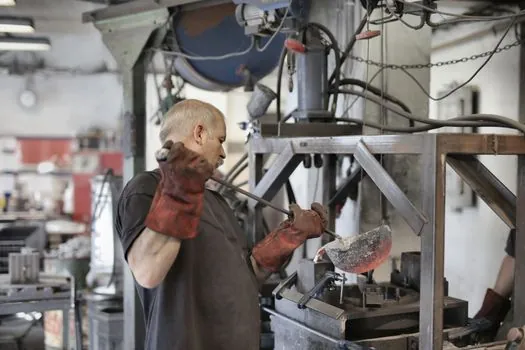
For prototyping or small-batch pump/valve parts (1-50 pieces), B2B MOQ-1 listings support sample runs at US$32.00-39.00 per piece, but the unit price collapses when the same part moves to a foundry running 8,000 t/year capacity [S1][S5]. For chemical-process pump and valve production in special alloys (Hastelloy, Inconel, titanium, zirconium), the supplier must show not just an ISO 9001 certificate but a metallurgical process route, and Xi'an Pump & Valve Plant's published material lines and the larger trading-company consolidation model at Hichine are the two main routes Chinese buyers actually use [S2][S4].
The most common failure mode is mismatched ladle capacity and pour rate: a 1-ton ladle emptying in 90 seconds into a small investment-casting tree causes splashing and inclusions, while a 50-kg ladle feeding a 3-ton sand mold creates cold-shut defects from multiple-pour layering. For foundries running export-grade valve castings to Europe, AD2000 and PED-TUV-CE pressure-equipment certifications are the gate, and PED-2019 is the current revision referenced by Zhejiang Shidai [S5]. Hichine's group model sidesteps the metallurgy question by routing each alloy to a specialized member factory, an option only available to buyers ordering at container-load scale [S4].
Sourcing signals and selection logic for 2026 procurement
Procurement teams in 2026 should match the casting process to the part first, then size the casting ladle to the pour-rate demand of that process, and only then filter suppliers by alloy certification, capacity, and export credentials. Zhejiang Shidai's published export share (50% to Europe, America, Japan) and its full certification stack (ISO 9001, DNV, BV, LR, AD2000, PED-TUV-CE) make it a benchmark for EU-bound valve and pump castings [S5].
Buyers sourcing 2026 induction-furnace upgrades to feed these ladles can cross-reference the induction furnace selection map for matching power and frequency gates. For new foundry cells using a lighting equipment and electric lamp inspection station for visual defect sorting, plan floor space against the ladle transfer radius, not the mold footprint alone. A trackable signal for the next 6 months is whether Chinese foundries publicize PED-2025 or updated AD2000 revision numbers on their sites, and whether Xi'an Pump & Valve Plant expands its published material line beyond the current seven alloy families [S2][S5].