For high-mix automotive foundries pouring iron, aluminum, and nickel-based alloys, the casting ladle is the bottleneck between melt furnace and casting mold; selection turns on ladle capacity (typically 250–5,000 kg), refractory class, and pour rate compatibility with the part being run [S1][S3].
Investment casters serving turbocharger and exhaust manifolds run nickel-based alloy pours in the 1,400–1,550 °C window, and the same Wuxi Huaerte product line shows turbocharger turbine wheels quoted FOB US $5.5–6.0/piece at 100-piece MOQ, which signals the volume band where lined ladle ROI is justified [S1]. The same supply chain offers heat-resisting steel nozzle ring components in 5,000-piece MOQ at US $0.39–0.42/piece, and silica-sol lost-wax casting at US $8.3–9.2/kg at 500-piece MOQ, so the ladle you spec must hold temperature across both small-lot precision and larger series pours [S1].
Ladle Class and Capacity Gates for Automotive Volumes
Teapot-spout and bottom-pour ladles dominate ferrous automotive lines; transfer ladles rated 1–3 tonnes per drop match the typical 60–120 second pour window for engine block and brake-rotor cells [S3]. Wuxi Huaerte's turbine-wheel series (T04E, TB34, TR1400, GT, D378-1) is priced at the 100-piece MOQ tier with FOB US $5.5–6.0 per piece, which is consistent with a job-shop pattern that pairs smaller transfer ladles with batch-style investment casting, not continuous conveyor pouring [S1].
For ductile iron knuckle and control arm pours, 1.0–2.5 t bottom-pour ladles lined with high-alumina or MgO-C refractory deliver a 1,350–1,420 °C working range, and the metal casting energy study on automotive material selection confirms that refractory choice directly shifts the energy-per-tonne figure in the casting yield calculation [S4]. The general casting tooling encyclopedia entry on casting tooling covers the parallel constraint of ladle preheat and tundish dry-out cycles that gate daily throughput.
Lining Material and Pour Temperature Compatibility
High-alumina (60–80 % Al2O3) linings are standard for gray and ductile iron automotive ladles; MgO-C brick is preferred for high-Mn and stainless pours where FeO attack is the failure mode [S3]. For aluminum automotive parts (cylinder heads, transmission housings, EV battery trays) the same plant will run a separate transfer ladle with monolithic alumina-silica lining rated 700–780 °C, and cross-contamination of the iron ladle with Al melt is a hard stop that requires a dedicated ladle per alloy family [S1][S4].
Nickel-based turbocharger pours in the Wuxi Huaerte range (D378-1, T04B-2, AP697) are quoted with the same FOB US $5.5–6.0/piece band, which implies a single alloy family being run through a matched refractory campaign and a ladle that has been preheated to roughly 1,200 °C to avoid thermal-shock spalling on first contact [S1]. The general die-casting die reference and the casting aux page cover the auxiliary heating and tundish hardware that sit between ladle and mold.
Selection Criteria: Ladle Type vs Automotive Part Family
Compare the three main ladle types against the parts they fit: hand shank / crucible ladle (50–200 kg) suits low-volume precision investment casting such as the silica-sol lost-wax nozzle rings quoted at US $0.39–0.42/piece; gear-tilted teapot ladle (500–3,000 kg) fits batch gray iron brake rotor and drum pours; bottom-pour ladle (1,000–5,000 kg) is the standard for ductile iron knuckle, control arm, and crankshaft pours where slag-free delivery at controlled flow rate matters [S1][S3].
Selection checklist for an automotive buyer or process engineer: (1) alloy family, which dictates lining and preheat; (2) part weight, which sets ladle capacity at 1.2–1.5× the heaviest single pour; (3) pour rate target in kg/s, which rules out hand shank for any cell running above roughly 8 kg/s; (4) refractory wear life, typically 60–200 heats for high-alumina and 30–80 heats for MgO-C; (5) the die-casting cell interface, since die-cast aluminum lines use a different ladle train than the iron line [S4]. The casting ladle entry in our casting ladle reference lays out the same criteria against standardized capacity bands.
Who This Is For (and Who It Is Not)
This selection logic targets automotive job shops and Tier-1 foundries running mixed iron, aluminum, and nickel-based alloy campaigns in the 100–5,000-piece MOQ band that Wuxi Huaerte and similar Wuxi/Chengdu/Suzhou suppliers quote [S1]. It is not the right reference for high-pressure die casting cells (see die-casting), where the shot sleeve and plunger replace the ladle in the pour path.
For OEM surplus and aftermarket distribution channels, e.g. Northside Auto Parts' body shop line, Daurio Auto Truck's OEM surplus and re-manufactured engines/transmissions, and bsautosupplies.com's VIN-based part search, the ladle decision sits one or two tiers upstream, and the right point of contact is the foundry's process engineering team, not the aftermarket catalog [S2][S5][S6].
Real Use Cases and Standards Crosswalk
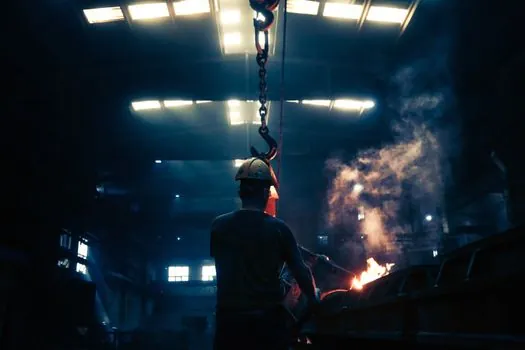
A typical Wuxi-region investment casting cell for automotive turbochargers runs a 200–500 kg hand-shank crucible ladle feeding multiple wax-pattern trees, then transfers the spool to a vacuum investment casting station, with each turbine wheel priced at FOB US $5.5–6.0/piece at the 100-piece MOQ [S1]. A larger ductile iron automotive line (knuckles, hubs, caliper brackets) runs a 1.5–2.5 t bottom-pour ladle into a green-sand or horizontally-parted casting mold line, with the ladle preheated to 1,200 °C and MgO-C refractory rated for roughly 50–80 heats before re-lining [S3][S4].
For buyers cross-referencing material selection, the Springer study on metal casting energy-efficient metrics for automotive parts is the cleanest public data set on how ladle yield loss and refractory preheat energy feed into the per-tonne CO2 figure quoted in OEM sustainability reports [S4]. Buyers specifying the casting aux side (tundish heating, stopper rods, slide gates) should fold those into the same RFQ as the ladle, since vendors bundle them differently.
Common Failure Modes and Sourcing Signals
Three ladle failure modes show up most often on automotive lines: (a) thermal-shock spalling from cold-ladle first contact, fix is staged preheat to 1,100–1,200 °C; (b) slag carryover into the mold, fix is bottom-pour geometry plus a well-maintained skimmer; (c) refractory wear at the slag line causing FeO penetration into the iron ladle, fix is planned re-lining at 60–200 heats depending on the lining class [S3][S4].
Trackable sourcing signals for the next 6 months: stainless investment casting 304/316/316L supplier counts in the Suzhou/Jiangsu cluster, which is the same geographic band as Wuxi Huaerte and ECODCN, where the precision casting service listings show ISO-certified stainless and aluminum die casting under one roof [S1]. For buyers in the construction-steel upstream (rebar, plate) segment, the same factory-footprint logic that drives Steel plate selection for residential construction also drives the 1,000+ ton/year foundry footprint that justifies a 3–5 t ladle investment; for rail-adjacent spec work, the engineering plastic selection for rail article parallels how a foundry buyer should pre-filter ladle linings by alloy family before RFQ.