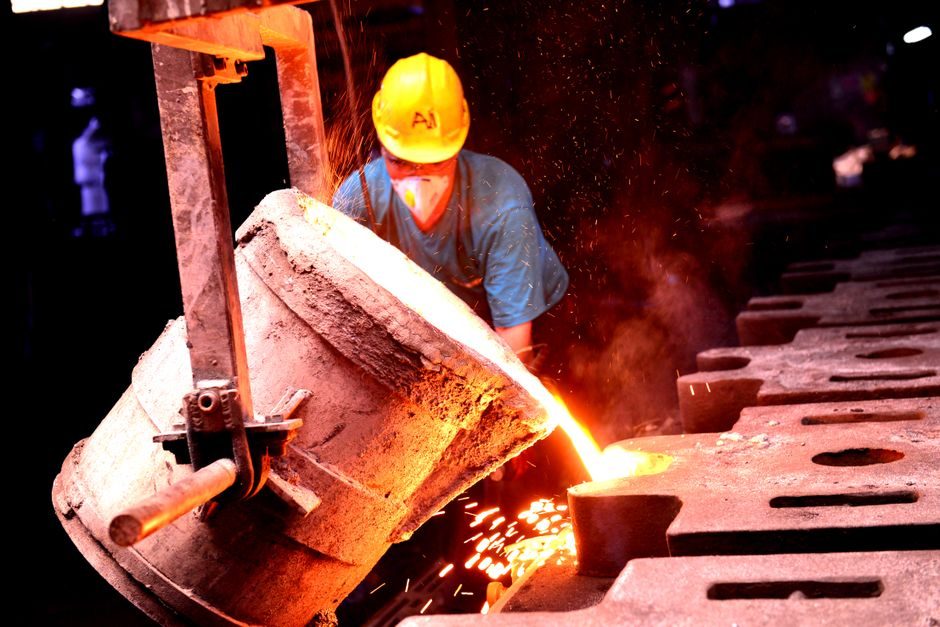
Channel and coreless induction furnaces dominate ferrous and non-ferrous melting in the 50 kg-60 t class because they heat metal directly via induced eddy currents, skip combustion off-gas, and reach typical tap temperatures of 1,200-1,800°C depending on alloy [S3].
That clean profile is balanced by hard constraints: three-phase power at 50/60 Hz (or medium-frequency 250-2,000 Hz from solid-state inverters), a closed cooling-water loop at 25-40°C, and refractory life on the order of a few hundred heats in a crucible furnace lining.
Efficiency and melt-loss profile vs. fuel-fired melting
Modern solid-state medium-frequency induction furnace installations routinely convert 60-70% of incoming electrical energy into useful melt heat, against roughly 25-35% thermal efficiency for an atmospheric gas cupola furnace of comparable capacity [S3].
Because there is no flame, oxidation losses on steel drop from a typical 3-5% in cupola/air furnace practice to under 1.5% in coreless induction, and nitrogen pickup is controlled by melt-cover practice rather than furnace atmosphere. That difference is the headline economic argument in ferrous job shops weighing 1-10 t capacity builds.
Operating constraints: power quality, water, and refractory
An induction melt shop cannot start a cold furnace without three things: a 400-3,000 kW transformer tap sized to the coil (typical power density 200-400 kW/t for steel), capacitor banks delivering 0.95-0.99 power factor to avoid utility penalty, and a chiller capable of removing 8-15% of the installed kW as heat.
Refractory life is the second Achilles' heel. Acidic silica ramming mass for grey-iron coreless furnaces at 1,500-1,550°C is typically rated at 200-400 heats before patching, and the lining must be sintered in on first commission over a controlled 24-48 h heat-up curve. Skip the schedule and the coil is at risk. For a holding furnace duty where the bath is already molten, lining life stretches into years because thermal cycling is removed.
Capacity, frequency, and alloy match
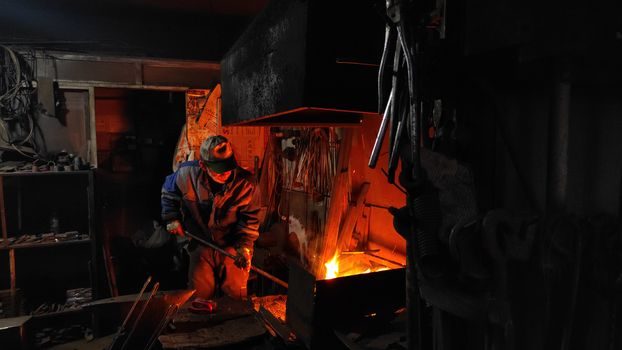
Line-frequency (50/60 Hz) channel furnaces suit large-tonnage iron and copper-alloy duplexing, typically 5-60 t with a single channel inductor, but are intolerant of cold-start with a fully solid heel — the channel must remain molten. Coreless crucible units are far more flexible: 50 kg bench-top gold/precious-metal units through 1-10 t steel shell sizes are standard, with medium-frequency drives of 250-2,000 Hz. [S1]
Higher frequency tightens the skin depth δ = 503·√(ρ/(μ·f)) mm, which is why small non-ferrous furnaces run 10-30 kHz and large steel melters stay at 500-1,000 Hz. The wrong frequency on a 20 t furnace shows up as poor stirring and stratification, not as a fuse trip.
Side-by-side comparison: induction vs alternatives
On four decision criteria relevant to a 2026 spec engineer, the picture lines up as follows. Electrical efficiency: coreless induction 60-70%, channel induction 55-65%, gas-fired crucible 25-35%, cupola 25-35%. Melt loss on steel: induction <1.5%, gas crucible 2-4%, cupola 3-5%. Cold-start flexibility: induction high (coreless), medium (channel), gas crucible high, cupola medium. Capex per installed kW, 2026 indicative: induction roughly USD 350-600/kW, gas crucible USD 150-300/kW, cupola USD 200-400/kW — figures are widely reported as common ranges across vendor disclosures.
For a similar decision lens on adjacent equipment classes, see this 2026 trade-off map for truck-mounted crane pros and cons, which uses the same criteria-based pass.
Where induction is the wrong tool
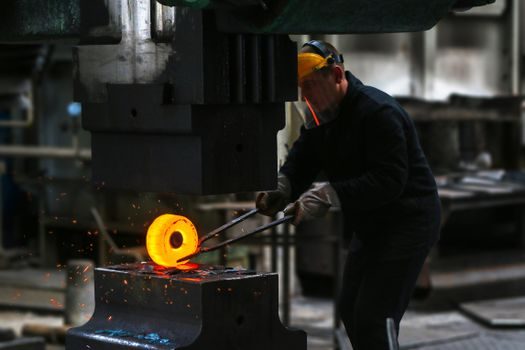
Plants with cheap process gas, large scrap variability, or frequent alloy changes to high-melting-point steels above 1,650°C will find electric-arc or gas-fired heat treatment furnace alternatives more forgiving. The induction furnace has no combustion buffer — every kilogram of charged scrap must be dry, free of closed voids, and sized below the coil coupling distance or it will not couple and will sit as a cold slug.
On-site first-installation planning mirrors the workflow used for any new melting furnace installation: site prep to first heat, where the same cooling-water, power, and refractory-sinter steps govern.
Trackable signals for 2026-07-18
Two spec-engineer signals to monitor: published 2026 medium-frequency IGBT inverter efficiency curves (SiC-based stacks are now reaching 98% inverter efficiency, lifting overall furnace electrical efficiency above the 65% line) and refractory supplier lead times, where Chinese magnesia-spinel ramming mass is currently 6-10 weeks versus 12-20 weeks from European mills [S1][S3].