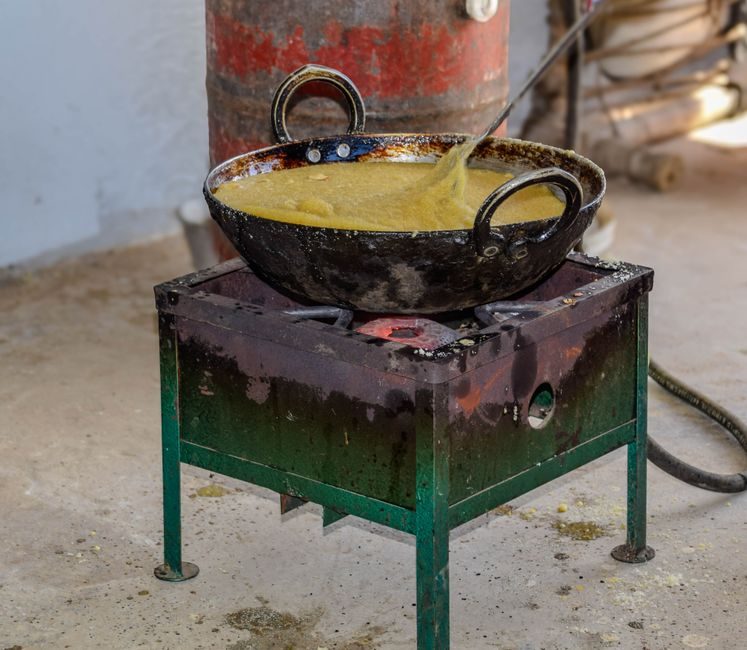
A degassing unit is built to strip dissolved hydrogen and float oxide inclusions out of molten aluminum, typically pulling melt down to ~0.10 ml H2/100 g Al versus 0.20–0.30 ml/100 g for untreated charges, while a casting ladle is built to hold, transfer and pour molten metal — and in steel mills, to host vacuum refining cycles inside a refractory-lined steel shell.
The two equipment classes overlap only at the melt-handoff interface: a ladle receives degassed metal from a degassing unit and delivers it to the mold, but the process physics, materials of construction and operating envelopes are different. This frame maps the 2026 selection cut for process engineers who must decide whether to specify, retrofit or skip either unit on a given melt stream.
Process Physics: Hydrogen Stripping vs Refractory-Bound Metal Handling
Aluminum melt picks up hydrogen from atmosphere and furnace charge moisture; at 720 °C, solubility drops sharply during solidification, forcing the gas out as porosity. A rotary degassing unit injects argon or nitrogen through a silicon-nitride rotor at 350–500 rpm, dispersing the gas into fine bubbles that scavenge H2 and float Al2O3 films to the dross layer [S1][S4].
A casting ladle is a passive refractory vessel — a steel shell lined with high-alumina ramming body, magnesia-carbon brick or dolomite — sized for ladle-to-mold or ladle-to-tundish transfer. In steelmaking, the same shell becomes a vacuum-refining chamber: the Cherepovetsk Steel Mill pattern uses MK-90 corundum ramming body produced by Kazogneupor to line ladle cavities used for vacuum treatment, where slag resistance and thermal-shock stability are the binding constraints [S3]. Ladle physics is about thermal loss (typically 1.5–2.5 °C/min for a 30-ton steel ladle in transit), not about driving chemistry to equilibrium.
Equipment Architecture: Rotor + Graphite vs Steel Shell + Refractory Stack
The core hardware of a degassing unit is a graphite or Si3N4 rotor-shaft assembly driven by an overhead motor, a heater-capable treatment box sized 1–10 tons, and a flux-injection manifold. Si3N4 degassing rotors from Shenzhen-tier Chinese suppliers are listed at US$288/piece MOQ with 5000-piece/week capacity, reflecting commodity supply for the global aluminum casthouse market [S4]. A casting ladle is the opposite architecture: a welded or cast steel shell, a working lining of 150–250 mm high-alumina or MgO-C brick, a slide-gate or stopper-rod nozzle, and — for steel — a vacuum lid with sealing rings and oxygen lance connections [S3].
The 2026 sourcing reality is that both units are mature, off-the-shelf equipment with deep Chinese and Eastern-European supply. Aluminum degassing cells are typically procured as a packaged FDU with the rotor, heater, gas panel and PLC, while steel ladles are engineered-to-order against furnace tapping weight, ladle-to-tundish height and refractory campaign life targets. The capital ratio is roughly an order of magnitude apart: a 5-ton aluminum FDU lines up near US$150–300k installed, while a 100-ton steel ladle with vacuum lid clears US$1.5M before refractory.
Selection Criteria: Alloy, Hydrogen Spec and Temperature Window
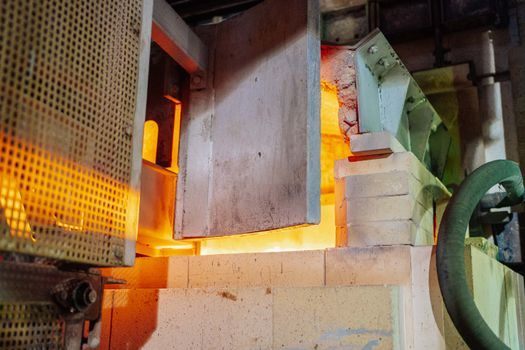
Aluminum alloys are the unambiguous use case for a degassing unit. In Al8Si3Cu, researchers compared six melt-treatment conditions using a T-shaped mold and found that degassing plus grain refinement cut hot-tearing susceptibility by an order of magnitude relative to untreated baseline, with the lowest cracking index tied to combined flux-degassing and Al-5Ti-1B refinement [S2]. Steel — particularly electric-furnace or ladle-metallurgy routes — is the unambiguous use case for a vacuum-capable casting ladle lined with high-alumina or MgO-C refractory [S3].
For copper, zinc and magnesium foundries the rule flips again: most non-ferrous melts are handled with a transfer ladle plus a small inline flux box, not a rotary degasser, because hydrogen solubility in those metals is lower and the inclusion load is dominated by oxides that are handled at the furnace rather than at the casting station. A comparison frame:
- degassing unit — for: Al-Si, Al-Cu, Al-Mg foundry alloys needing ≤0.15 ml H2/100 g; not for: steel, copper, large-tonnage iron. - casting ladle — for: steel EAF/IF transfer and vacuum refining, iron foundries with high-tonnage pouring, non-ferrous transfer; not for: aluminum that still requires inline H2 removal. - Process function: degassing changes chemistry (H2, inclusions), ladle preserves thermal and chemical state. - Capex tier: degassing cell US$150–300k for 5-ton; ladle US$0.5–1.5M for 30–100-ton steel.
Operating Limits: Temperature, Atmosphere and Campaign Life
Rotary degassing is run between 680 °C and 760 °C for aluminum, with argon flow in the 15–30 l/min range per rotor and treatment times of 8–20 minutes; exceeding 800 °C accelerates rotor-shaft wear on Si3N4 hardware and pushes melt toward Mg burn-off in Al-Mg alloys [S1][S4]. A casting ladle operates across a much wider window: 1200 °C–1700 °C for steel, with preheat to ≥1000 °C before tap to avoid skulling, and a refractory campaign of 60–120 heats before re-lining when lined with high-alumina ramming body [S3].
Vacuum refining on a steel ladle drops the chamber to <1 mbar to drive decarburization and hydrogen stripping, which is a fundamentally different control problem from argon sparging on aluminum — the ladle is a sealed pressure vessel during treatment, while the FDU runs at near-ambient pressure with a vent hood. Mixing the two specs is a common sourcing error: aluminum FDU heaters and rotor drives are not rated for steel temperatures, and steel ladle vacuum lids are oversized and uneconomic for aluminum melt volumes.
Failure Modes and Maintenance Reality
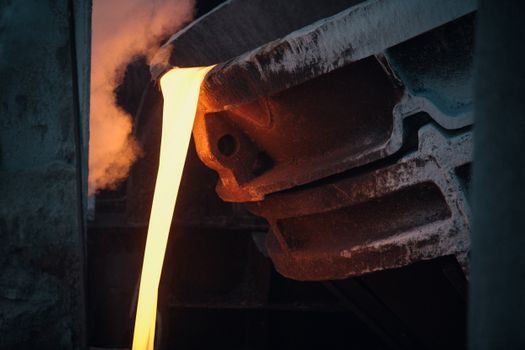
On a degassing unit, the dominant failure mode is rotor-shaft erosion and graphite-shaft oxidation; Si3N4 rotor life is typically 300–800 heats in standard Al-Si service, with a sharp drop when bath temperature exceeds 760 °C or when chlorine-bearing flux is over-fed [S4]. The dross-handling system, heater elements and PLC interlocks are the secondary failure cluster, and unplanned downtime on a 5-ton FDU is commonly attributed to flux bridging at the injection port rather than to the rotor itself [S1].
On a casting ladle, the refractory lining is the failure currency: thermal-shock spalling on the slag line, MgO-C oxidation in the bottom, and slide-gate nozzle leakage are the recurring modes. MK-90 corundum ramming body supplied by Kazogneupor was selected at the Cherepovetsk electric steelmaking shop specifically to extend campaign life in vacuum-refining service, where standard alumina ramming mass fails prematurely at the ladle-lid interface [S3].
Standards, Sourcing and 2026 Cost Signals
No single ISO or ASTM standard governs either equipment class end-to-end; design references include ISO 4782 (argon purity for metal treatment), ASTM E2792 (rotary degassing of aluminum), and the refractory-side norms ISO 12677 and EN 1094 for ladle lining bricks. Specs typically follow OEM data sheets plus the buyer's melt-quality target (e.g. ≤0.12 ml H2/100 g Al by RPT or vacuum solidification for premium aerospace castings). Rotor hardware from Chinese suppliers such as the Shenzhen Si3N4 line is now globally price-competitive at US$288/piece MOQ, with 5000-piece weekly capacity reported — a relevant 2026 sourcing fact for casthouses evaluating a fleet swap from graphite to Si3N4 [S4].
On the ladle side, the cost lever is refractory grade, not the steel shell. For buyers pairing both units on a single melt line — for example an aluminum casthouse pouring into steel-mold tooling — the cross-spec is the melt transfer temperature window, not the equipment spec itself. See a broader frame on melt-line integration in the melting furnace selection criteria 2026 field cut and capex benchmarks in the induction furnace 2026 price and cost guide.
For component-level specifications, see frl unit.