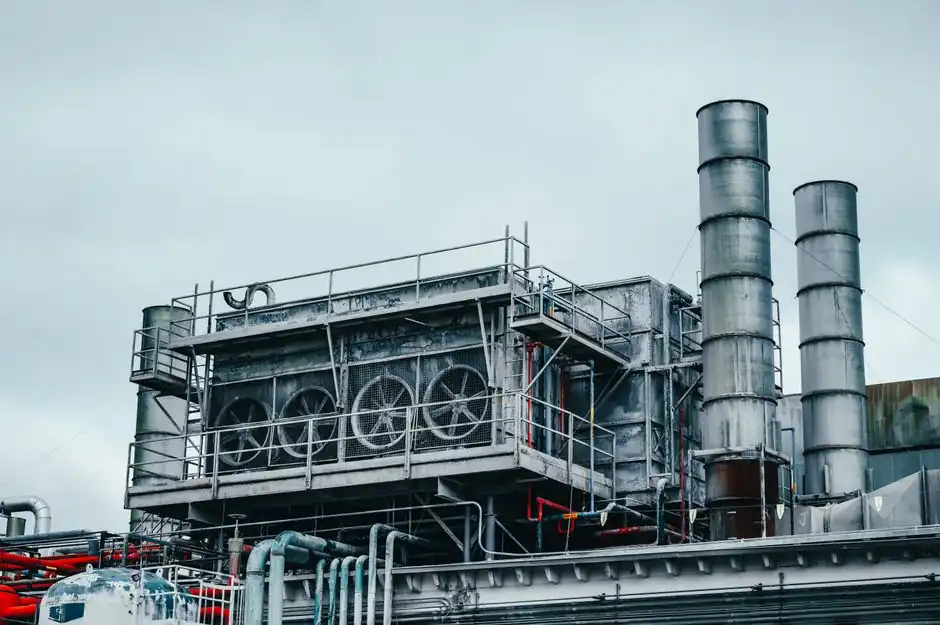
Industrial catalyst production is a discrete five-stage equipment chain, not a single machine: support formation, impregnation or coating, drying, calcination, and bulk material handling, with each stage driving its own unit-operation spec [S1][S4][S6].
FEECO, a US-based OEM with more than 75 years of material processing experience, lists alumina, zeolites, and silica as the dominant catalyst support chemistries its equipment is engineered around, and offers pin mixers, disc pelletizers, granulation drums, rotary impregnators, rotary dryers, fluid bed dryers, and rotary kilns as the canonical process modules [S1].
Stage 1: Support Formation (Wet Granulation and Pelletizing)
Wet granulation and pelletizing convert powders, fines, or active precursors into spherical or cylindrical supports, and FEECO pin mixers and disc pelletizers are specified for micropelletizing and fines-to-granule conversion of both supports and active components [S1].
For high-capacity settings, granulation drums provide an alternative geometry to disc pelletizers, and academic work at the Rutgers Catalyst Manufacturing Center lists crystallization and filtration as the upstream solution/suspension preparation steps that feed these shaping units [S6]. Gericke's GMS double-shaft batch mixers, GCM continuous mixers, and TCM turbo compact mixers address the upstream powder-to-slurry conditioning step that determines feed consistency into pelletizers [S5].
Stage 2: Impregnation and Coating
Impregnation remains the dominant manufacturing route for supported metal catalysts because it combines formulation flexibility, scalability, and direct control over metal loading on a pre-formed support, per a 2026 Industrial & Engineering Chemistry Research review [S4].
FEECO's custom rotary impregnators are the workhorse for uniform impregnation or coating, and the same OEM backs them with test work in a dedicated process development facility, which is a common pattern across catalyst OEMs because impregnation uniformity is hard to predict from theory alone [S1]. Qlar complements the wet-end by supplying load cells, gravimetric feeders, and controllers that govern the precise metal-salt dosing that defines finished-catalyst loading [S3].
Stage 3: Drying
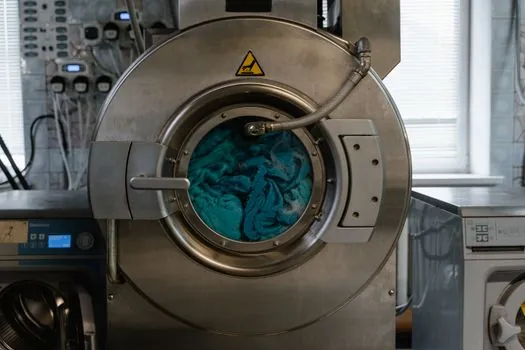
Drying follows impregnation and must hit tight bulk density and mechanical strength targets, so rotary dryers dominate because they deliver uniform drying with minimal attrition, while fluid bed dryers are the alternative for lower-capacity operations [S1].
Process engineers should treat the dryer exit moisture as a controlled variable feeding calcination: over-drying collapses pore structure on some zeolites, and under-drying spikes fuel consumption and can crack extrudates on the way into the kiln, a trade-off routinely evaluated in pilot-scale proof-of-product testing [S1][S6]. Qlar's gravimetric and volumetric feeders, plus its GUC-F universal controller, are typical of the loss-in-weight platforms used to meter binder and dopant additions just ahead of the dryer [S3].
Stage 4: Calcination
Calcination activates the catalyst by driving off volatiles and stabilizing the crystal phase, and FEECO custom rotary kilns are engineered to run at higher kiln loadings than legacy designs, which reduces both kiln size and capital cost for a given throughput [S1].
The Rutgers center frames the wider chain as preparation and mixing of solutions or suspensions, crystallization, filtration, shaping, drying, and calcination, confirming rotary kiln as the terminal high-temperature unit in the academic reference flow as well [S6]. ECMA's best-practice guide, by contrast, focuses on the downstream end: it addresses self-heating catalysts, reactor entry, confined space, nitrogen inerting, static electricity, and ancillary operations during loading, which all feed back into how the calcined product must be packaged and handled [S2].
Stage 5: Bulk Material Handling and Conveying
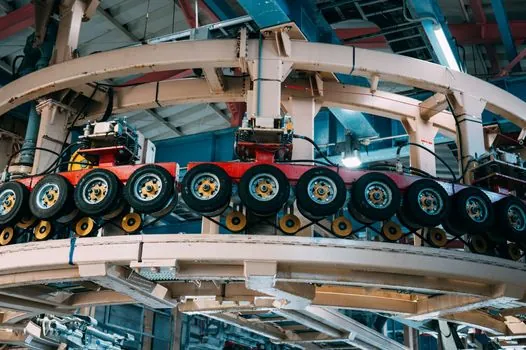
Bulk material handling is treated as a first-class equipment category, not an afterthought, and the reference catalog includes custom trough belt conveyors, bucket elevators, reversing shuttle conveyors, steep incline conveyors, belt feeders, and belt trippers and plows [S1].
For sealed transfer of finished catalyst, dilute-phase and dense-phase pneumatic conveying, vacuum conveying, diverter valves, and rotary airlocks (Gericke's heavy-duty and hygienic lines) are the standard options, and selection is driven by particle friability, moisture content, and oxygen sensitivity rather than throughput alone [S5]. Qlar's product tree, from load cells through pneumatic conveying to air separators and condition monitoring, illustrates how weighing and feeding vendors package the same chain as discrete modules that plant engineers can mix and match [S3].
Selection Criteria: Equipment Type vs Decision Factor
Comparing the main equipment families against four decision criteria gives a defensible shortlist: disc pelletizer vs granulation drum (capacity and shape uniformity, 1-50 tpd), rotary dryer vs fluid bed dryer (throughput and attrition tolerance, 0.5-30 tph), rotary kiln vs belt calciner (peak temperature, 400-900 degrees C range typical for alumina/zeolite), and dilute-phase vs dense-phase pneumatic conveying (particle friability and oxygen sensitivity) [S1][S5].
FEECO recommends a four-stage pilot workflow: feasibility or proof of concept (batch), proof of product (deeper batch), proof of process (continuous), and process or product optimization at industrial scale, which is the same escalation used by academic centers such as Rutgers to bridge bench to commercial output [S1][S6]. For a complementary read on how discrete process machinery is qualified and lined up in adjacent plants, see this Steel Rebar Manufacturing Equipment spec guide, and for the powder-handling controls that ride on top of every stage, the Moisture Analyzer supplier map is a useful parallel reference.
Safety, Standards, and Handling Constraints
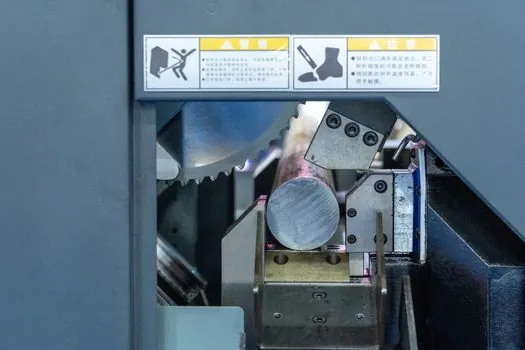
Catalyst handling is a specialized discipline: ECMA's best-practice guide flags reactor entry, confined space, nitrogen inerting, and static electricity as the four operational risks that drive equipment and PPE specification around the periphery of the manufacturing chain [S2].
The same guide states that the safety data sheet, the SDS, "contains details for the handling, transport and risk management measures such as personal protective equipment," meaning PPE and containment are dictated by the chemistry of each catalyst family, not by the equipment OEM [S2]. Self-heating catalysts are called out as a distinct sub-class, which is why ECMA dedicates a section to them and why many plants add nitrogen blanketing and earth-bonding on transfer points as standard [S2].
Who This Equipment Chain Is For, and Where It Is Not
The full five-stage chain is built for producers of supported heterogeneous catalysts, including hydroprocessing, FCC additive, emission control, and reforming catalysts at 100 tpy to 100,000 tpy scale, where the same OEM (FEECO, Gericke, Qlar) or a system integrator can supply every stage [S1][S3][S5].
It is not the right reference for homogeneous liquid catalysts, which follow a different preparation logic centered on dissolution, stabilization, and liquid handling rather than granulation, drying, and calcination, as Capital Resin notes for liquid catalyst preparation [S7]. It is also a poor fit for small-batch precious-metal catalyst labs, which usually bypass pelletizing entirely and run impregnation in bench-scale rotary evaporators, and for additive manufacturing of structured catalysts, where additive manufacturing material selection dominates over the equipment chain described here.
Failure Modes and Engineering Pitfalls
Attrition in rotary dryers and pneumatic conveyors is the single most common cause of off-spec fines, so dryer rotation speed, lift-flight design, and conveying velocity must be specified together, not independently [S1][S5].
Under-loading of rotary kilns wastes fuel and capital, and over-loading produces channeling and temperature gradients, which is why FEECO markets higher-than-historical kiln loadings as a differentiator and validates them in its Innovation Center [S1]. On the controls side, loss-in-weight feeder accuracy drifts if the feeder is sized outside its turndown window, and load cell calibration intervals are the typical remedy that Qlar's condition monitoring lineup is designed to flag [S3].
Sourcing Signals to Track
Watch for OEM-specific signals: FEECO's published brochure on rotary kilns and its Innovation Center brochure are the spec anchors for new US line builds [S1]; Gericke's September 2026 update to its catalyst-industry page is the live reference for powder-handling modules in Europe [S5]; and Qlar's online shop, covering weighing components and spare parts, is the proxy for parts availability across the industrial machinery spectrum used in catalyst plants [S3]. A second-trackable signal is ECMA's best-practice guide itself, ECMA1004q dated 9 September 2018, which functions as the de facto European handling baseline until a revision is published [S2].
Spec-level background on the components involved: linear guide.