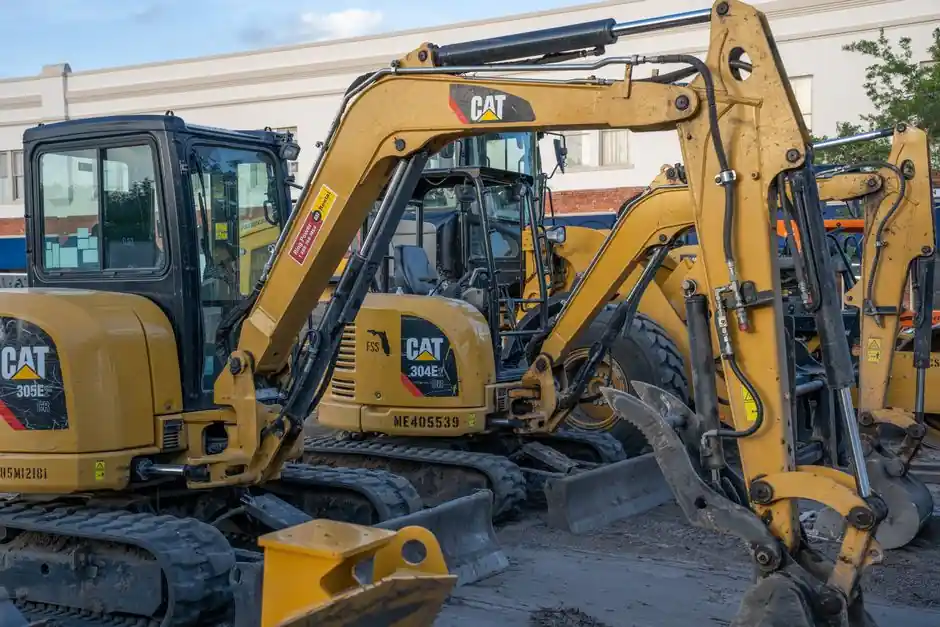
The two configurations share the same tractor, loader arm, and front bucket; the only true engineering difference is the rear frame, kingpost, and stabilizer geometry [S2]. On a side-shift machine, the backhoe kingpost rides on a carriage that slides laterally along frame rails, with vertical stabilizers that drop inside the tire track. On a center-mount machine, the kingpost is bolted to the rear-axle centerline, and the stabilizers swing out on a radial arc to a wider stance [S2][S3].
That one structural decision dictates roading width, trench geometry, lift force, and which markets buy the machine, and it has split contractors along geographic lines for decades, with side-shift dominant in Europe and Australasia and center-pivot dominant in North America [S2].
How the Two Rear Frames Actually Differ
The sliding kingpost on a side-shift unit is a hydraulic carriage moving on greased frame rails, allowing the entire boom to shift left or right of the tractor centerline without moving the wheels [S2][S4]. Stabilizers mount on each side of the rail and extend straight down within the tire width, so the working footprint stays narrow. This is why European contractors can park a side-shift loader against a curb or foundation wall and dig straight down without the stabilizer legs hitting the obstacle [S2].
On a center-mount (center-pivot) machine the backhoe is fixed to the rear axle center, and the stabilizers deploy on a radial arc that exceeds the tire width for a wider stance [S2][S3]. The mechanical simplicity of a rigid central mount concentrates structural mass on the tractor's center frame, which is the lever for higher rated lift and breakout at the bucket, particularly when using heavy hydraulic attachments like breakers [S4].
Stability, Breakout Force, and Lift Capacity
For raw breakout, independent manufacturer data shows side-shift designs can match or beat center-pivot units at the same machine class. The Mazzotti MAF 180 backhoe for tractors up to 30 HP rates 3,970 lbf of bucket breakout in side-shift trim versus 2,204 lbf in the MAF 180 USA center-pivot version, roughly an 80 percent gap; the Nardi backhoe family shows a smaller but consistent 2,890 lbf (side-shift) versus 2,450 lbf (center-pivot) differential [S3]. Reach and dipper geometry are essentially identical between the two versions of the same model, so the difference is structural mounting, not linkage leverage [S3].
For lateral stability under heavy breakout, the center-mount's wider radial stabilizer stance still wins on open ground, giving it the edge on uneven terrain, steep slope work, and maximum lift height with a loaded bucket [S5]. As Caterpillar's David Young frames it, "in terms of just hogging out as much dirt as you possibly can and maximizing the reach of your backhoe, the side shift is better," which underscores that the two designs trade off differently depending on whether the priority is straight-down breakout, lateral reach, or platform stability [S1].
Tight-Site Work: Parallel Trenching, Curbs, and Buildings
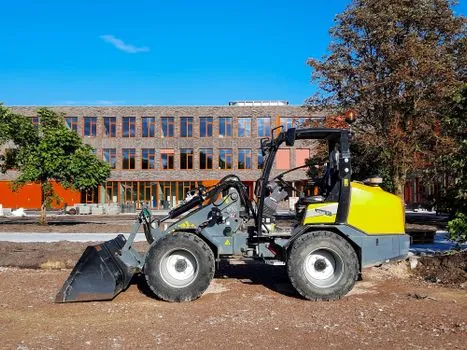
Side-shift is the geometry choice for working in a footprint close to the machine's tire width. Operators can offset the boom to dig a rectangular trench right next to a foundation wall or fence line without crab-steering the tractor, which reduces tire rutting on finished surfaces and cuts cycle time on long runs [S2][S4]. The vertical stabilizers raise and lower within the tire envelope, so setup against a curb, in a narrow alley, or alongside a wall is a single alignment rather than a repositioning move [S2].
For municipal and utility work, where trench lines run parallel to streets and buildings, the sliding swing frame also tucks the boom closer to the machine envelope during roading, giving a more compact transport profile on narrow European streets [S2]. Australian dealer feedback echoes this, with vertical-stabilizer side-shift hoes now offered exclusively in that market for the same versatility reason [S3].
Open-Site, Heavy-Duty, and Production Digging
Center-mount backhoes carry the heavier, more rigid rear frame that ties digging force directly into the tractor's center structure, a configuration that resists twisting loads from large hammers and deep trenching in open ground [S4]. Buyers selecting a backhoe loader for high-production trenching, agricultural drainage, or pipeline work across open fields typically favor this layout because every structural member contributes to lift and breakout rather than carrying a sliding carriage [S4][S5].
The wider radial stabilizer stance also raises the center of gravity envelope when the loader end is working, which is a real benefit on uneven or sloped ground where side-shift machines can feel less planted [S5]. For operators running a fleet that includes a wheel loader for bulk earthmoving and a backhoe for trenching, the center-mount option is usually the closer match in cycle feel and cab layout.
Operator Visibility, Controls, and Daily Workflow
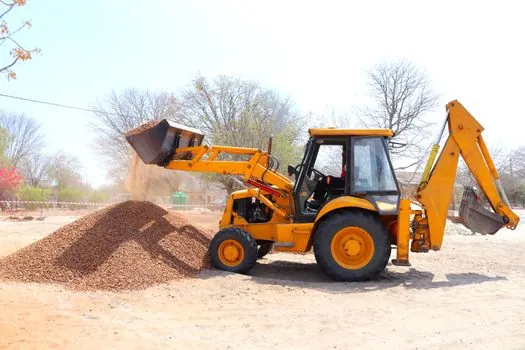
Side-shift machines give the operator an unobstructed view down into the trench because the kingpost can be offset away from the dig line, which reduces the blind spot created by a centered boom hanging over the cut [S2]. This is a meaningful productivity factor on deep utility work where the operator needs to track the bucket teeth continuously, and it is one of the reasons European crews trained on the layout from the 1960s onward [S2].
For roading and repositioning between digs, the same sliding carriage means a tighter travel envelope and less risk of clipping a boom corner on a parked car, light standard, or overhead line in congested urban sites [S2]. Operators moving between a skid-steer loader and a backhoe on the same jobsite will find the side-shift learning curve shorter than expected, since both platforms share the pattern of working close to obstacles.
Decision Matrix: Center-Mount vs Side-Shift
Across the criteria that drive a purchase order, the comparison lines up as follows. Stabilizer footprint: center-mount wider on radial arc, side-shift stays inside tire width. Bucket breakout: side-shift can match or exceed center-pivot in the same model family, with measured gaps of 18 to 80 percent in published OEM data [S3]. Lift capacity: center-mount generally higher for a given machine class due to direct load path [S4]. Worksite geometry: side-shift wins tight urban, utility, and residential work; center-mount wins open field, slope, and heavy-lift tasks [S2][S4][S5]. Regional aftermarket support: side-shift parts inventory in Europe, center-pivot inventory in North America, with OEMs like JCB and Case selling different SKUs into each region for that reason [S2].
For a fleet manager writing the spec, the rule of thumb is straightforward: if more than half the dig cycles happen within a meter of an obstacle, specify side-shift; if the work is bulk trenching in open ground with heavy breaker or pipe-lift cycles, specify center-mount. Mixed fleets running municipal contracts alongside agricultural drainage often run both, and the shared operator interface across modern ISO-pattern controls makes cross-training straightforward [S5].
Limitations and Common Failure Modes
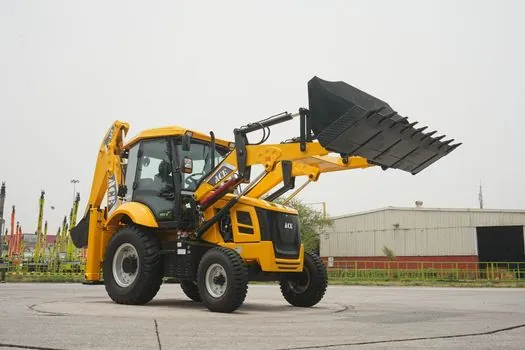
Side-shift carriages add a sliding interface that requires regular greasing and rail inspection; contamination on the rails is the most common cause of carriage drift and uneven boom tracking. Center-mount units avoid the sliding wear surface but are more exposed to frame flex cracking around the kingpost mount when the machine is consistently used near its rated lift limit on uneven ground. Both designs share the same loader-end wear patterns, hydraulic contamination risk, and front-axle loading, so the spec choice does not change the daily fluid and wear-parts service interval. Transportation width also remains a real constraint: a center-mount machine with stabilizers deployed exceeds the roading envelope of the same tractor in side-shift trim, which matters for permit-load moves on narrow rural roads. [S2]
Track the next regulatory and product signals: confirm any municipal contract's stabilizer-footprint clause before specifying, ask dealers for the latest OEM field data on sliding-carriage service intervals, and watch for updated operator-station layouts as ISO-pattern controls continue to standardize across backhoe loader lines [S5][S6].
See also our earlier report, ASTM A1035 Grade 100 vs Grade 120: Spec, Strength, and Selection.