
Hybrid ceramic deep-groove ball bearings in 604-608 sizes with GCr15 or stainless rings are listed at US$0.50-2.00 per piece (10-piece MOQ) on Chinese B2B platforms as of April 2026 [S3], while full-ceramic SSIC and ZrO2 structural parts for pumps, mechanical seals and ball valves are sold directly by specialist factories such as Beijing Zhongxing Shiqiang Ceramic Bearing [S2].
The two product tiers answer different problems: the S3 range covers consumer and light-industrial duty (skateboards, fan motors, power tools, derailleur pulleys), whereas the S2 catalogue targets chemical-pump, magnetic-pump, canned-motor-pump and metering-pump service where SiC and ZrO2 corrosion resistance and dimensional stability under thermal cycling drive the spec. Selecting between them is a media-and-speed question, not a brand question.
Main Ceramic Bearing Types on the 2026 Market
Three families dominate factory catalogues. Hybrid ceramic deep-groove ball bearings use Si3N4 balls running in metallic (typically GCr15 chrome steel or stainless) races; these are the format sold at the US$0.50-2.00 entry-level price point on Made-in-China.com, offered in 604, 605, 606, 607 and 608-2RS/ZZ closure codes for skateboard, fan-motor and power-tool service [S3]. Full-ceramic SiC (SSIC) bearings and structural parts — flat rings, cascade rings, plungers, nozzles, guide rails — form the second family, supplied by specialist Chinese manufacturers for pump and mechanical-seal duty [S2]. ZrO2 (zirconia) bearings and supports, including ZrO2 ball valves and small-round tool supports, sit as the third family and overlap with the SiC line on pump parts and valves [S2]. Adjacent components — silicon-carbide nozzles, high-precision plungers, friction guide rails and supports — are listed alongside bearings in the same factory catalogues, which is a useful signal: in the SSIC/ZrO2 segment you typically buy matched tribological sets, not loose balls [S2]. Bearings.com-style generalist sites such as CWL Bearings mirror the same family split across 200-series adapter sleeves, agricultural bearings, angular-contact ball and roller ranges [S6]. For a primer on the tribology that separates these families, see the ceramic bearing encyclopedia entry.
Selection Criteria: Speed, Temperature, Media, Precision
Four engineering parameters narrow the catalogue fast. Speed: hybrid Si3N4 balls in 608-2RS size are routinely rated for the d·n values common in electric-motor and tool-spindle service, and are the default pick where a metallic bearing was previously fitted [S3]. Temperature and thermal expansion: Si3N4 hybrids run cooler than full steel at the same load because of lower friction and lower thermal conductivity mismatch with steel rings; full SSIC and ZrO2 sets push the upper temperature ceiling well beyond what a greased steel bearing can survive, which is why they appear in canned-motor-pump and magnetic-pump parts lists [S2]. Media: SSIC and ZrO2 are specified where the lubricant is the process fluid itself, or where the bearing is exposed to acid, alkali, slurry or deionised water — corrosive duty that would destroy a GCr15 race in hours. Precision: factory offerings on Made-in-China.com cluster at trading-company tolerances (P0/P6 implied, no ABEC-7+ claim in the S3 listing), whereas specialist Chinese SSIC/ZrO2 plants typically publish precision-plunger and ball-valve seat tolerances to micron level because their customers (pump OEMs, seal OEMs) demand it [S2]. The wider material background on alumina versus zirconia versus silicon carbide is laid out in the industrial ceramic reference.
Hybrid Si3N4 vs Full SSIC vs ZrO2: A Criteria Comparison
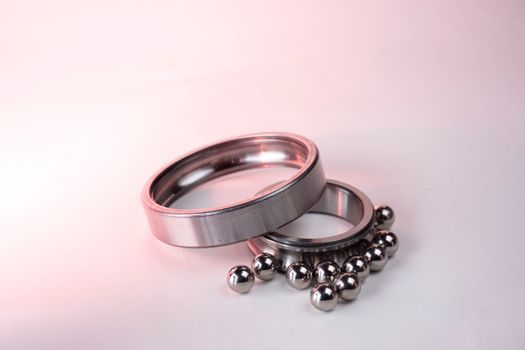
Three options, four decision criteria. Hybrid Si3N4 (ball material Si3N4, ring material GCr15 or stainless): unit cost US$0.50-2.00 at 10-piece MOQ on Chinese B2B channels [S3]; maximum continuous speed adequate for skateboard, fan-motor, power-tool and derailleur-pulley service (the bike-pulley application is also a live eBay aftermarket segment with 11T guide pulleys around US$10-13) [S4]; corrosion resistance limited to whatever the metallic race can survive; typical tolerance class not declared in trading-company listings. Full SSIC (silicon-sintered SiC): unit cost materially higher than hybrid and typically quoted by specialist Chinese factories rather than trading-company MOQ lots [S2]; maximum continuous temperature and d·n values exceed hybrid because the rings are also ceramic; corrosion resistance covers most acids, alkalis and slurries; precision routinely held to micron level on flat rings, cascade rings and plungers [S2]. ZrO2 (yttria-stabilised zirconia): unit cost sits between hybrid and SSIC in most pump/valve quotes [S2]; maximum continuous temperature lower than SSIC but higher than hybrid; corrosion resistance comparable to SSIC in many chemical media, with better fracture toughness than SSIC (a key reason ZrO2 is preferred for ball-valve seats and small-round supports); precision similar to SSIC in factory listings [S2]. The headline: hybrid for cost and drop-in steel replacement, SSIC for hot, abrasive, acidic service, ZrO2 where impact or thermal-shock resistance matters more than peak temperature.
Hybrid Si3N4 deep-groove ball bearings make sense for OEMs and rebuild shops that need a drop-in upgrade to a steel 604-608 bearing in moderate-speed, lightly loaded applications such as skateboards, electric fans, small power tools and bicycle derailleur pulleys, where the US$0.50-2.00 price band [S3] and the modest MOQ (10 pieces) keep inventory risk low. Full SSIC and ZrO2 bearings and structural parts suit pump OEMs, mechanical-seal manufacturers, magnetic-pump builders, canned-motor-pump builders and chemical-process plants that need parts tolerant of acid, alkali, slurry and temperatures that would coke a grease-lubricated steel bearing [S2]. Walk-away cases: high-impact, shock-loaded gearboxes (SSIC is hard but brittle; ZrO2 is tougher but still no substitute for a properly sized steel bearing under cyclic shock loads), and any application where the buyer cannot verify the supplier's ball-grade, ring-grade and sintering route — the Made-in-China.com factory index lists ISO 9001:2008 and "Others" as the dominant management certifications across Chinese ceramic-bearing plants [S5], which is a useful first-pass filter but is not a substitute for material certificates.
Standards, Certification and Supplier Vetting in 2026
The Chinese ceramic-bearing factory base in 2026 is dominated by ISO 9001-certified and trading-company-export channels, with the Made-in-China.com factory index showing ISO 9001:2008 as the headline management certification and "501-1000 People" / "Above 1000 People" as the typical staffing bands for serious bearing plants [S5]. Application-specific standards (ABEC/ISO tolerance classes for precision, ASTM/ISO corrosion test methods for SSIC chemical service, and the relevant material standards for Si3N4 balls and ZrO2 supports) are not published in the S1-S6 corpus of research; if your application is regulated (food contact, medical, nuclear, semiconductor wet bench), request the actual test reports rather than relying on factory marketing. The dominant Chinese provinces for ceramic-bearing manufacture on the Made-in-China.com index include Shandong (where the S3 entry-level supplier is based) and a long tail across Anhui, Beijing, Chongqing, Fujian and Gansu [S5], so for buyers comparing quotes, region is a useful secondary signal because it correlates with raw-material supply chains.
Total Cost Levers Beyond Unit Price
Three cost drivers sit on top of the headline unit price. MOQ: trading-company hybrid bearings on Made-in-China.com are listed at 10-piece MOQ [S3], which keeps sample cost low but means a 10,000-piece production run is still quote-based; specialist SSIC/ZrO2 plants typically require a custom quote for non-stock tolerances [S2]. Tooling and drawing ownership: high-precision plungers, ZrO2 supports and SSIC ball-valve seats are made to drawing, and tooling amortisation is often a separate line item that the factory index hides [S2].
Real Failure Modes and Sourcing Watch-Outs
Ball-grade mismatch: low-cost hybrid Si3N4 balls with porosity or surface defects will spall under load long before a correctly sintered ball; the entry-level US$0.50-2.00 price band on Made-in-China.com is achievable only with mass-produced Chinese Si3N4 stock, which is fine for skateboard/bike/pulley service but should be re-validated for continuous-duty motor applications [S3]. Race-material confusion: full SSIC bearings and SSIC rings used as mechanical-seal faces have different surface-finish requirements; a pump buyer who orders a "ceramic bearing" without specifying flatness, parallelism and lapping will often receive a part that looks correct but fails the seal-face specification [S2]. Lubrication mismatch: hybrid bearings still need grease; full-ceramic SSIC/ZrO2 bearings in pump service are often run "dry" or on the process fluid, and any residual petroleum grease from factory assembly can contaminate a clean-process application. For a wider material-property background, the alumina ceramic entry and the ceramic tile entry are useful cross-references for the sintered-ceramic families, while the crossed-roller guide encyclopedia page covers the roller-bearing kinematics that hybrid ceramic balls are sometimes specified into.
Trackable next signals: the Made-in-China.com factory index refreshes management certifications and staffing data roughly every quarter [S5], so a re-check in Q3 2026 will show whether ISO 9001:2015 has displaced ISO 9001:2008 across the major Chinese ceramic-bearing plants; specialist SSIC/ZrO2 factories such as Beijing Zhongxing Shiqiang publish product-class additions (new nozzle sizes, new plunger tolerances, new ZrO2 support dimensions) on their English catalogue pages without separate press releases [S2], which is the cleanest signal of where high-precision ceramic-bearing supply is heading through 2026.