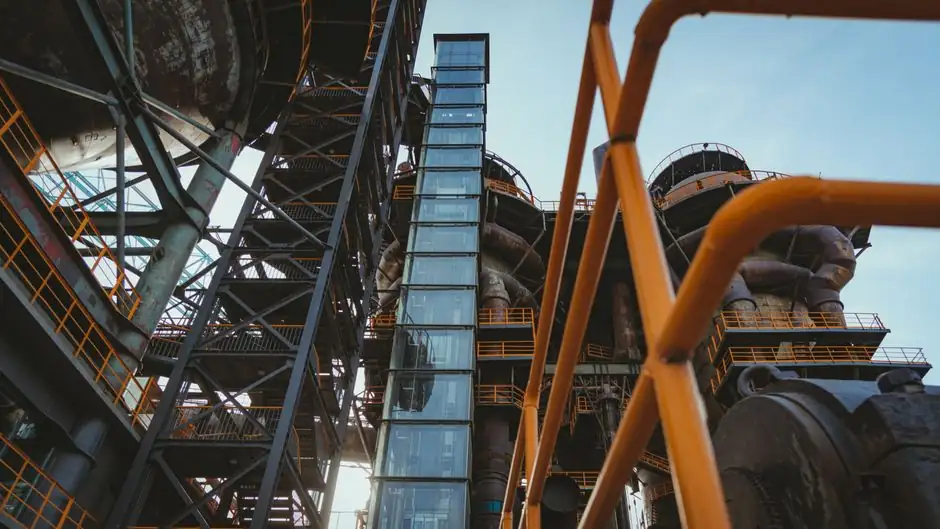
Full-ceramic and hybrid ceramic bearings (silicon nitride Si3N4 rolling elements on steel rings) are increasingly specified in cement plant motors, ID fans, and VFD-driven mill drives to defeat electrical erosion from shaft currents, while all-steel spherical roller bearings (SRBs) still carry the heaviest combined loads on kiln support rollers, mill trunnions, and crushers [S4].
Cement plants concentrate four destructive forces on bearings: abrasive limestone and clinker dust, heavy combined radial-axial shock loads, 1.5–2.5° of shaft-to-housing misalignment from deflecting 70–90 m kiln shells, and sustained temperatures of 150–220°C near kilns and clinker coolers [S2][S3][S5]. Specifying bearings is therefore an equipment-position exercise, not a generic catalogue choice.
Where Hybrid Ceramic Bearings Win in a Cement Plant
The 2026 guidance for cement plants recommends ceramic-coated insulated bearings or full AEGIS-style shaft grounding rings on the non-drive end of VFD-driven equipment, where inverter-induced common-mode voltages otherwise pit raceways and cause premature flaking [S4]. Silicon nitride balls are non-conductive, lighter than steel, and tolerate marginal lubrication, which matters in dusty conveyor and fan positions where grease film breakdown is the dominant failure mode.
For a VFD-driven 5,000 TPD plant's ID fan where a single seizure has been documented to drive $180,000 in lost production plus emergency crane costs, a hybrid ceramic on the non-drive end combined with a grounding ring is the published mitigation path [S4]. In non-electrical, lower-speed positions such as kiln support rollers, ceramic elements add cost without addressing the dominant failure modes (overload, misalignment, dust ingress), so steel SRBs remain the default [S2][S3].
Steel Spherical Roller Bearings: the Default for Heavy-Load Positions
Spherical roller bearings with two rows of barrel-shaped rollers carry both radial and axial loads, and their spherical outer raceway accommodates the 1.5–2.5° of misalignment produced by thermal expansion and structural deflection in 70–90 m kiln shells [S3][S5]. Bore diameters in production SRB series run from 20 mm to 1,400 mm, covering everything from small separator drives to the largest kiln support rollers [S5]. Tapered bores with 1:12 or 1:30 taper ratios are used where adapter or withdrawal sleeves simplify field replacement in confined housings [S5].
The standard cement-plant position-by-position map from two independent 2026 supplier guides assigns SRBs to: kiln support rollers, raw and cement mill trunnions, dynamic separator rotors, clinker coolers (heat-stabilised, C3/C4 clearance), and crushers, with cylindrical or tapered roller bearings specified only inside mill drive gearboxes where radial rigidity dominates [S2][S3]. Heat-stabilised steel with C3 or C4 internal clearance, paired with high-temperature grease rated 150–220°C, is the published baseline for kiln, preheater, and clinker-cooler positions [S2].
Comparison: Bearing Type vs. Cement Plant Position
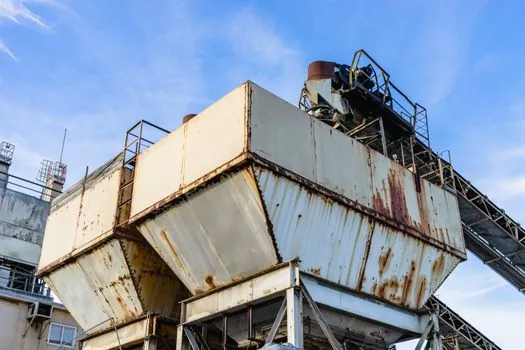
Selection reduces to four decision criteria: load direction (radial only vs. combined radial-axial), misalignment tolerance, temperature exposure, and contamination severity. SRBs score high on the first three and tolerate contamination when sealed or labyrinth-equipped [S2][S3][S5].
Deep groove ball bearings and cylindrical roller bearings are restricted to specific roles: high-speed process fans and blowers (deep groove, primarily radial load, moderate temperature), mill drive gearboxes (cylindrical for radial rigidity or tapered for combined load), and sealed deep-groove or pillow-block units on conveyors and material handling where abrasive dust ingress is the controlling risk [S2]. Full-ceramic bearings (ceramic rings plus ceramic rolling elements) appear in OEM cement-industry catalogues but are niche, used where both electrical isolation and corrosion resistance are simultaneously required [S1].
Sealing, Lubrication, and the 80% Failure Driver
Published heavy-industry failure data attributes roughly 80% of premature bearing failures to improper lubrication and solid contamination, with over-lubrication blowing seals and admitting clinker and raw-meal dust as often as under-lubrication starves the raceway [S4]. In cement service, sealed (2RS) or shielded variants, re-greasable sealed pillow-block housings, and regular relubrication intervals sized to flush dust are the standard mitigation, with high-frequency ultrasound on the lube route replacing paper checklist confirmation of "did it get greased?" [S2][S4].
Condition-monitoring practice that combines acoustic friction measurement, vibration velocity trending, and thermography is reported to reduce unexpected bearing seizures by 85% versus a grease-volume-only route, with one asset taking roughly 12 minutes of complete diagnostic time [S4]. Facilities running structured templates aligned to ISO 55001 asset-management practice are the documented baseline for this improvement [S4]. High-temperature grease rated 150–220°C and heat-stabilised steel with C3/C4 clearance are the matched material set for kiln-adjacent positions [S2].
Material Trade-offs: Silicon Nitride vs. Zirconia vs. Steel
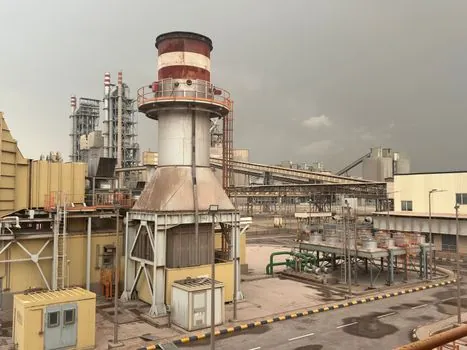
Full-ceramic bearings, with both rings and rolling elements in ceramic, are catalogued for cement applications requiring both electrical isolation and corrosion resistance simultaneously, at a price point that typically restricts them to chemically aggressive or highly specialised positions rather than bulk plant use [S1]. Across all hybrid options, the same failure-mode logic applies: the ceramic element extends life where electrical erosion or marginal lubrication is the dominant killer, and adds cost where it is not. For broader material context on the ceramic families themselves, the alumina ceramic properties reference covers the oxide-ceramic counterpart to silicon nitride, while ceramic bearing design catalogues the hybrid and full-ceramic construction variants in use across heavy industry.
Adjacent Plant-Spec Reading
Bearings are one node in a wider cement-plant spec stack. Process fans driven by VFDs share electrical-isolation logic with the sealing-material and body-material choices covered in the bellows seal selection spec guide, while heavy-impact positions such as crushers and hammer mills overlap in load and shock behaviour with the spherical plain bearing selection for agricultural machinery spec map. For a sanity check on the host machinery the bearings sit inside, the power trowel selection for masonry piece documents blade-pattern and rotor-balance practice that mirrors separator-rotor balancing on the dynamic separator. [S2]
Track these signals going forward: revised ISO 55001-aligned condition-monitoring templates for cement bearing routes, hybrid-ceramic cost curves as VFD penetration in cement mills rises, and any OEM update to grease-temperature ceilings for clinker-cooler positions above 220°C.
For the relevant spec sheets and selection criteria, see cement concrete.