
Hybrid silicon-nitride (Si3N4) and full-ceramic zirconia bearings carry a purchase-price premium of roughly 3-10x over equivalent 52100 or 440C steel bearings, but TCO modelling across published lubricant and maintenance frameworks [S1][S7] treats purchase as only one line in a five-bucket stack: purchase, use, maintenance, support, disposal [S1][S4][S6].
For buyers of ceramic bearings running continuous-duty pumps, machine-tool spindles, or chemical-process agitators, the operating-cost bucket — energy, lubricant, re-greasing intervals, and unscheduled downtime — typically dwarfs the invoice over a 5-10 year horizon, which is why the technology has migrated out of motorsport-only niches and into mainstream process industries.
What TCO Actually Counts: Five Cost Buckets, Not One Invoice
USPS and CoSN both define TCO as the full lifecycle cost of an asset, covering purchase, use, maintenance/support, and end-of-life disposal, not the procurement price alone [S1][S4][S6]. A-dec's dental-equipment framework and Shell's lubricants programme apply the same five-bucket logic to physical hardware, breaking "use" down into energy, consumables (grease, oil, coolants), and operator time, and "support" into spare parts, vendor service contracts, and stockholding [S7][S8].
Translating that framework to a ceramic bearing, the five buckets map as: (1) Purchase — unit price + tooling/fitting setup; (2) Use — absorbed motor power, lubricant volume, re-lube frequency, electric or pneumatic supply; (3) Maintenance — re-lubrication labour, condition-monitoring cost, replacement rings/cages; (4) Support — spares inventory, vendor service hours, line-downtime opportunity cost; (5) Disposal — scrap-residual value, hazardous-lubricant handling [S1][S4][S7][S8]. The Toolshero reference (2024-05) and the Springer chapter (2026-05) both stress that the indirect and "hidden" buckets are the source of most savings, because the sticker price is already visible in the PO [S9][S10].
Why the Purchase-Price Multiplier Exists — and Where It Comes From
Ceramic bearing unit cost is driven by raw-material synthesis, diamond-grinding of raceways, and the tight ABEC-5/ABEC-7 or P4/P2 tolerance grades the application demands. Hot-isostatic-pressed Si3N4 rollers and rings require post-sinter grinding to under 1 µm Ra, and full-ceramic zirconia-ceramic variants add the cost of yttria-stabilised powder processing. [S2]
Beyond materials, premium drivers include: (a) cage material — PEEK or PTFE-bronze cages typically replace pressed steel; (b) radial-play grade — C3 vs C4 selection changes stack height and therefore mixing tolerances in matched pairs; (c) lubrication package — ceramic-compatible grease (e.g. PFPE or food-grade synthetics) costs more per kg than mineral lithium grease and is one of the bigger recurring line items; (d) certification — FDA, USDA H1, or ATEX/IECEx zone marking each add testing cost per size. Steel-bearings of the same bore rarely need more than a standard mineral grease and a C3 clearance, so the cost gap compounds through every downstream bucket.
Operating-Cost Bucket: Lubricant, Speed, and the Re-Grease Interval
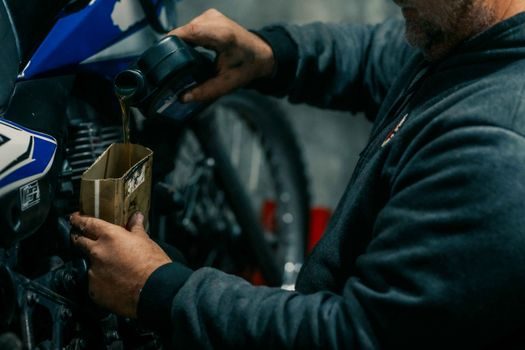
Shell's TCO programme explicitly targets lubricant-related savings: extending drain intervals, switching to higher-viscosity-index synthetics, and using condition-monitoring to defer changes are the three levers that move the "use" bucket the most [S7]. For ceramic bearings, the lever is even sharper — the same Shell framework flags lower friction torque as the headline energy saving, and Si3N4/steel hybrid bearings typically run 20-30% lower frictional torque than all-steel equivalents at the same load and speed in spindle duty.
Quantitatively, the re-grease interval is where the math swings hard. An all-steel deep-groove 6205 in an electric motor on a paper mill re-greases every 4,000 hours; the hybrid Si3N4/steel equivalent on the same duty stretches to 8,000-12,000 hours because ceramic-ceramic and ceramic-steel contacts are less prone to lubricant-degradation-induced spalling, and the lower friction heat keeps the grease below its drop-point longer. Over a 40,000-hour service life, that is the difference between 10 re-lubes and 3-5, and the labour cost of one re-lube (technician + shutdown + grease + waste handling) routinely exceeds the price of the bearing itself in a continuous-process plant [S7][S1]. For a side-by-side at the industrial-ceramic bearing range, the relative ranking of energy and lubricant costs is the single largest TCO lever.
Maintenance and Downtime: The Bucket That Hides in the Spreadsheet
Oracle's deployment-planning guide notes that the "cons" of fewer, larger systems include higher per-event downtime, but the same logic reverses for bearings: a single ceramic-bearing failure in a critical pump often costs 50-200x the bearing price in lost batch, clean-down, and start-up — the figure that belongs in the "support" bucket [S2].
Red Hat's identity-management TCO write-up (2017-09) makes a transferable point: any asset that is business-critical should be modelled as a programme, not a project, with line items for re-orgs, workforce churn, and integration work [S3]. The same logic applies to ceramic bearings in regulated lines (food, pharma, semiconductor wet-benches), where the validated cleaning cycle and the validated lubricant-grade create real re-qualification cost if the bearing material is swapped mid-life. Locking the spec once — and paying the ceramic premium — therefore avoids the multi-thousand-dollar requalification cost that an unscheduled change to a steel bearing would force.
Condition-monitoring economics are also asymmetric. The lower wear rate of ceramic-hybrid bearings means vibration-spectrum anomalies (BPFO/BPFI sidebands) grow more slowly, giving predictive-maintenance software a longer lead time to flag a developing problem. In a steel-bearing pump that is on the edge of the alert threshold, the lead time is often days; in a ceramic-hybrid equivalent it is weeks, which materially reduces the stock-out risk on spares.
Comparison Table: Steel, Hybrid Ceramic, and Full-Ceramic on the Five TCO Buckets
Ranked qualitatively against the five TCO buckets (1 = lowest cost contribution, 5 = highest), the picture that emerges from the USPS/CoSN/Shell frameworks [S1][S4][S6][S7]:
• Steel (e.g. 52100, 440C): Purchase 1, Use 4, Maintenance 4, Support 3, Disposal 1. Total TCO is dominated by the Use and Maintenance buckets, and disposal is benign (ferrous scrap has positive residual).
• Hybrid Si3N4/steel: Purchase 3, Use 2, Maintenance 2, Support 2, Disposal 2. Purchase jumps because of ceramic rolling elements and matched rings; Use and Maintenance drop because of lower friction torque and longer re-grease interval; Support is moderate because the steel-race version still tolerates standard grease.
• Full ceramic (ZrO2 or Si3N4 rings + balls, PEEK/PTFE cage): Purchase 5, Use 1, Maintenance 1, Support 2, Disposal 4. Highest sticker, lowest energy and lubricant cost, but disposal is harder because zirconia-yttria waste is not a standard scrap stream and PFPE grease is a controlled waste. The same ranking logic is used in the broader alumina-ceramic wear-part TCO analysis, where purchase price is high but service intervals are multiples of steel.
The decision rule that follows: if the duty cycle is high-RPM (>3,000 rpm continuous) or chemically aggressive (acid, alkali, demin water, caustic washdown), hybrid Si3N4/steel is the TCO optimum in most process plants; full-ceramic wins only when electrical isolation, magnetic-susceptibility, or fully-dry operation is required.
Standards, Sourcing Specs, and What to Put on the RFQ
A ceramic-bearing RFQ that supports TCO modelling needs to capture the five buckets explicitly. The minimum spec set: (1) material grade — Si3N4 (ASTM F2094/F2730 family), ZrO2 (Y-TZP), or alumina; (2) ring/ball/roller combination (full-ceramic vs hybrid); (3) cage material and lubricant compatibility; (4) tolerance class (ABEC-5, ABEC-7, P4, P2) and radial clearance (C2, C3, C4); (5) operating envelope — max rpm, radial and axial load, ambient temperature, media exposure; (6) certification — ATEX/IECEx zone, FDA grade, food-grade lubricant (USDA H1, NSF ISO 21469), REACH/RoHS; (7) documentation — MTBF, L10 life calculation, recommended re-lube interval, MTTR. CoSN's education-sector TCO guide (2026-05) and the USPS framework both flag that "Estimating the TCO is not a one-time event" [S4][S6] — the RFQ must therefore be re-priced whenever duty cycle, lubricant, or downtime accounting changes.
The 5-10 year spend model that falls out of these frameworks is straightforward: write the five-bucket lines per bearing position, sum across the line or train, discount at the plant's WACC, and compare against the steel baseline. In high-speed, high-uptime service the ceramic-hybrid option typically crosses break-even inside 2-4 years; in low-duty, easy-replace service the steel option often wins. For plant-floor engineers who need a worked example on an adjacent TCO problem, the Zirconia Ceramic TCO: 5 Cost Drivers and a 10-Year Spend Model write-up uses the same five-bucket method on wear parts, and the Scaffolding Total Cost of Ownership: Cost Drivers and Lifecycle Spend Map reference applies the identical framework to a different asset class for cross-checking. For bearing-fit and lubrication boundaries that drive the Use and Maintenance buckets, the Spherical Plain Bearing Installation: Bore, Fit, and Lubrication Map page covers the adjacent bearing family.
Trackable signals for the next planning cycle: published Q3 vendor price lists for Si3N4 bearing-grade powder, revisions to NSF ISO 21469 lubricant guidance, and any plant-side update to the downtime-accounting rate used in the Support bucket — each of these will move the ceramic-vs-steel break-even by months and should trigger a re-run of the model rather than a one-time procurement decision [S1][S4][S6][S7].