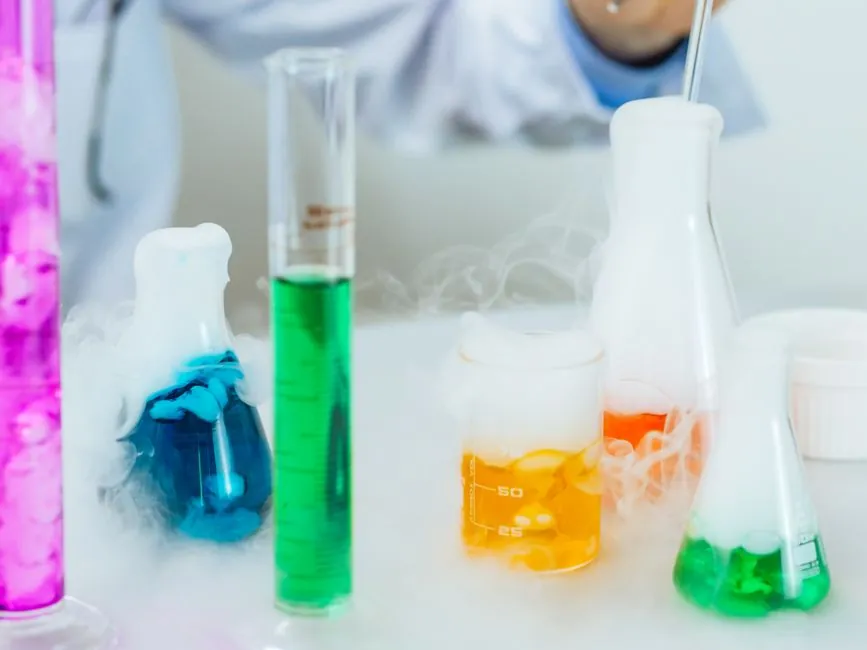
Metal diaphragm transmitters built from 316L stainless steel, Hastelloy C-276, or tantalum dominate the upper pressure envelope, high temperature lines, and NACE MR0175 sour service, where mechanical robustness and cyclic fatigue life outweigh the ceramic advantage in media compatibility [S1][S3].
Material Chemistry and Wetted Surface Behaviour
Alumina (Al2O3) and zirconia (ZrO2) diaphragms are chemically inert oxides, which is why the ceramic side resists acidic, alkaline, and most organic media without an additional coating [S4]. The same inert-oxide behaviour is the reason HF is the single common exception: HF attacks the glass-phase oxide and dissolves the diaphragm, so any HF-bearing stream (typically >1% HF at ambient temperature) is excluded from ceramic selection [S6].
Hastelloy and tantalum extend the wetted envelope into HCl, wet chlorine, and strong oxidising acids that would pit 316L within weeks, and they are the de facto reference alloys for severe chemical service [S3].
Pressure Range, Temperature, and Mechanical Limits
Ceramtec specifies the ceramic diaphragm envelope at 0-100 bar for capacitive designs, with a thinner disc geometry that gives high sensitivity at low pressures but caps the upper end below what a metal diaphragm can take [S2]. Sino-Inst's 2026 factory guide adds that ceramic sensors show strong resistance to electromagnetic interference and mechanical vibration, an advantage on skids with VFD noise and pump pulsation [S8].
Metal diaphragms routinely cover 0-600 bar and higher in standard transmitter form factors, with operating temperatures commonly between -40 and 150 degC for 316L and up to 300 degC for Inconel/Hastelloy variants [S1]. The thick-film strain gauge on ceramic has a lower temperature ceiling than a metal thin-film or bonded foil gauge, which is why high-temperature reboilers and steam lines stay on metal diaphragm designs.
Chemical Compatibility Matrix by Medium
Abrasion, Slurries, and Mechanical Wear
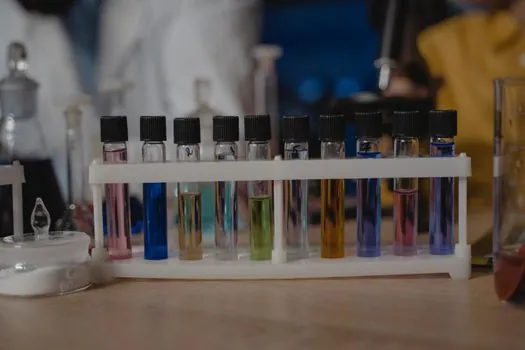
Ceramic diaphragms carry a measurable abrasion-resistance advantage over 316L, which is why mining slurries, lime milk, and similar media with high solids content are routinely specified on ceramic [S1][S7]. Ceramic sensors are resistant to abrasion and corrosion, with superior chemical resistance, lower cost, and a long service life [S7].
Stainless steel thin-film diaphragms are only 0.01-0.05 mm thick, and a single impact from a slurry slug or a steam hammer can rupture the foil. Where slurries exceed 5% solids by weight, switching to a Hastelloy-faced or ceramic diaphragm with a flush-mount process connection is the standard mitigation.
Selection Decision Matrix
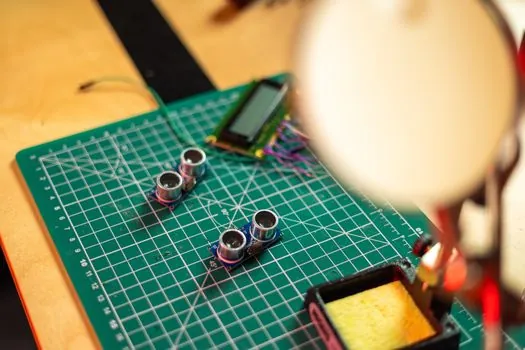
Use the four-axis comparison below to shortlist a diaphragm technology. (1) Pressure range: ceramic suits 0-100 bar; metal covers the 100-600 bar band. (2) Temperature: ceramic stays under 125 degC in standard build; metal extends to 300 degC. (3) Chemical resistance: ceramic wins on most acids/alkalis except HF; metal with Hastelloy/tantalum wins on hot HCl, wet Cl2, and HF-bearing streams where ceramic dissolves [S6]. (4) Cost and lead time: ceramic sensors cost less and ship faster in standard ranges; metal diaphragm transmitters in exotic alloys carry longer alloy surcharge and lead time [S7].
Choose ceramic capacitive when the medium is corrosive, the pressure is under 100 bar, the temperature is moderate, the fluid contains solids, and the installation is a hygienic or sanitary skid [S5]. Choose metal diaphragm when the pressure is high, the temperature is high, the service is sour (NACE MR0175), the medium contains HF, or the wetted surface must be a qualified alloy for a specific certification [S1][S3].
Failure Modes and Field Reliability
Ceramic pressure sensors are chemically inert and do not react with most acids or alkalis, but are attacked by hydrofluoric acid [S6]. Once the ceramic disc cracks, the sensor fails open or short, and there is no in-field repair; the diaphragm and the front seal are replaced as an assembly.
Metal diaphragm failure modes are corrosion-driven: pitting under chloride deposits, crevice corrosion under gaskets, stress corrosion cracking in chlorides above 60 degC, and sulphide stress cracking in sour service when NACE MR0175 is not followed [S3]. Long-term drift on a metal thin-film gauge is usually 0.1-0.2% of URL per year, while ceramic capacitive sensors can hold 0.05-0.1% per year when the diaphragm stays intact, which is one of the reasons ceramic is preferred for clean, low-pressure chemical dosing loops [S1][S2].
Integration, Output Protocols, and Process Fit
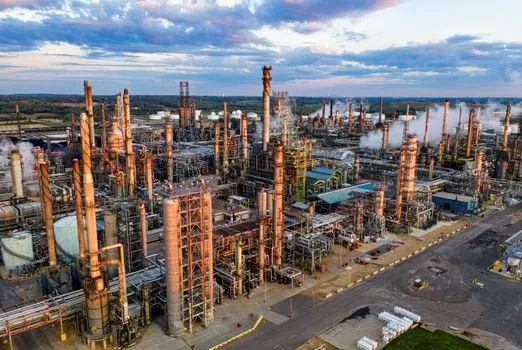
Both technologies ship in 4-20 mA HART, FOUNDATION Fieldbus, PROFIBUS PA, and IO-Link variants, so the control-system choice rarely forces the diaphragm choice [S5]. The more common binding constraint is the process connection: ceramic capacitive probes are widely available with flush diaphragms and Tri-Clamp / Varivent fittings for sanitary lines, while metal diaphragm transmitters default to threaded NPT, flanged (ANSI/EN 1092-1), or hygienic process connections sized for the higher pressure classes [S1].
For a chemical skid handling acids under 100 bar at ambient to 80 degC, a ceramic capacitive probe with HART gives the lowest installed cost and the cleanest CIP/SIP behaviour. For a hydrocracker reactor differential measurement at 250 bar and 320 degC with H2 and H2S, only a metal diaphragm transmitter in NACE-qualified alloy with a capillary or direct-mount seal is acceptable, and the diaphragm pump sealing principles behind the impulse lines are what the application note for that service will reference.
The underlying component specifications are covered under capacitive sensor, and chemical anchor.
See also our earlier report, ICT vs Functional Test for Server Boards: 2026 Coverage Decision.