Chinese machine tool and power tool suppliers remain the dominant global source in 2026, with construction-machinery exports alone reaching USD 16.07 billion in Q1 2026, a 24.3% year-on-year increase per the China Construction Machinery Industry Association [S4]. For OEM buyers, the practical question is no longer whether to source from China, but how to map cluster, machine class, and acceptance test before the deposit clears.
This guide consolidates the current 2026-dated reference layer: regional cluster strengths (Shandong, Yangtze River Delta, Pearl River Delta, Liaoning, Anhui, Sichuan), supplier-tier risk patterns, the eight-factor CNC supplier evaluation used by sourcing engineers [S1], and the FAT-driven machinery-buying workflow [S3]. It is written for procurement engineers, OEM brand owners, and import distributors who already know the basic RFQ drill and need a decision map.
Regional cluster map: which province for which machine class
China's machine tool supply chain is geographically segmented, and the 2026 cluster map groups suppliers by machine category rather than by brand [S2]. Shandong (Jinan, Tengzhou, Qingdao) concentrates CNC lathes, vertical machining centers (VMCs), routers, and fiber-laser cutters, with Tengzhou and Jinan producing many similar-looking quotes that require configuration-level verification. The Yangtze River Delta (Shanghai, Suzhou, Wuxi, Changzhou, Ningbo, Hangzhou, Taizhou) is the region for machining centers, automation cells, precision components, controllers, and export-oriented industrial suppliers.
Guangdong (Pearl River Delta) leans toward CNC routers, sheet-metal equipment, automation integrators, and electronics-adjacent support ecosystems, while Liaoning (Shenyang, Dalian) carries heavier traditional machine-tool capability and larger-frame machining centers [S2]. Anhui and the inland expansion are cost-competitive for laser equipment, sheet-metal machinery, and machine frames but require closer review of export documentation, and Sichuan plus Chongqing handle automotive and aerospace-adjacent heavy equipment. A reasonable first-pass rule: shortlist two regions for any given machine class, then verify supplier identity, controller, spindle, linear guide type, ball-screw brand, and casting weight before treating any quote as comparable.
The eight-factor supplier evaluation for CNC machining partners
Buyers evaluating a CNC machining parts manufacturer in China should screen on eight factors: company experience, machining capabilities, quality control systems, engineering support, production capacity, sample consistency, communication efficiency, and industry expertise [S1]. A supplier with more than 10 years of operating history is statistically more likely to have handled the medical, robotics, automotive, aerospace, optical, and consumer-electronics part mixes a new buyer will eventually need.
Equipment list is the hard filter: a credible shop should publish its 3-axis CNC machining centers, 4-axis CNC mills, 5-axis machining centers, CNC turning centers, Swiss-type lathes, grinders, EDM machines, and coordinate measuring machines (CMM) on site, and answer four buyer questions in writing, namely maximum machining size, achievable tolerance, complexity ceiling, and prototype-to-volume capacity [S1]. For motion-critical builds, ask specifically about the crossed-roller guide versus linear-rail choice on each axis, because that decision drives both rigidity and the maintenance schedule. First-article inspection, in-process inspection, and final inspection must be documented; a quote that omits these three checkpoints is incomplete.
Machinery class comparison: what to source where, at what spec tier
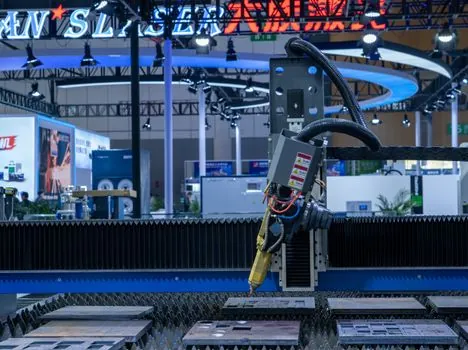
Different machine classes belong in different clusters, and the 2026 sourcing guidance treats them as separate search problems [S2]. A CNC lathe search should not run through the same shortlist as a fiber-laser, router, precision grinder, or wire EDM search. Power tools, as a related segment, exported more than 390 million hand-held units in 2025, worth approximately USD 18.76 billion, holding a 64.3% global market share and growing 31.8% year on year in lithium cordless [S5].
The price gap is real and quantifiable: a private-label cordless drill from a Chinese OEM can land 45% to 60% cheaper than an equivalent Bosch, Makita, or DeWalt order, with sample turnaround of 7 to 15 days versus the 45 to 60 days typical of the major brands [S5]. For heavier industrial machines, the equivalent gap is smaller but still meaningful, and the leverage moves to configuration choices, payment terms, and warranty scope rather than headline unit price.
Cluster-specific verification: what to check before you wire the deposit
Factory identity versus trading company is the single most common failure point in China machinery sourcing, and the cluster map explicitly flags it as the first verification [S2]. A trading company can quote faster and cheaper, but it adds a layer between you and the machine, which complicates warranty, spare parts, and FAT scheduling. The legal name on the proforma invoice (PI), the bank account receiving the deposit, and the business license should be cross-checked against the entity that signs the sales contract and the entity on the factory gate.
For a comparable shortlist, the configuration must be normalized across quotes. That means identical controller model, identical spindle brand and RPM, identical linear guide and ball-screw suppliers, and identical casting weight in kilograms, because two VMCs with the same model number can differ by 20% in mass depending on whether the bed is cast iron or welded steel [S2]. Acceptance-test plan must be written into the PI before the balance payment, with measurable test criteria rather than a generic "video test." Third-party inspection is recommended for most high-value machinery orders, since video alone is not a substitute for defined test criteria and independent verification [S3].
Factory acceptance test, payment milestones, and after-sales coverage
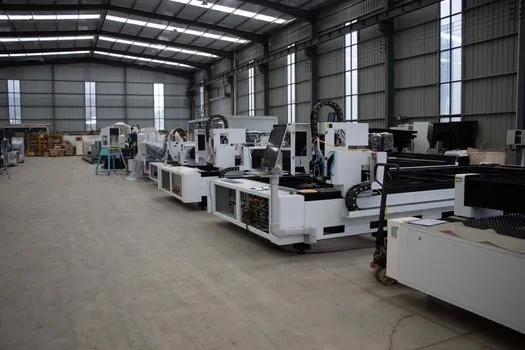
The 2026 machinery buyer workflow splits into five checkpoints that must be locked before production starts: technical requirements, testing evidence, after-sales scope, payment milestones, and shipping terms [S3]. Technical requirements should name capacity, materials, voltage, power, production environment, output tolerance, spare-parts list, and destination-country electrical standards. Testing evidence means test videos, FAT terms in writing, sample-run results, named inspection points, and shipping dimensions.
Common omissions that derail machinery orders: spare-parts list, installation scope, training hours, warranty limits, manual language and format, and post-sale support channels [S3]. For construction-machinery-class equipment, the buyer-side benchmark is that thirteen Chinese companies now sit in the global top 50 construction-machinery makers, with XCMG and Sany both in the top 10, so the domestic field is competitive and willing to negotiate on FAT scope and on-site commissioning [S4]. The standard buyer mistake is paying a deposit before the legal name, bank account, and PI details are confirmed, or using a vague product description that leaves tolerance, packaging, and defect limits undefined until after production has started [S3].
Power tool sub-segment: MOQ, certification, and pitfall patterns
For power-tool buyers, the four main manufacturing clusters each do something different, and the segment-level data point is that domestic Chinese brands have pushed their substitution rate in European and American professional channels to 37.5% [S5]. MOQ at Chinese factories commonly starts near 500 units for cordless platforms, against roughly 5,000 units at the global brands, which is a real entry point for new importers and Amazon or Shopify sellers.
The recurring pitfall patterns are relabeled machines, falsified power ratings, scanned-and-edited certificates, and lithium batteries misdeclared as ordinary cargo [S5]. Certification scope should be checked against destination market: CE for the EU, UKCA for Great Britain, UL or ETL for North America, and PSE for Japan where applicable. For pneumatic tool and power tool categories, the certification file should include a test report from an accredited lab, not a self-issued declaration, and the battery pack should ship under UN 38.3 plus the appropriate dangerous-goods classification, with watt-hour rating on the nameplate matching the safety data sheet. Spec mismatches on input voltage (110 V versus 220 V versus 380 V three-phase) and on cycle rating remain the most common reasons a container is refused at the destination port.
Tooling, accessories, and the rebadged rebar-tool segment
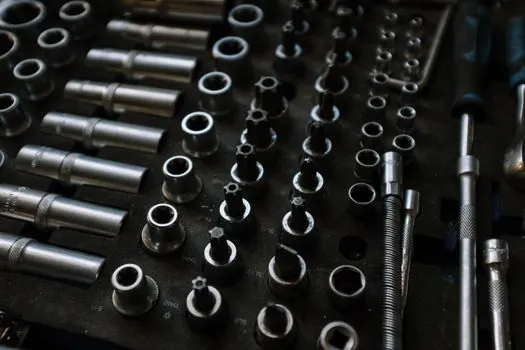
Buyers who need a concrete tool or rebar tool line should treat these as their own sourcing sub-category, because the failure modes are different from a CNC lathe. The same factory-depth argument applies: motor, gearbox, and hydraulic subassemblies can often be sourced within a few kilometers of the assembly line, which compresses sample lead time to 7 to 15 days for many portable tool classes [S5].
For a rebar cutter or bender, the verification list narrows to cutting capacity in millimeters and rebar grade (typically Grade 60 / 420 MPa or Grade 75 / 520 MPa), hydraulic pressure rating, cycle time per cut, and noise level at one meter. For a concrete vibrator or power trowel, the spec is input power, shaft speed or frequency, head diameter, and IP rating of the motor housing. Certification on these lines varies by destination, but a CE technical file plus a factory ISO 9001 certificate is the minimum most EU buyers will accept, and a UL or ETL listing is the parallel requirement for North America. Volume buyers should ask for a sample-run video on the actual production line, not a marketing clip, before authorizing the balance payment.
Signals to track in the next buying cycle
Two trackable signals will reshape the 2026–2027 sourcing map: (1) the ongoing export trajectory of Chinese construction machinery, with Q1 2026 already at USD 16.07 billion and excavator exports up 33.5% in the first half of the year to over 73,000 units [S4], and (2) the cluster-by-machine-category verification layer now published as a buyer-side map rather than as a marketing list [S2]. The next decision node is the FAT contract: buyers who write a measurable acceptance-test protocol into the PI, rather than accepting a generic "machine runs" clause, will see the largest drop in post-shipment disputes.
Related analysis: Pharmaceutical Dock Leveler Spec: Hygienic Finish, Hydraulic Drive, Sealed Pit.