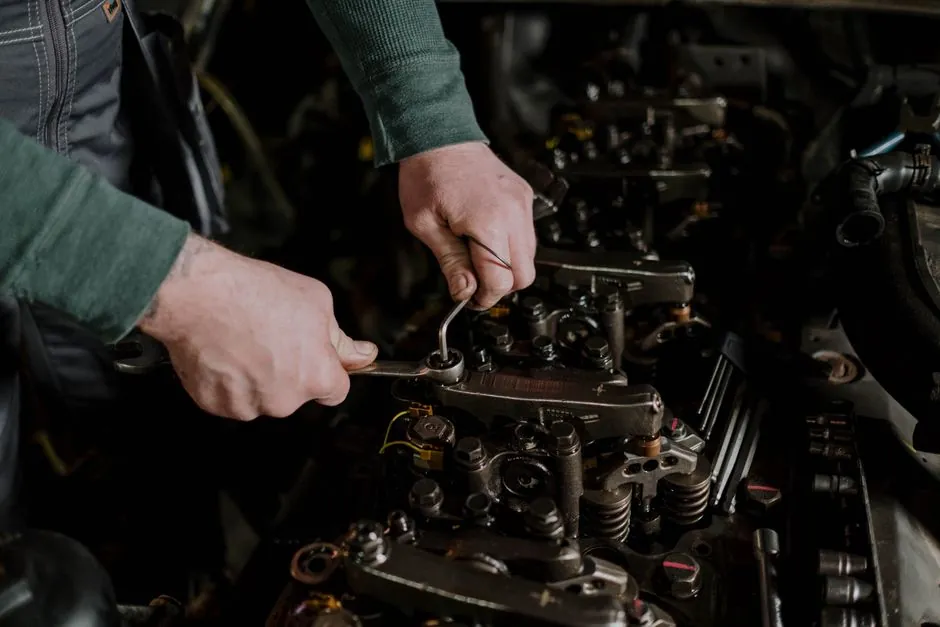
Procurement teams buying CNC machine tools in mid-2026 face a market where a single workpiece mix can swing tooling cost per part by 40-55%, depending on which alloy is selected and how the machine is matched to it [S3]. Choosing equipment and material in tandem, not in sequence, is the first decision that separates a defensible capex from a rework budget.
The window between July 2026 and August 2026 saw four independent procurement guides published, each converging on the same conclusion: machines, materials, and supplier QA must be specified together. A precision lathe that holds ±0.01 mm on day one but drifts after 8 hours of spindle-on time is not a precision lathe, it is a sample-day instrument, and that distinction is the centre of gravity in current buying guidance [S4][S5].
Match the Machine Architecture to the Workpiece Family First
CNC machine tool families split into four functional buckets, and each one imposes a different load profile on the part, the fixture, and the operator [S4]. CNC lathes serve rotationally symmetric parts and are configured as single-spindle, twin-spindle, or sub-spindle depending on whether re-chucking is to be minimised or part flow automated; X and Z travels set the maximum machinable diameter and length, so they must be sized to the largest blank, not the average blank.
CNC milling machines take prismatic parts, pockets, and freeform surfaces, with the axis count (3-axis to 5-axis) defining what can be reached in a single setup [S4]. Machining centres add an automatic tool changer and often a pallet system; vertical machining centres suit flat parts and moulds, while 5-axis centres reduce setup count and improve dimensional consistency on complex geometries. When tolerance pushes past what cutting can hold, cylindrical or surface grinders, plus wire or die-sinking EDM, enter the spec.
Spec the Material and the Machine in the Same DFM Pass
The Machinability Index is the single number that quantifies how a workpiece behaves on a given machine, and the 2026 spread is wide: free-machining 6061-T6 aluminum rates roughly 300% the machinability index of B1112 steel, while hardened tool steels fall below 40% [S3]. Aluminum allows cutting speeds up to 800 m/min and minimal tool wear, which suits high-volume runs; carbon steels sit at a 60-80% machinability index and balance strength against cost; hardened alloys demand coated tools and slower feed, with cycle times extending 3-5x.
A documented 2026 case swapped 304 stainless for 4140 alloy steel on a hydraulic valve, and the result was a 40% drop in machine time and a 55% drop in tool cost while keeping tensile strength above 800 MPa [S3]. 4140 in its quenched-and-tempered condition reaches around 950 MPa tensile and is the default for gears, shafts, and structural components, while austenitic stainless 304/316 trades thermal conductivity for corrosion resistance. Buyers who chase maximum hardness as a standalone target end up paying in tool wear and machining hours.
Thermal Stability Is the Hidden Procurement Spec
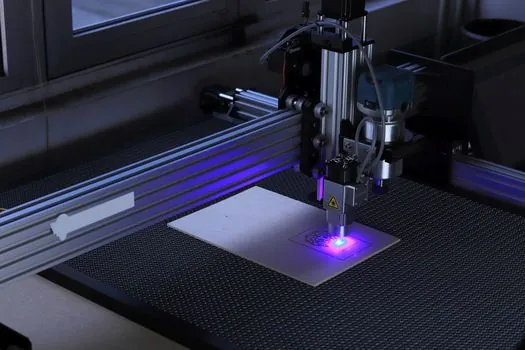
Long-run dimensional stability on a precision lathe machine is governed less by static accuracy and more by how the structure handles heat from the spindle, the bearings, the transmission, and the cut itself [S5]. Differential thermal expansion between machine elements is the dominant accuracy-loss mechanism during multi-shift production, and it cannot be fixed at the controller level.
Two design moves are the usual differentiators in 2026 builds. First, structural thermal symmetry: a double-column symmetrical frame with mirrored tool-slide placement deforms uniformly when it heats up, so the error is shared rather than introduced [S5]. Second, guideway preparation: post-heat-treatment hand scraping and grinding spreads the contact load and lets the lubricant form a uniform oil film, which carries away frictional heat instead of letting it accumulate in the slide. Procurement language should require both, not just "thermal compensation" as a marketing line.
QA Process, Not Just Part Drawing, Is the Supplier Filter
The most expensive variable in machine tool procurement is the part that fits the wrong way because the supplier was never asked to manufacture to a drawing or sample in the first place [S1]. A repeatable buying checklist runs through five items: drawing-matched manufacturing, exact material grade and finish (not a generic description), inspection process before dispatch, a single committed lead time, and a named post-delivery contact for non-conformance.
On the supplier's own floor, the 2026 expectation is ISO 9001 with statistical process control holding Cpk ≥ 1.33, which keeps rejection rates inside 0.5% on runs of 100,000+ parts [S3]. Closed-loop coolant filtration cuts fluid consumption up to 70%, and modern multi-axis CNC services report material yields of 85-95% versus a 50-60% baseline; a 50,000-piece stainless bracket run tracked in 2026 came in at 98.5% first-pass yield, 20.6% faster delivery, and 15% lower cost against the prior method [S3]. Those numbers belong in the RFQ, not the post-mortem.
Tooling, Way-Protection, and the Peripherals That Decide Uptime
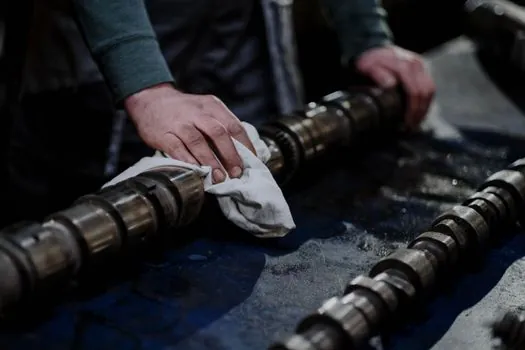
Uptime on a CNC cell is decided as much by way-protection, rebar couplers, and linear-guide cleanliness as by spindle hours, and these peripheral categories are now part of the standard sourcing checklist for Indian and pan-Asia buyers [S1]. A buyer evaluating crossed-roller guide suppliers should ask the same five questions: drawing match, material grade, pre-dispatch inspection, committed lead time, and after-delivery support, because the answer pattern predicts field failure rate.
Software-side, the procurement function itself is being retooled. Specialist platforms such as Kodiak Hub, a Stockholm-based SRM system founded in 2015, integrate with SAP, Oracle, Coupa, and Microsoft Dynamics to consolidate fragmented supplier data, automate onboarding, and run real-time risk and resilience monitoring with KPI scorecards; the company closed a $6 million funding round in 2026 to expand into the US market [S2]. For direct-spend and MRO buyers, these tools sit alongside the older source-to-pay and e-auction suites and are reshaping how machine tool sourcing is documented.
Criteria-Based Comparison of the Main Machine Families
Across the four primary CNC families, four procurement criteria give a defensible side-by-side view for an RFQ scorecard [S4]. On tolerance ceiling, machining centres with 5-axis reach roughly ±0.01 mm on functional bores when the thermal spec is met, while standard 3-axis milling typically holds looser unless guideway and controller resolution are upgraded; grinding and EDM exceed both when the target tolerance goes beyond cutting capability.
On material fit, lathes handle rotationally symmetric parts in aluminum, carbon steel, and alloy steel up to 4140-class; mills take prismatic and freeform parts in the same material envelope; EDM is the only practical route for hardened tool steels above ~60 HRC and for thin-walled features that would distort under cutting force. On setup count, 5-axis machining centres compress multi-op parts into one setup, while a 3-axis mill plus a lathe will need two fixtures and a re-grip. On capex vs flexibility, a vertical machining centre plus a separate lathe is the common entry combination, while a 5-axis centre plus a sub-spindle lathe covers roughly 80% of mid-volume mixed-batch work, and EDM is added only when the part mix demands it.
Procurement Workflow: From Drawing to First Qualified Part
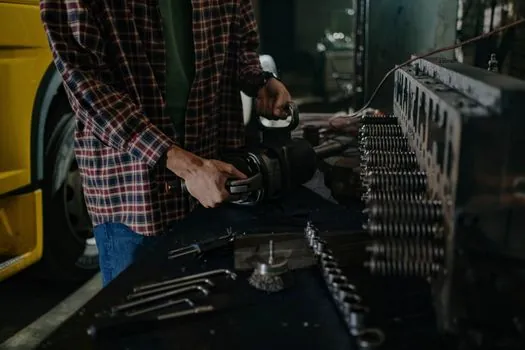
Procurement strategy collapses to a five-step loop once the machine family and material are pre-selected. Step one, lock the workpiece envelope: largest diameter, longest length, hardest material, tightest tolerance, and required Ra, then derive the minimum axis travel, spindle power, and rigidity class [S4]. Step two, demand ISO 9001 certification and Cpk ≥ 1.33 evidence on similar parts from the OEM or the job shop, with rejection-rate and first-pass-yield data from the last 12 months [S3].
Step three, run a DFM pass that compares material options by machinability index, not by hardness alone, and document the expected cycle-time and tool-cost delta in the RFQ. Step four, require a thermal-stability commitment in writing: structural symmetry, hand-scraped guideways, and a published warm-up-to-stability curve for the spindle [S5]. Step five, fix the lead time in calendar days, not in weeks, and name the post-delivery support contact in the purchase order [S1]. A buyer who runs all five steps before signing the PO typically reports 20-30% lower total cost of ownership across the first three years of the asset, consistent with the 2026 procurement datasets [S3].
The most trackable near-term signal for buyers is the publication of supplier-specific thermal-stability curves on OEM datasheets, replacing the older "thermal compensation included" line item, with 4140/6061-T6 cycle-time benchmarks now appearing in 2026 RFQ responses. A second signal is the migration of supplier scorecards from static questionnaires to live KPI feeds from SRM platforms such as Kodiak Hub, which raised $6 million in 2026 to scale that workflow into the US manufacturing base [S2].
Spec-level background on the components involved: linear guide.
Related analysis: Cement Demand Signals: Enforcement Failures, M&A Consolidation, and Binder Substitution....