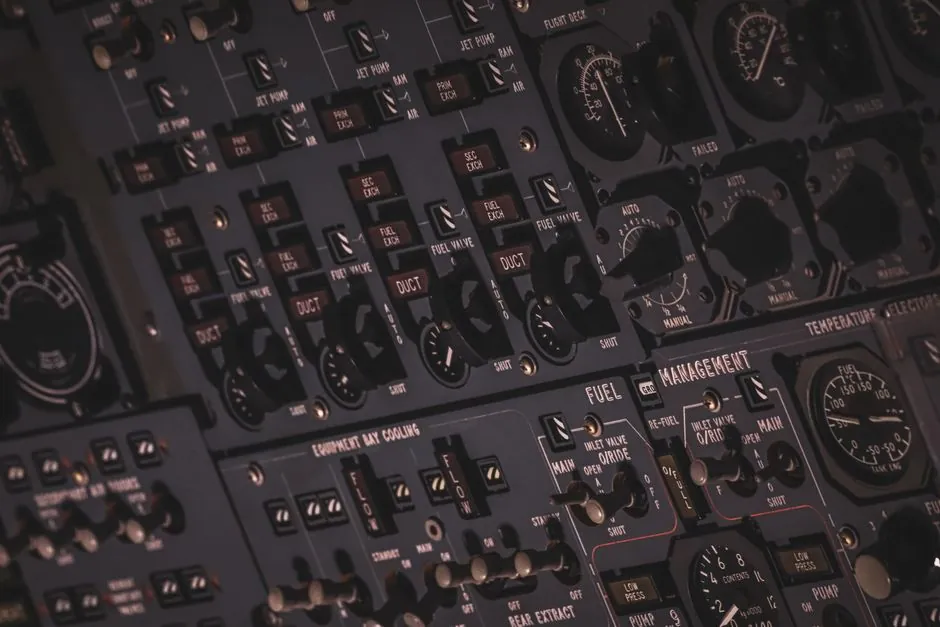
Selection of a combined pushbutton and pilot light in 2026 hinges on four binding constraints: panel cut-out diameter (22mm or 30mm), supply voltage (AC/DC 6V to 220V), contact block density (1NO up to 2NO/2NC), and hazardous-area certification, with Ex db IIC Zone 1/2 units reserved for flammable atmospheres [S1][S2][S4].
Compact 22mm and 30.5mm modular series now dominate OEM panel builds because the LED is integrated into the operator body, removing the need for a separate stack-light and cutting installation depth, while still supporting momentary and maintained action in a single SKU [S1][S8].
Cut-out Diameter: 22mm vs 30mm vs 30.5mm
The most fundamental decision is panel cut-out, because once a panel is punched for 22.5mm holes, fitting a 30.5mm operator is impossible without reworking the sheet metal. The 22mm format is the de-facto world standard for plastic-bodied industrial control stations, with Clipsal's 22mm ZB5 series and Clipsal-equivalent SchZB5AW7A1721 plastic double-headed pilot light both mounting in a 22mm hole [S5][S6][S7].
30mm mount is mandatory for North American heavy industrial and for hazardous-area operators. Allen-Bradley's 800GP1EX 30mm White Pushbutton Pilot Light uses the larger cut-out to accommodate a flameproof Ex db IIC body that can be installed in Zone 1 and Zone 2 areas, which is the same dimensional class as Bartec Feam's Ex db IIC pilot lights, pushbuttons, and handles [S2][S3][S4]. Teknic Electric also offers a 30.5mm metallic series that is "majorly used in Railways" because the larger bezel tolerates vibration and impact better than plastic [S8].
As a quick rule: pick 22mm plastic for general machine panels, packaging lines, and indoor control desks; pick 30mm or 30.5mm metal when the spec calls for hazardous-area certification, railway, or outdoor wash-down duty. A useful cross-reference for an adjacent decision is our linear guide selection for packaging lines: 2026 spec path, which follows the same panel-builder logic of matching a small-format standard to a high-volume line.
Voltage Range and Transformer-Less LED Drive
Modern LED-integrated operators accept AC/DC 6V, 12V, 24V, 36V, 48V, 110V, and 220V on the same lamp block, with no step-down transformer required at any of those taps, which removes a common panel-builder failure point [S1]. For a 24Vdc control cabinet the same SKU is wired directly; for a 110Vac machine the same SKU is also wired directly, only the legend colour and contact block change.
This is a real cost saver on retrofit work: a 6V-220V integrated-lamp pushbutton can replace an older transformer-based pilot light without rewiring the secondary. Jubilee JEC's S2-series round push buttons in 22/25mm format follow the same philosophy, with separate 1A and 1B contact codes for green and red operators that map cleanly to a start/stop cluster on a 24Vdc PLC panel [S9]. For higher-tier procurement that also touches flow instrumentation, our thermal mass flowmeter sizing and selection guide walks through the same "match the supply, not the box" logic.
Contact Configuration and Stack Density

Standard contact blocks come as 1NO, 1NC, 1NO-1NC, 2NO, and 2NC, and a flat illuminated pushbutton can mount three contacts per layer for a total of six contacts in a single 22mm hole, which is useful for combined start/stop + indicator-lamp pushbuttons where panel real estate is tight [S1]. Jubilee JEC codes its blocks more simply: "1A" denotes 1NO and "1B" denotes 1NC, which is the format most European and Asian panel shops are used to [S9].
For a maintained-action selector with an illuminated position, look for a "push-lock / turn-reset" head rather than a spring-return head; Jubilee JEC's S2ER-E3RB is the typical 40mm red mushroom emergency-stop that uses this action so the operator cannot re-start the line without a deliberate twist [S9]. As a comparison, Allen-Bradley 800GP1EX is purely a pilot light (no contacts), intended as a remote status repeater in a hazardous area rather than as a command device [S2][S3]. For related decisions in motion control, our linear guide selection for material handling applies a similar trade-off between contact density (blocks per station) and panel real estate.
Body Material: Polycarbonate Plastic vs Metal
Plastic operators use a polycarbonate body and a polycarbonate diffuser, which is light, cheap, and resistant to UV; the Feam/Bartec datasheet lists "Body: polycarbonate, Diffuser: polycarbonate" as the standard build for non-metallic pilot lights [S4]. The Clipsal 22mm plastic illuminated pilot light (SCHZB5AW7A1721) is the same logic: a plastic double-headed pushbutton for industrial control panels, listed at AUD $53.90 trade price [S5][S6].
Metal operators, typically brass-nickel or zinc alloy with a chrome bezel, are specified where impact, solvents, or temperature swings would attack plastic. Teknic's 30.5mm metallic range is recommended for railway and outdoor cabinets; the Feam Ex db IIC range is also metallic because the flamepath must be machined metal to contain an internal explosion [S4][S8]. For corrosive chemical plants, even a metal-bodied Ex db unit still needs a comparison against stainless-enclosed alternatives such as those covered in our best cable drag chain for chemical processing: 2026 spec path, since cable carrier life often sets the panel's IP rating in practice.
Colour Coding and Legend Conventions

Standard illuminated pushbutton colour codes are Red (R), Yellow (Y), Green (G), Blue (S/Blue), and White/Black, with the five-colour set sufficient for IEC 60073-style status indication (red=stop/danger, green=run/safe, yellow=warning, blue=mandatory, white=general info) [S1]. The Jubilee JEC S2-series ships in green (1A), red (1B), and black (1A) round 22/25mm caps, covering the three most common commands on a machine [S9].
For double-headed units, the convention is green-on-top for start and red-on-bottom for stop, as built into Clipsal's SCHZB5AW7A3740 22mm plastic double-headed pushbutton, which pairs one green and one red flush button in a single 22mm hole and is widely used on machinery operator stations [S7]. The Clipsal single-head illuminated white pilot (SCHZB5AW7A1721) is the typical "machine-on" repeater next to that start/stop cluster [S5].
Hazardous-Area Certification: When You Need Ex db IIC
If the panel is in a Zone 1 or Zone 2 area with flammable gas or vapour, the operator must carry Ex db IIC Gb marking plus an ATEX and/or IECEx certificate, and it must be installed on a certified Ex enclosure rather than a plain steel box [S2][S3][S4]. The Allen-Bradley 800GP1EX lists "Zone 1 and Zone 2 compatible" and is part of the 800G family built to AS/NZS 3000 wiring rules, while Bartec Feam adds Inmetro, EAC, and NEC 505 coverage on top of ATEX/IECEx for global projects [S2][S3][S4].
Outside hazardous areas, the same physical 30mm form factor is acceptable without Ex marking, which is why most 30mm catalogue items in the trade channel (Schnap, for example) carry a 30mm pilot light at AUD $58.20 trade / $72.50 list without the Ex surcharge, while the Ex-rated equivalent costs several times more [S2][S3]. If the panel does not have a flammable atmosphere, do not pay for an Ex-rated operator; conversely, if it does, a non-Ex plastic 22mm unit is a safety non-conformance, not a cost saving. Related process-side decisions are covered in our metering pump TCO reference, since pump and panel sit on the same skid.
Selection Comparison: Common Options Side by Side
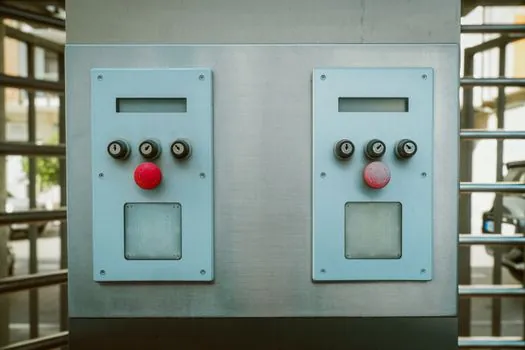
The four most common 2026 build-outs, lined up against four decision criteria, look like this: (1) Clipsal 22mm plastic double-headed SCHZB5AW7A1721 is the cheapest at AUD $53.90 trade, fits general indoor panels, is non-Ex, and runs 6V-220V integral LED; (2) Allen-Bradley 800GP1EX 30mm is AUD $58.20 trade, fits Zone 1/2 areas, is a pilot-light only (no contacts), and uses AS/NZS 3000 wiring; (3) Jubilee JEC S2-series 22/25mm is the most code-flexible (1A/1B and 40mm mushroom), is non-Ex, and supports push-lock/turn-reset emergency-stop action; (4) Bartec Feam Ex db IIC 30mm is the only option here for Zone 1/2-21/22 with ATEX/IECEx/Inmetro/EAC/NEC 505 coverage, polycarbonate or metal body, and is the most expensive line in this group [S2][S3][S4][S5][S6][S7][S9].
Who should NOT pick the mainstream 22mm plastic option: any panel that sits within 1m of an open solvent line, any outdoor panel without a UV-stable hood, any railway cab (vibration cracks the polycarbonate bezel), and any food-and-beverge line where IP69K wash-down is required [S1][S4][S8]. In each of those cases, step up to a 30mm or 30.5mm metal operator or to a fully Ex-certified unit. The shortlist logic for a buyer is therefore: start with cut-out, then add voltage, then add contact count, then add Ex zone, and only then compare price.
Track the following two signals over the next buying cycle: (a) the Allen-Bradley 800G family revision notes, since 800GP1EX is the bench-mark for 30mm Ex pilot lights and any IECEx update will flow through the Australian trade channel first [S2][S3]; and (b) Teknic's 22.5mm vs 30.5mm mix shift on railway orders, because that is a leading indicator of how fast the 30mm metal format is replacing 22mm plastic in heavy-industry cabinets [S8].
The underlying component specifications are covered under pushbutton pilot light, emergency light, and safety light curtain.