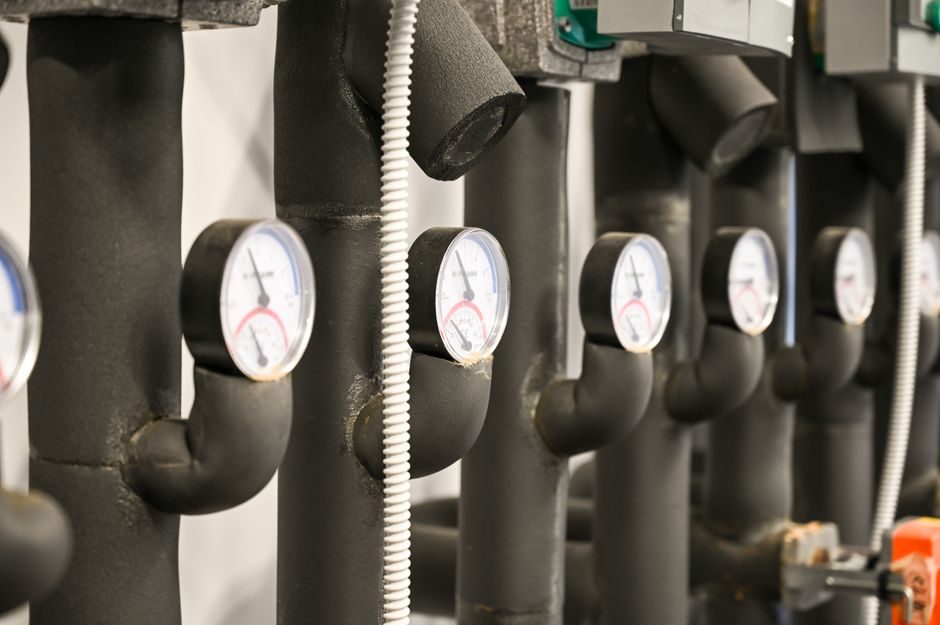
Clean-in-place pressure reducing valves on food process lines must satisfy four independent evidence gates before they can be wired into a validated CIP loop: hygienic design certification, food-contact elastomer compliance, hygienic surface finish, and material traceability documentation [S2][S3].
Stainless 316L body, EPDM or FKM diaphragm, Ra ≤ 0.8 µm internal wetted finish, and a 3-A or EHEDG certificate are the minimum spec envelope most European dairy and beverage EPCs now write into PRV RFQs as of mid-2026 [S2].
Which Hygienic Design Certificate Applies to the PRV Scope
3-A Sanitary Standards and EHEDG Type EL Class I/II are the two certificates auditors actually ask for on a cleanable CIP PRV, and they cover overlapping but non-identical scope items on the wetted path [S2].
3-A covers the valve body geometry, seal pocket drainability, and self-draining orientation when the valve is installed per the certificate drawing; EHEDG Type EL Class I adds a cleanability test against a defined challenge organism on the disassembled or in-place valve. For diaphragm-actuated PRVs in the Cla-Val 90-21 / 90-01 class (rated 250-400 psi, 180 °F / 82 °C), the hygienic variants must be ordered as the -S or 3-A option, not the fire-protection stock SKU [S3]. A standard industrial PRV — for example a Goetze KG 481 series brass-bodied unit rated 0.5-40 bar [S2] — cannot be reclassified as hygienic by retrofit; the body geometry, gasket grooves, and pocket dimensions are not 3-A compliant.
Failure pattern I see repeatedly: a project buys a 316L PRV with a Ra 0.8 finish, then files it under "hygienic" without the certificate number on the data plate. The 3-A / EHEDG mark on the body or a separate certificate PDF must be on file, with the certificate number cross-referenced to the vendor's published 3-A / EHEDG certificate database entry [S2].
Food-Contact Elastomer Compliance: FDA 21 CFR and EU 1935/2004
Every wetted elastomer — diaphragm, O-rings, stem seals, seat inserts — must carry a compliance statement to FDA 21 CFR 177.2600 (US) and EU Regulation 1935/2004 (EU) on food contact materials, and a finished-goods Declaration of Conformity (DoC) must name each compound [S2].
Three things to verify on the DoC, not just the data sheet: (1) the compound family is named (EPDM, FKM/Viton, PTFE, FFKM), not a generic "food-grade rubber"; (2) the cure process is named (peroxide-cure EPDM is preferred over sulfur-cure for low extractables); (3) the DoC lists both the US and EU regulations explicitly, with the EU 1935/2004 article 3 traceability statement, not just FDA. For CIP loops running at 80-95 °C with sodium hydroxide and hot-water-acid alternation, peroxide-cure EPDM is the practical default; FKM is reserved for higher-temperature or fatty-product lines where EPDM extractables or swelling becomes a concern [S2].
3-A / EHEDG does not replace the elastomer DoC — they are independent gates. A valve can be 3-A certified with a non-FDA elastomer if the standard scope excludes the seal; food process auditors treat that as a finding.
Surface Finish, Wetted Material, and ASME BPE Alignment
Wetted path must be 316L stainless (ASTM A276 or A479) with documented Ra surface finish per ASME BPE-2019 (or the current revision your project specifies) — typically Ra ≤ 0.8 µm (32 µin) for clean-in-place diaphragm PRVs, with Ra ≤ 0.5 µm (20 µin) required for aseptic / sterilized-in-place loops [S2].
Mechanical-polished and electropolished are not equivalent. Electropolish reduces Ra and removes the sub-surface iron-contamination layer that harbours biofilm, which is why dairy and beverage specs default to "electropolished, Ra ≤ 0.8 µm" rather than "mechanical polish Ra ≤ 0.8 µm" [S2]. Documentation that the electropolish was done, not just specified, is a measurable surface-finish reading traceable to a calibrated profilometer, with the serial number of the test instrument on the certificate.
For PRVs that are skidded into a CIP return or supply loop, the wetted finish must extend to the body bore and the diaphragm cavity, not just the visible trim — auditors look for a section drawing that calls out the electropolished surfaces by Ra value. Compare this to fire-protection or HVAC PRVs such as the Cla-Val 90-21 (250-400 psi, 180 °F ductile-iron body) where hygienic finish is irrelevant and the certificate scope is FM/UL fire [S3]; using that SKU on a CIP return line is a finding on its own.
Selection Criteria Map: Which PRV Type for Which Food Service
For a food process CIP PRV, four decision criteria separate the candidate types: cleanability (3-A / EHEDG certificate scope), wetted material (316L vs brass/bronze), control characteristic (fixed setpoint vs adjustable pilot), and pressure/temperature class [S2].
Diaphragm-actuated globe PRVs (Cla-Val 90-21 hygienic variant, 250-400 psi, 180 °F) suit clean-in-place supply loops where setpoint stability matters and slow-acting pilot control is acceptable [S3]. Cartridge-style logic elements (HydraForce ER10-S30 screw-in, spring-biased reducing element) suit OEM skid builders integrating the PRV into a hygienic manifold, but 3-A certification is on the manifold, not the cartridge, and the integrator has to prove the wetted path [S1]. Piston- or spool-type hydraulic PRVs (Goetze 481 series, 0.5-40 bar, -10 to 95 °C) are out of scope for food — they are designed for industrial hydraulics, not CIP [S2]. Plastic water PRVs (POM body, 3-10 kg inlet, 2-4 kg outlet) suit low-pressure point-of-use lines, not validated CIP loops [S6].
Pressure class on food-side loops is normally capped at PN16 (≈ 232 psi) for stainless hygienic PRVs, well below the 400 psi class on the Cla-Val fire-protection line [S3]; over-specifying pressure class drives unnecessary cost and complicates 3-A documentation because higher-pressure variants often have heavier wall sections and different gasket grooves. Match the PRV pressure class to the CIP loop design pressure, not the utility-side supply pressure.
Material Traceability and Mill Documentation

Material traceability is a gate, not a checkbox: each valve body must ship with a mill test certificate (EN 10204 3.1) naming heat number, 316L chemistry, and the wetted-component list, and that heat number must be cross-referenced on the body data plate [S2].
Two failure modes repeat. First, the PRV ships with a generic "material certificate" that does not name the heat number — that is a 2.2 test report, not a 3.1, and is insufficient for food-grade specs. Second, the certificate is provided for the body only, not for the trim, diaphragm, or spring wetted components; the audit finding reads "incomplete traceability of wetted parts." Require 3.1 certificates for the body and for any wetted machined component, with the heat number for the body and the elastomer batch number for the diaphragm. The elastomer batch number is what ties the FDA 21 CFR / EU 1935/2004 DoC to a specific production lot, and without it the DoC is not auditable.
Supplier Verification: How to Tell the Certificate is Real and in Scope
A valid 3-A or EHEDG certificate is verifiable directly on the issuing body's online registry against the certificate number, model code, and revision date [S2].
Three concrete checks before signing the PRV PO. (1) Pull the 3-A certificate PDF from the 3-A Sanitary Standards website and confirm the model code on the certificate matches the model code on the supplier quote — suppliers frequently quote a hygienic part number but ship a standard industrial SKU. (2) Confirm the EHEDG certificate (if claimed) lists the PRV as Type EL Class I or II, not just "EHEDG-cleanable" or a generic "hygienic design" line; Type EL Class I is the only EHEDG designation that includes the cleanability test. (3) Confirm the elastomer DoC is dated within the past 24 months and names the part numbers actually shipped — vendors sometimes reuse old DoCs across compound changes. For the broader supplier audit, cross-reference the manufacturer's quality system to ISO 9001 and, for dairy / pharmaceutical crossover, ISO 22000 or FSSC 22000 [S5].
Common Audit Findings and How to Pre-empt Them

Five findings show up on roughly two-thirds of food-process PRV audits: missing 3-A / EHEDG certificate number on the data plate, 2.2 mill certificate instead of 3.1, FDA DoC that does not name the EU 1935/2004 regulation, electropolish specified but not measured, and elastomer DoC without batch number linkage to the shipped part [S2].
Pre-emption is mechanical, not judgemental. Build a four-row PRV incoming-inspection checklist (hygienic certificate, elastomer DoC + batch number, body 3.1, wetted-finish profilometer reading) and make sign-off on all four a purchasing-receipt hold; do not release the PRV to the CIP skid until all four clear. This single discipline eliminates the recurring finding pattern and is the reason some food-grade EPCs write a 12-page PRV spec for what is mechanically a commodity item.
How a PRV Compares to Other Loop Components on the Same Gates
The four gates (hygienic design, food-contact compliance, surface finish, traceability) are not unique to PRVs — they apply equally to the rest of the CIP loop, which is why consistency across the bill of materials matters more than per-component optimisation [S2].
Compared with a CIP supply pump or a CIP return pressure reducing valve on the same skid, the PRV is the component most often short-cut on the elastomer gate because the diaphragm is treated as a "seal" rather than a food-contact part. A safety relief valve on the same loop faces the same four gates, plus an additional PED / ASME pressure-vessel-safety relief certification gate that the PRV does not. On instrumentation side, the multifunction process calibrator used to set the PRV outlet pressure has no food-contact gate at all, which is why the PRV setpoint verification step does not need a hygienic-certificate hand-off — only a traceable calibration certificate. Use that asymmetry to scope the audit effort: concentrate the four-gate evidence on the wetted-path components, not on the bench instruments.
For a project that already has 3-A / EHEDG piping and a documented CIP skid, the practical next step is to lock the PRV vendor list to two or three makes whose hygienic variants are already on file in the 3-A registry, and to add the four-row incoming-inspection checklist above as a purchasing-controlled document. If the project is still in PRV vendor selection, the deciding question is which vendor's hygienic line has the cleanest 3-A certificate trail — not which has the widest pressure class, since 90% of food-side CIP PRVs end up specified at PN16 or below [S2][S3].
This topic is covered further in Degassing & Refining Unit Types: Classification, Spec Ranges, and Selection Boundaries.