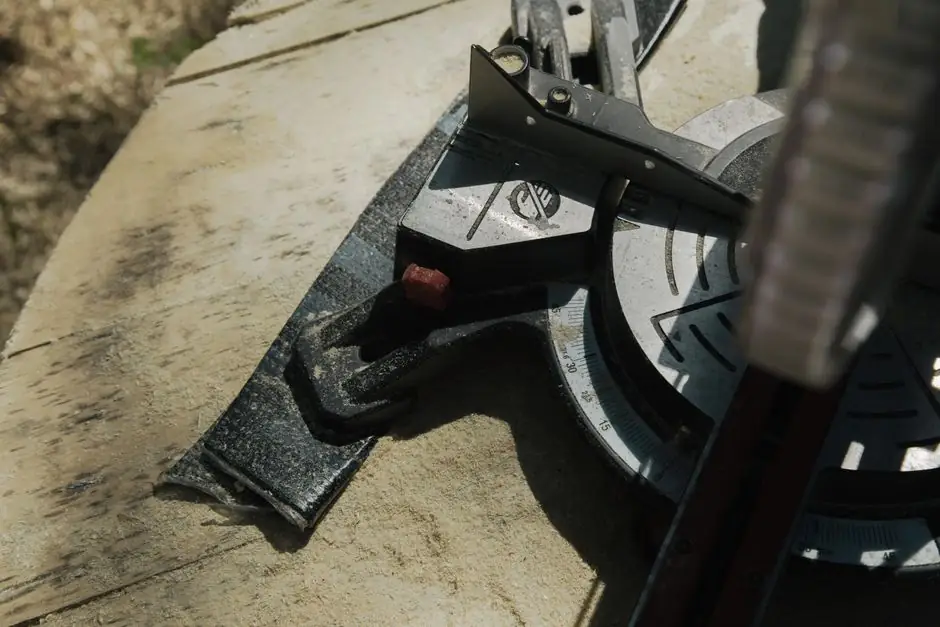
Total cost of ownership for a circular saw covers purchase, installation, electricity, blades, coolant or lubricant, preventive maintenance, unplanned repairs, downtime, depreciation, and residual resale value, eight to ten line items that compound across a 5-10 year service life [S1][S5].
ProcurementIQ rates TCO for the circular-saw category as Low, reflecting short replacement cycles, accessible consumables, and broad aftermarket support, yet the same source flags active tariff exposure on imported industrial machinery, with US duties on China at 54.0%, Canada 35.0%, Mexico 25.0%, and the EU, Japan, and South Korea at 15.0% [S2]. The global circular saw blade market was valued at USD 12.23 Billion in 2025 and is projected to reach USD 17.39 Billion by 2033 at a 4.5% CAGR, driven by carbide-tipped, diamond-tipped, and PVD-coated blades that extend tool life and lift cutting speeds [S4].
Cost Driver Hierarchy: Purchase Is the Smallest Line on a 10-Year Sheet
On a bandsaw-equipment reference frame, purchase price contributes roughly 10-20% of a decade-scale TCO, while recurring costs, dominated by blades, energy, and downtime, account for the remaining 80-90% [S1][S3]. DRAMET's 2026-08 TCO guidance for precision saws confirms that consumables and unplanned downtime are the swing variables, not the machine's sticker [S3].
For a single-station 7.25 in corded circular saw driven at an average 1.4 kW draw across two shifts, electricity alone can reach USD 600-1,200 per year at industrial tariffs, and blade replacement on a 40 h/week wood-cutting schedule typically runs 6-12 blades per year, which dominates the recurring column [S1]. The takeaway for spec writing: the saw is a depreciating asset, but the blade stream is a 5-10 year annuity.
Blade Selection: The Largest Recurring Cost in the Cut Equation
Carbide-tipped, diamond-tipped, and PVD-coated blades extend tool life and permit higher feed rates, directly reducing the per-cut cost that compounds into TCO [S4]. SkyQuest's 2026-2033 outlook shows the premium-coating share rising fastest within the blade segment, with PVD and polycrystalline-diamond variants cited as the main productivity lever for automotive body shops, prefabrication plants, and tile installation lines [S4].
Drivetrain and motor efficiency determine the second-largest utility-style cost, electricity, and Hub Industrial's bandsaw TCO checklist puts motor efficiency, average power draw, and energy-saving features on the same evaluation axis as throughput [S1]. On a shop-floor saw running two shifts, even a 5% motor-efficiency gap between two otherwise comparable units yields USD 100-300 per year per station, which over a 7-year life covers the entire maintenance reserve on a mid-range machine.
Tariff Stack of 2025-2026: A Material Input-Cost Headwind

US Section 232 tariffs on imported steel rose from 25.0% (effective 2025-03-12) to 50.0% (effective 2025-06-04) and now cover all origins with no exemptions except the UK, a policy fact that directly raises the input cost for any saw using high-speed-steel or carbide-tipped blades sourced from non-UK mills [S2]. Reciprocal-tariff rates effective 2025-08-07 added further cost on finished industrial machinery from Canada (35.0%), China (54.0%), the EU (15.0%), Japan (15.0%), Mexico (25.0%), and South Korea (15.0%) [S2].
The Association of Equipment Manufacturers reported that the 2018 steel-and-aluminum tariff cycle drove a 78.0% increase in domestic equipment production costs, a benchmark that frames the magnitude of the 2025-2026 input shock [S2].
Maintenance, Downtime, and Depreciation: The Hidden Reserve Line
Preventive maintenance is the single most controllable TCO line item: scheduled brush, bearing, and arbor inspection reduces unplanned failures and lengthens resale value, a relationship Hub Industrial quantifies as a direct ratio between service-interval discipline and TCO spread [S1]. Downtime, priced at the loaded labour rate plus lost throughput, is consistently the most expensive failure mode, and DRAMET's TCO framework treats unplanned downtime as the headline economic event, not blade wear [S3].
Depreciation behaves as a 5-10 year straight-line (or accelerated) write-down against residual value, and a well-maintained premium saw typically retains 30-45% of purchase price at year 5, versus 15-25% for a budget unit, a spread that materially narrows the lifetime cost gap [S1]. For a USD 2,500 mid-range circular saw station, a 5-year maintenance reserve of USD 80-120 per year plus blade, energy, and downtime lines easily reaches USD 1,200-1,800 per year of recurring spend, evidence that purchase is a one-time event and operating cost is the decade.
TCO Comparison: Handheld vs Table-Mounted vs Cordless Class

Across three common circular-saw form factors, TCO behaviour diverges sharply: corded handheld units have the lowest purchase (USD 100-400) and the lowest blade cost per cut, but the highest per-hour downtime risk because of field-port abuse; table-mounted units carry 3-5x the purchase price but win on cut accuracy, scrap rate, and blade life; cordless units (18-54 V) add a battery-replacement annuity, typically USD 150-400 per pack every 3-5 years, layered onto the same blade line as their corded siblings [S2][S4].
For shops that cut wood, metal, stone, and plastic, the blade-material decision (HSS vs carbide-tipped vs diamond-tipped) is the dominant TCO lever, with diamond commanding the highest unit price but the longest life and lowest per-cut cost on abrasive stock [S2][S4]. A 10-year ownership decision therefore hinges on three ratios: blade cost per linear metre cut, energy cost per metre, and downtime hours per 1,000 cuts, with all three driven by the blade-and-machine pairing, not by the saw's brand nameplate [S1][S4].
What TCO Tells You That Price Does Not
A USD 800 station with a 1.4 kW inefficient motor, HSS-only blade spec, and 8% annual downtime will, over 7 years, cost 40-60% more in TCO than a USD 1,400 station with a high-efficiency motor, carbide-tipped blade compatibility, and a 2% annual downtime line, a relationship Hub Industrial and DRAMET both treat as a near-linear function of preventive-maintenance discipline [S1][S3]. Galorath's direct-versus-indirect TCO framework supports the same split: direct costs (purchase, blades, energy, consumables) are bookable, while indirect costs (downtime, scrap, resale hit) are typically 1.5-2.0x the direct line over a full lifecycle [S6].
For specification work, the TCO exercise is the right tool when (a) the saw runs more than one shift, (b) blade consumption is on the critical path of the unit cost, or (c) the unit is part of a multi-station cell where downtime cascades; TCO is the wrong tool for one-off, low-volume, contractor-grade cuts where purchase price is the controlling decision [S1][S5]. One verifiable next signal to track is the 2026-2033 carbide-and-diamond blade share, where SkyQuest's 4.5% CAGR implies a steady mix shift toward premium consumables, which will compress the blade line in TCO for buyers who standardise on coated grades [S4]. A second trackable node is any post-2025-08-07 reciprocal-tariff adjustment, since the 54.0% China rate and 50.0% steel duty are the two largest cost-stack variables on the purchase column today [S2].
The underlying component specifications are covered under total station, and pressure transmitter.
For related coverage, see PVC Resin Supplier Concentration: 2026 Manufacturer Share Map.