
For electrical-installation crews, a 7-1/4-inch (184 mm) corded 15-amp in-line circular saw covers roughly 80% of on-site cutting tasks, including wood backing, plywood backboards, metal cable trays with the right blade, and PVC conduit [S1][S3].
The choice between corded and cordless, and between in-line and worm-drive geometry, is driven by three job-site variables: outlet availability, vertical-cut volume, and the dominant material being cut [S3][S4].
Blade Size and Motor Power: the Two Numbers That Decide Everything
The 7-1/4-inch blade is the de facto standard for corded circular saws and remains the most common size stocked on electrical jobsites [S3]. A 15-amp motor at 120 V delivers roughly 1,800 W of cutting power, enough to drive a 24-tooth framing blade through pressure-treated 2x lumber at 4,500 rpm without bogging, as demonstrated on the Makita 5377MG platform [S2].
For cordless models on the same jobsite, 18 V and 20 V Max platforms dominate, with rear-handle worm-drive designs gaining share for framers and electrical contractors who need a two-handed grip on vertical cuts into OSB or plywood sheathing [S2]. Note that 18 V and 20 V Max describe the same nominal battery class; 20 V Max is a marketing label for the peak unloaded reading of an 18 V nominal Li-ion pack.
Cutting depth at 90 degrees on a 7-1/4-inch saw typically lands between 2-1/2 and 2-7/8 inches, which clears a 2x4 or 2x6 in a single pass and is the practical minimum for cutting through a standard 19 mm plywood backboard without flipping the sheet [S3][S5].
In-Line vs Worm-Drive: Which Geometry Suits Conduit and Tray Work
In-line (sidewinder) saws place the motor perpendicular to the blade, weigh less, and are the common choice for one-handed trim and finish cuts around finished surfaces [S3]. A typical 15-amp in-line saw runs near 6,000 rpm, well suited to fast crosscuts in dimensional lumber used for blocking and backing.
Worm-drive saws align the motor with the blade through a gear reduction, trading top-end rpm for torque, and tip the scales 4-5 lb heavier than a comparable sidewinder [S3]. For repetitive vertical cuts into plywood panels or oriented strand board during panel-board fabrication, the worm-drive geometry holds its speed under load better than a sidewinder of equal amperage.
For electrical-installation scope specifically, the deciding factor is cut orientation: if the crew is making more horizontal cuts on the bench (cutting struts, backboards, short conduit stubs) an in-line saw is faster to deploy; if the dominant cut is vertical (cutting plywood for service-entrance panels, cutting OSB sheathing around recessed boxes) a worm-drive or rear-handle design reduces user fatigue. A broader cross-shop view of circular-saw trade-offs in portability, precision, and power maps the same geometry question across trades beyond electrical.
Corded vs Cordless: Outlet, Runtime, and Generator Logic
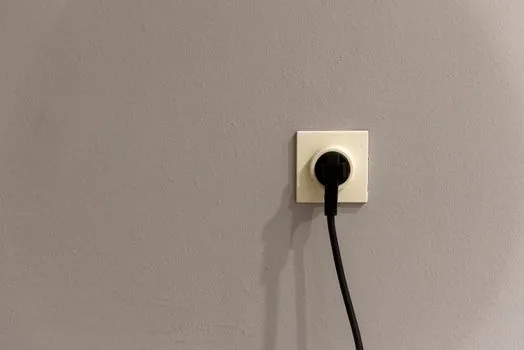
Corded saws deliver unlimited runtime, consistent power from first cut to last, and lower purchase cost per watt of cutting ability, but they require a verified outlet, GFCI protection per NEC 590.6 for temporary site power, and a cord-management plan that does not cross the cut path [S5].
Cordless saws eliminate the cord-vs-cutline hazard, are interchangeable across the same brand's 18 V / 20 V Max battery platform, and are the only option when the crew is on lifts, scaffolds, or rough-in stages before temporary power is landed. The penalty is finite battery capacity: a typical 5.0 Ah pack delivers 60-90 linear feet of 2x4 crosscut before the saw begins to bog [S5].
For generator-fed sites, a 15-amp corded saw pulls roughly 1,800 W continuous; a 3,000 W inverter generator handles one saw plus vacuum cleanup, while a 2,000 W unit will trip if the same saw starts under load. For electrical work that ties into broader low-voltage electrical infrastructure, cordless 18 V / 20 V Max saws are typically the better fit at the device-end of the run, where temporary power has not yet been commissioned.
Blade Match: Tooth Count, Kerf, and Material-Specific Choices
The blade shipped on a new circular saw is almost always a 24-tooth framing blade, optimized for fast longitudinal cuts in construction lumber, not for clean cuts in plywood, trim, or metal [S5]. For electrical-installation work, three blade changes cover most of the material list:
1. 40-tooth or 60-tooth carbide-tipped finish blade for plywood backboards, cover plates, and clean trim cuts around fixtures. The higher tooth count reduces tearout and leaves an edge that needs little sanding before device mounting.
2. 80-tooth or finer metal-cutting blade, either a ferrous-only carbide blade or a dedicated thin-kerf bimetal blade, for cutting steel cable tray, steel strut channel, and EMT up to 1-1/4 inch. This blade swap is the single biggest productivity gain when an electrical crew cuts tray on-site instead of using a bandsaw or porta-band.
3. Diamond or masonry abrasive blade for cutting concrete block, brick, or cast-in-place concrete where a conduit penetration is needed. Note that abrasive blades cut slower than carbide and produce much more airborne dust; a dust shroud tied to a HEPA vacuum is the practical site-control answer.
Blade change speed is governed by the shaft lock, a button that holds the spindle still and is standard on essentially every modern 7-1/4-inch saw [S3]. On electrical jobsites where the crew swaps between wood, metal, and masonry blades multiple times per day, a true shaft lock (not a two-wrench hold) is a hard requirement.
Safety Features That Matter on a Live Electrical Site
An electric brake stops the blade within 2-5 seconds of trigger release by reversing current to the motor, compared to 10-15 seconds coast-down on a non-braked saw, and is a baseline safety feature on every modern corded 15-amp model [S3]. On cordless models, electronic brake recovery time is similar but is governed by the battery management system rather than a reversing field.
The lower blade guard must retract smoothly through the full bevel range (0-56 degrees on most modern saws) without snagging; a guard that binds on a bevel cut is a known kickback precursor [S3]. For electrical-installation cuts made overhead or in tight panel-board cavities, a magnesium or cast-aluminum shoe (base plate) holds flatness better than stamped steel after multiple drops, and fiber-reinforced plastic shoes are the most impact-tolerant option for rough-in work [S3].
On a generator-fed or temporary-power site, double-insulated saws (marked with the double-square symbol) are required because the site grounding electrode system is often incomplete. A grounded three-prong plug on a saw without reliable site ground creates a hazard path through the user; the GFCI on the temporary distribution panel mitigates but does not eliminate this risk.
Selection Criteria and a Direct Comparison
For an electrical-installation crew choosing one saw to start, the comparison below lines up the three practical options against the criteria that drive the decision. [S5]
Corded 15-amp in-line (e.g. Skil 15-Amp, Makita 5377MG): lowest cost per watt, unlimited runtime, lighter weight, requires outlet and cord management. Best for: shop fabrication, fixed bench work, indoor finish-out where temporary power is landed. Limit: cord hazard and outlet dependency on early-phase rough-in.
Cordless 18 V / 20 V Max sidewinder (e.g. Bosch 18V, DeWalt 20V cordless): best portability, no cord, battery interchangeable across the brand's platform, runtime-limited to roughly 60-90 ft of 2x4 per 5.0 Ah pack. Best for: rough-in, lift work, scaffold work, small-diameter repetitive cuts. Limit: cost (often twice the corded equivalent once batteries are counted) and power drop at low state of charge.
Cordless rear-handle worm-drive (e.g. Milwaukee M18 rear-handle, Skil worm-drive): two-handed grip reduces fatigue on vertical cuts, higher torque under load, heaviest option. Best for: panel-board fabrication, vertical plywood cuts, framing-day support. Limit: highest cost and shortest runtime in the cordless category; over-spec'd for trim-out.
Across all three, the saw's role on a broader jobsite often overlaps with that of an impact drill for interior finishing, which covers the fastening side of the same workflow.
Limitations and When to Reach for a Different Tool
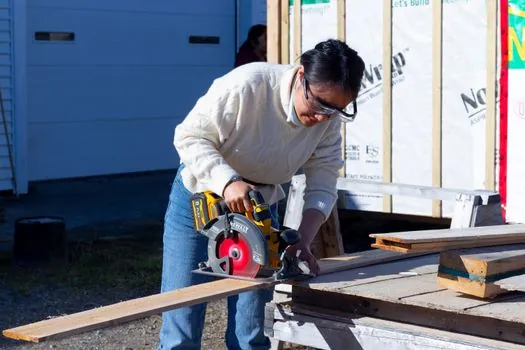
A circular saw is the wrong tool for three electrical-installation tasks that look like saw work but are not: cutting rigid PVC conduit above 2-inch trade size (use a mitre saw with a fine-tooth plastic-cutting blade for clean, square ends), cutting large-gauge copper or aluminum bus bar (use a porta-band or cold-cut saw, never an abrasive blade, due to bimetallic ignition risk), and cutting drywall for old-work box installation (use a jab saw or spiral saw instead). [S3]
Also outside circular-saw scope: cutting ENCLOSED live electrical panels, energized conductors, or any cabinet interior while bus bars are live. Even a cordless saw with a non-conductive shoe presents unacceptable arc-flash and electrocution risk in this application. The correct tool is a non-sparking hand tool or a remotely operated hydraulic cutter after lockout/tagout per NFPA 70E.
For electrical-installation crews working alongside instrumentation, the electrical measurement and electrical automation disciplines govern the verification side of the same job, and the saw selection only matters for the structural side of the build.
Standards and Sourcing for the Spec Sheet
UL 60745-1 and the corresponding CAN/CSA-C22.2 No. 60745-1 govern handheld motor-operated electric tools in North America and define the double-insulation marking and the brush-and-commutator construction rules; CE-EN 60745-1 covers the European equivalent for tools sold into the EU. These standards are the baseline for any saw specified on a commercial electrical jobsite. [S3]
For jobsites in classified (hazardous) areas, only explosion-proof or intrinsically safe saws rated to NEC Class I Division 1 (or ATEX/IECEx Zone 1 equivalent) may be used; standard 15-amp corded saws are not acceptable in these zones, and the choice is governed by the broader explosion-proof electrical equipment rules.
Trackable signals for the next quarter: (1) cordless platform voltage migration, with 18 V / 20 V Max continuing to dominate professional installs and 40 V / 60 V FlexVolt-class saws expanding into heavy framing, and (2) blade pricing volatility tied to tungsten carbide supply, which directly affects whether a crew stocks dedicated wood, metal, and masonry blades or runs a single composite blade.