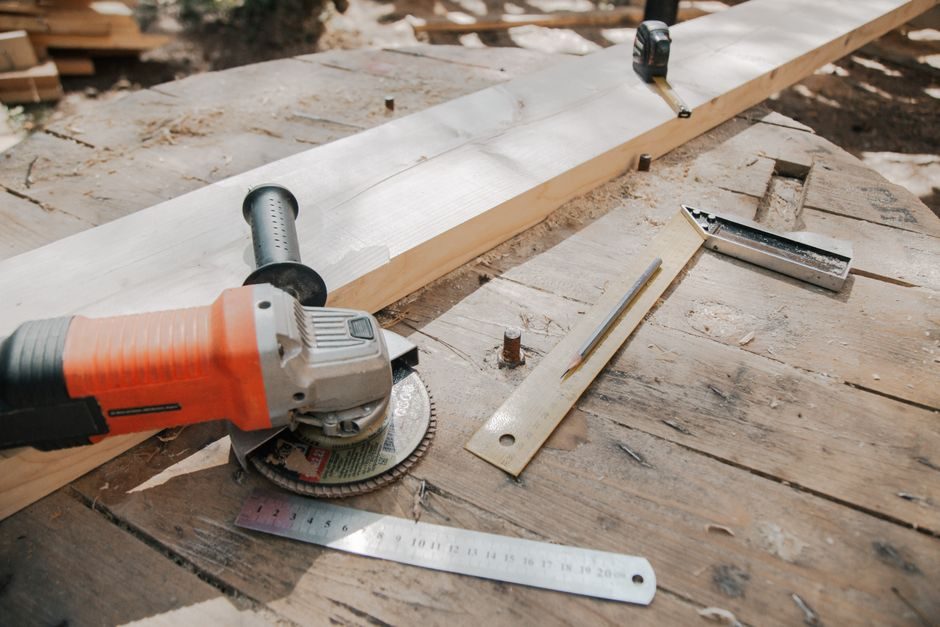
Interior finishing carpentry rewards saws in the 1200-1800 W corded class running 184-190 mm TCT blades at 4500-5800 rpm no-load; below 1000 W the motor stalls in 18 mm MDF, above 2000 W the saw becomes a one-handed hazard on trim work [S2].
The binding decisions are blade diameter, tooth count, tooth geometry (ATB vs TCG), kerf width, and whether the base shoe offers a 0-50° bevel with a positive stop at 45°; these four variables set cut quality across plywood, melamine-faced chipboard, and solid hardwood trim more than motor wattage does [S2].
Blade Diameter and No-Load Speed: The Cutting-Arc Math
Blade diameter drives maximum depth of cut: a 184 mm blade on a 90° cut delivers roughly 65 mm of depth, while a 190 mm blade at the same shoe geometry reaches about 67 mm — enough to bisect standard 2x4 lumber and to through-cut 19 mm plywood in a single pass [S2].
No-load speed in the 4500-5800 rpm band corresponds to peripheral rim speeds of roughly 45-60 m/s for a 184 mm blade; this is the same aerodynamic threshold at which a thin steel disc begins to excite eight-or-more nodal-diameter disc-vibration modes and audible ringing, so a stiffer laser-cut blade plate is preferable to a cheap stamped plate at the upper end of that range [S3].
Rim speed above 50 m/s marks the boundary where aerodynamic excitation of the disc becomes significant; below 50 m/s, cutting forces on the teeth dominate the vibration spectrum, and a regenerative chatter pattern on the kerf wall limits clean cut depth [S3].
Tooth Count and Geometry: ATB, TCG, and Triple-Chip
For interior trim and cabinet plywood, a 40-tooth ATB (alternating top bevel) blade on a 184 mm body leaves a noticeably cleaner edge than a 24-tooth framing blade, and the kerf widens only from roughly 2.4 mm to 2.6 mm — a 0.2 mm change that does not upset most factory-edge tolerances on 16-19 mm sheet goods [S2].
Melamine-faced and laminate-coated panels chip on the exit face unless a TCG (triple-chip grind) or high-tooth-count ATB (60T on 184 mm) is used; the triple-chip geometry puts a chamfering tooth ahead of each flat-top tooth so the corners do not lever out the melamine layer, and 60T is the conventional minimum on 184 mm bodies for chip-free cuts in prefinished panels [S2].
Hook angle also matters: a 15-20° positive hook cuts MDF and softwood aggressively, while a 0-5° low or negative hook reduces tear-out on veneered ply and is the safer default when the saw is being dedicated to a cabinet shop rather than a framing crew [S2].
Motor Power, Corded vs Brushless, and Bevel Capacity
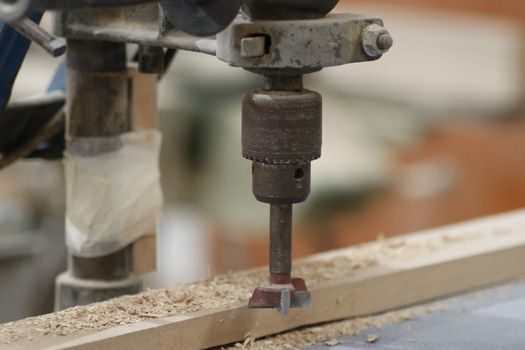
The 1800 W corded platform remains the default in interior finish because it sustains torque through 18 mm MDF without the thermal cutout that 800 W cordless units trigger after three or four long rips; a brushless 18 V cordless saw is competitive only when a battery platform is already standardized on the truck [S2].
For bevel cuts, the spec to verify is a positive 45° stop with a published tolerance of ±0.5°, not a free-floating detent; a sloppy 45° stop is the most common reason factory miter joints gap at the ceiling line, because the operator trusts the detent more than the angle [S2].
Base shoe flatness matters more than most buyers realise: a stamped steel shoe that rocks on a granite reference plate will skew the cut, so a cast-aluminum or machined magnesium shoe is the right specification for finish work where 0.5 mm accuracy compounds over a 4 m run [S2].
Vibration, Kerf, and Cut Quality: What the Physics Says
The single largest defect on first entry to a plywood sheet is a damaged corner caused by transient self-excited rim vibration; this is governed by the relationship between tooth-pass frequency and travelling-wave frequency in the saw plate, and a thin disc with a high rim speed (above 50 m/s) and few teeth is the worst combination [S3].
Off-cut corner damage can be reduced by ramping the blade into the workpiece with a slow pivot on the front of the shoe rather than a straight plunge, and by using a blade with 40+ teeth so tooth-pass frequency rises out of the resonance band for the common 8-nodal-diameter disc modes [S3].
Kerf widening from lateral rim vibration is the second quality penalty; it is limited in steady state by the side-cutting clearance angle of the tooth, but at the moment of first engagement the limit is set by the disc's travelling-wave response, not by tooth geometry, so a stiffer blade plate with a thicker body (2.0 mm kerf rather than 1.6 mm) is the practical fix [S3].
Dust Extraction, Riving Knife, and Safety Constraints

A 35 mm or 38 mm dust port matched to a class M or H extractor keeps the cut line visible on melamine and reduces airborne MDF dust, which is the occupational exposure that matters on interior sites; saws without a riving knife should not be specified where the operator will freehand-rip solid timber, even on a finish-out job [S2].
For comparison, the same 1800 W motor class used in portable circular saws appears in concrete-cutting configurations where abrasive discs and water suppression dominate, and those saws share dust-port geometry but not blade-body stiffness requirements with finish woodworking blades [S2].
For crew spec'ing, a road-maintenance concrete circular saw is the wrong platform for interior trim because its abrasive disc geometry and water-supply plumbing add 4-6 kg of mass and a hazard profile that does not belong in a finished room.
Who This Saw Is For — and Who It Is Not For
This spec fits a finish carpenter cutting 16-19 mm plywood, MDF, and melamine-faced panels on a track or with a straight edge at a rate of 50-100 linear metres per day; it does not fit a framing crew that needs a 235 mm blade for 3x lumber, and it does not fit a trim carpenter who only needs crosscuts under 60 mm — that role is better served by a miter saw with the same TCT blade family [S2].
It is also the wrong tool for in-place door trimming on hardwood sills where a 90 mm trim saw with a 60T TCG blade and a 7 mm kerf gives a cleaner result; a full-size 184 mm circular saw over-specs the cut and the shoe will not sit flat on a sill [S2].
For crews that already standardize on brushless cordless, the impact drill selection spec map is a useful sister reference for matching battery platform and torque class to the same trade.
Buying Checklist: Six Numbers to Verify Before Purchase

Confirm no-load speed of 4500-5800 rpm, blade diameter of 184-190 mm, bevel capacity of 0-50° with a positive 45° stop, weight under 4.5 kg for one-handed trim work, dust port of 35-38 mm, and a riving knife matched to the kerf width of the supplied blade [S2].
Buyer due-diligence on the same range: read the blade-body kerf (1.6 mm thin-kerf vs 2.0 mm full-kerf), the tooth count on the included blade (24T is a framing blade, not a finish blade), and whether the shoe accepts a standard 184 mm or 190 mm blade — proprietary blade footprints lock the operator to a single OEM and raise consumable cost by 30-60% [S2].
Trackable signals for the next spec cycle: brushless 18 V cordless saws crossing the 4500 rpm mark with a 184 mm blade, OEMs publishing 45° bevel tolerance in writing rather than as a marketing figure, and TCG blade pricing falling into parity with ATB blades on 184 mm bodies — any one of these would shift the default recommendation within 12 months [S2].
Spec-level background on the components involved: pressure transmitter, and flow meter.