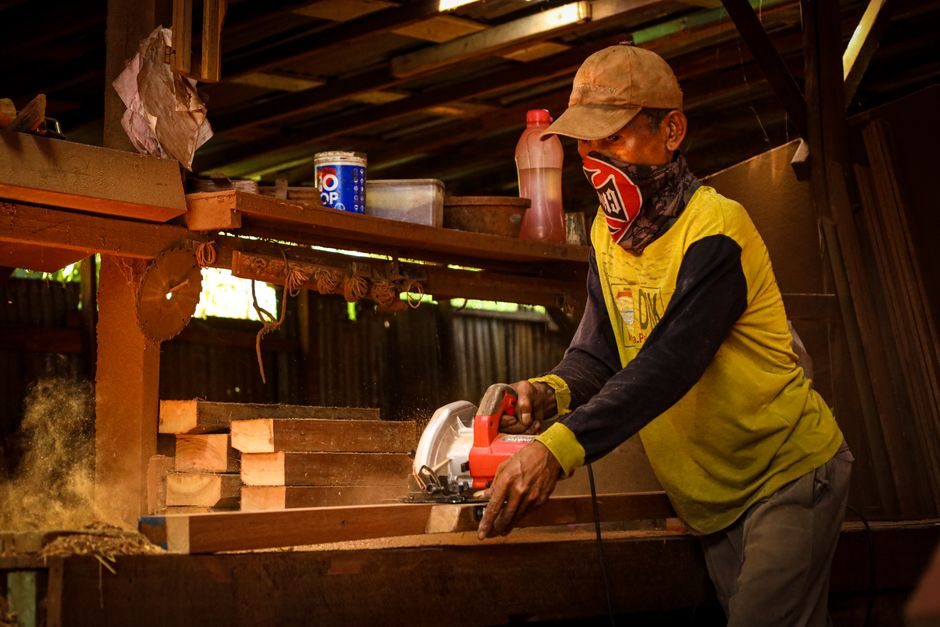
Plumbing crews running PEX, copper, Schedule 40 PVC, ABS, cast iron, and stainless now split cuts across three tool classes: a 7-1/4 in cordless sidewinder for wood backing and framing, a dedicated 4-1/2 in angle grinder with a 1 mm metal cutoff wheel for copper and stainless, and a low-speed abrasive chop saw for cast iron [S1][S3].
On a single residential repipe in Jacksonville, FL, contractor teams report cutting a 2 in cast-iron stack with a 14 in dry-cut abrasive saw, then switching to a 7-1/4 in cordless saw with a 40-tooth ATB finishing blade to trim the new PVC closet flange flush to floor level [S1]. Cordless platforms in the 18-20 V class dominate because job-site power is often not yet energised at the rough-in stage.
Selection Criteria: Match the Saw to the Pipe, Not the Other Way Round
A 7-1/4 in blade spinning at 5,800 rpm cuts a maximum depth of about 2-1/2 in at 90°, which clears the OD of 2 in Schedule 40 PVC and 2 in copper Type L in a single pass; 3 in and 4 in pipe require flipping the workpiece or stepping up to a 10 in saw that delivers 3-13/16 in depth-of-cut [S3].
Choose blade tooth count by material: 24-tooth framing for wood subfloor and backing, 40-tooth ATB for clean PVC and ABS, 60-tooth or higher TCG for finish cuts on melamine and stainless-clad hangers. For cast iron and ductile iron, a dry-cut diamond or silicon-carbide abrasive wheel on a 14 in low-rpm chop saw (around 3,800 rpm) keeps sparks and dust controlled and extends tool life versus a standard wood blade. Worm-drive saws (e.g. the 15-amp Skil MAG77T) push about 2-3 in of cut at 90° and are preferred for repetitive notching in subfloor because the inline torque reduces operator fatigue.
Plumbers do not need a framing-first tool. If the cut list is 70% pipe and 30% wood, a 6-1/2 in cordless circular saw (around 4,500 rpm, 2-1/4 in depth) is the better buy because it is one-handed on a ladder and still handles 2x dimensional lumber. The trade-off is that 3 in and larger pipe must be cut with a different tool — usually an angle grinder with a cutoff wheel, a reciprocating saw, or a dedicated pipe cutter.
Who the 7-1/4 in Cordless Saw IS For (and Who It Is NOT)
The 7-1/4 in cordless brushless circular saw fits plumbing crews doing bathroom remodels, water-heater swaps, and residential repipes where cuts alternate between wood framing, subfloor, PVC, and copper [S1]. A 5.0 Ah 18 V battery delivers roughly 200-250 lineal feet of 2x4 cross-cuts per charge, which covers a full rough-in day for a two-bathroom job.
It is the wrong primary tool for: (a) commercial cast-iron drain stacks, where a 14 in chop saw or snap-cutter is faster and quieter; (b) 4 in and larger ductile-iron water main, which belongs on a ratchet-style soil pipe cutter; (c) stainless supply risers in healthcare or food-service builds, where a dedicated 14 in metal-cutting band saw produces a burr-free, heat-discoloured-free cut required for sanitary welds. Crews running only PEX and copper on a service-truck route can go smaller — a 5-3/8 in or 6-1/2 in cordless saw plus a rotary tubing cutter covers 90% of the work at half the weight.
Side-by-Side Comparison: Three Saw Classes for the Cut List
Lining the three tool classes up against the criteria a plumber actually feels on the clock:
1. 7-1/4 in cordless sidewinder — depth 2-1/2 in, weight 8-9 lb with battery, blade cost $8-15, cut time on 2 in PVC about 4 seconds, dust moderate, noise about 95 dB(A). Best for framing + small-diameter pipe; weakest on 3 in and larger pipe.
2. 14 in low-rpm abrasive chop saw (3,800 rpm) — depth 4-5 in, weight 40-55 lb bench-style, wheel cost $5-12, cut time on 4 in cast iron 10-15 seconds, dust high (use wet or vacuum), noise 95-105 dB(A). Best for cast iron, ductile iron, and large PVC; weakest in tight corners and overhead.
3. Worm-drive 7-1/4 in corded — depth 2-3/8 in, weight 11-12 lb, blade cost $10-20, cut time on 2x lumber about 1 second slower than a sidewinder, dust moderate, torque high. Best for repetitive subfloor notching; weakest on overhead and ladder work because of inline length.
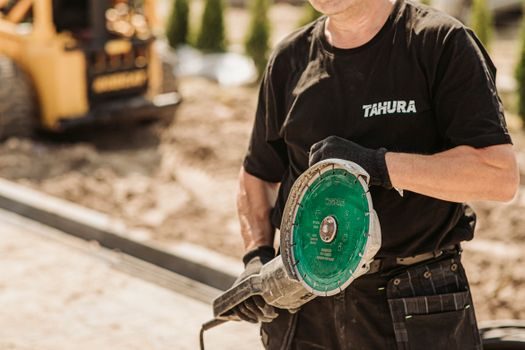
If the job includes more than 25% of cuts in metal pipe, the second tool on the truck should be a 4-1/2 in angle grinder with a 1 mm Type 1 cutoff wheel — it weighs about 4 lb, reaches into corners a chop saw cannot, and burrs only need a quick pass with a deburring tool before soldering or pressing.
Failure Modes and Acceptance Criteria on the Job
The most common complaint after a saw cut is a melted or gummy PVC edge — the cause is almost always a dull blade, a slow feed, or a high tooth count pushing heat into the cut. The corrective action is to switch to a 24-32 tooth fast-cut blade and let the saw run at full rpm before entering the cut. Acceptance: a clean, square edge with no visible melt bead, ready for a dry fit without sanding. [S3]
The second common failure is cast-iron blade binding, which throws a hot spark shower and can crack the wheel. The root cause is side-loading on an abrasive wheel, often because the workpiece is not square to the fence. Corrective: re-mark the line, support the pipe on both sides, and let the wheel enter straight. Replace — do not repair — any wheel that has been side-loaded or dropped; discard criteria are any visible chip, a flat spot wider than 1/8 in, or any crack sound on spin. If a wheel has been used past its published RPM-rated diameter (cutting below the marked minimum diameter on a 14 in wheel, typically 5 in), the wheel is out of spec and must be replaced.
Third failure: cordless saw stalls mid-cut on 2x lumber, which on a 5.0 Ah pack points to a battery under 20% state of charge or a non-toothed blade jamming. Stop, release the trigger, withdraw, swap to a fresh pack, and confirm blade sharpness. If a 7-1/4 in blade stalls repeatedly on a fresh battery, the motor or gear is failing — escalate to service, do not keep forcing cuts.
Blade and Battery Specs That Matter
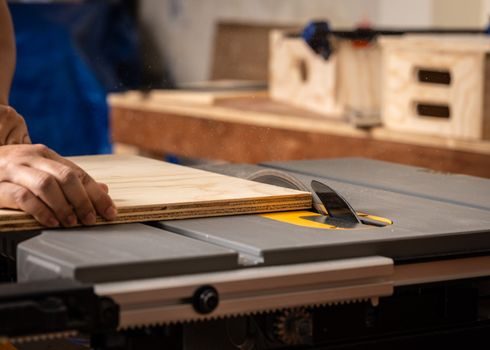
For PVC, a 40-tooth ATB with a -5° hook angle cuts cleanly without grabbing; for wood framing, a 24-tooth framing blade with a 15°-20° positive hook feeds fast and clears chips. [S3]
Battery sizing for a one-person crew is 3 × 5.0 Ah packs on a rotation: one in the saw, one on the charger, one cooling. On a 12 V/15 V site-radio platform, this is rarely enough runtime and the saw drops into undervoltage cutout before a battery indicator shows empty; the fix is 18 V or 20 V max platforms, which are now the de-facto plumbing-trade standard.
Sourcing, Standards, and What to Verify on the Datasheet
Plumbing-cut quality on potable-water tubing is governed by the joining method: copper press systems (e.g. Viega ProPress, NIBCО) require a cut free of burrs and ovality greater than 0.015 in; PEX cold-expansion fittings (e.g. Uponor ProPEX) require a cut within 0.5° of square; PVC solvent-weld systems tolerate a rougher edge but reject any axial score [S1]. Verify the cut with a 90° square and a deburring tool before the joint.
On the saw datasheet, the values that actually matter are: no-load rpm (4,500-5,800 typical for 7-1/4 in), depth-of-cut at 90° and 45°, bevel range (most stop at 56°), weight with battery, and dust port diameter (1-1/4 in or 1-1/2 in for shop-vac hookup). For abrasive wheels, look for the maximum rated speed in rpm, the diameter range, and the bond type (A for aluminium/steel, C for concrete/stone, SA for steel). For a 14 in chop saw wheel, an A30Q or A36Q bond is the common plumbing choice on ferrous pipe.
Compare a current spec sheet against the 2026 steel-construction circular saw map for metal-blade cross-reference and against the concrete circular saw spec map for road crews for dry-cut diamond and abrasive options when a plumbing job crosses into a slab penetration.
Trackable signal: the cordless 7-1/4 in segment continues to converge with framing-construction SKUs, and brushless 18 V models with 2-1/2 in depth and a magnesium shoe are the new price-point baseline; plumbers buying in 2026 should spec a minimum 5.0 Ah pack, brushless motor, and a riving knife or retractable lower guard to meet common job-site safety audits.
Spec-level background on the components involved: pressure transmitter, and flow meter.