A standard digital clamp meter is a current-sensing tool, while a clamp earth ground resistance tester is a specialised single-purpose ground-electrode checker. The two overlap on jaw form factor and LCD readout but differ fundamentally in what they measure, their resistance range, and their test method [S3].
For a maintenance team choosing between a $40–$180 pipe clamp-style general clamp meter and a $135–$440 dedicated ground tester such as the ETCR2100A or ETCR2000C, the decision hinges on whether the goal is current diagnostics or grounding-system compliance verification [S4][S9][S1].
Core Measurement Principle and Test Method
A conventional clamp meter operates as a current transformer: its jaws encircle a single conductor and sense AC (or, in AC/DC models, Hall-effect DC) current, typically from a few milliamps up to 1000 A, with voltage measured via separate test leads. It is built around the same inductive CT technology described on the clamp meter reference page and is unsuited to reading electrode resistance directly [S3].
A clamp-on earth ground resistance tester instead applies a known test voltage across the jaws, induces a small current through the electrode under test, and derives resistance from V/I. Units such as the ETCR2000C+ and the Duoyi DY4100 cover 0–20/200/2000 Ω ranges, and the MEWOI/ETCR2100A spans 0.01–200/500 Ω with LCD readout [S3][S4][S7][S9]. The clamp method requires the electrode to be in parallel with other grounds forming a return loop; isolated rods cannot be measured this way, which is the same limitation MEWOI flags when contrasting the technique with the fall-of-potential (FOP) method using auxiliary stakes [S3].
Range, Resolution, and Accuracy Comparison
Spec data from current listings (2026-06 to 2026-07) cluster the clamp ground tester into three resolution tiers. Entry-level units such as the AliExpress-listed "Easy LCD Clamp Earth Ground Tester" cover 0.01–500 Ω with a basic 4.9-rated LCD display at roughly $136 [S1]. Mid-range models like the ETCR2100A deliver 0.01–200 Ω at 0.01 Ω resolution for about $175 [S4]. The ETCR2000C+ adds an alarm-threshold function and pushes the upper limit higher, listing at US $438 on eBay [S9]. Duoyi's DY4100 on Alibaba spans 0–20 Ω / 0–200 Ω / 0–2000 Ω with a 2-piece minimum order at CN¥215.93–249.67 and 60 units reported sold in that listing [S7].
By contrast, a general-purpose clamp meter — for example the Uni-T and PeakMeter families carried on the same B2B catalogs — typically resolves current to 0.01 A or 1 mA and voltage to 0.1 mV, with no native low-ohm resistance mode calibrated to ground-rod values [S6][S7]. For a spec-driven comparison, line the two product families against the criteria that actually drive the purchasing decision: low-end range, upper range, alarm/setpoint function, and price band.
Selection Criteria by Use Case
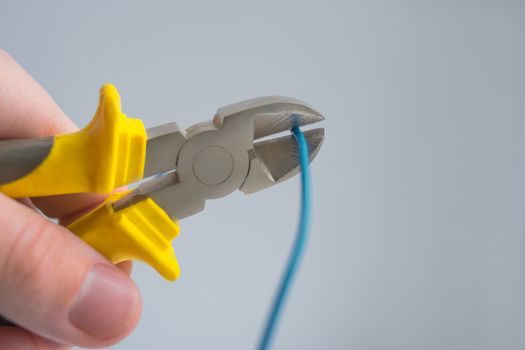
For electricians troubleshooting live circuits — checking load current, leakage, or voltage drop — a general clamp meter is the correct tool. The 1000 A AC jaw rating common in this category handles motor and feeder diagnostics, and the same catalog page enumerates AC/DC, leakage, and Rogowski-coil variants from suppliers such as MEWOI and PeakMeter [S3][S6].
For facility electricians and telecom/site engineers verifying a building's earth ground electrode against a target of typically ≤5 Ω (telecom) or ≤25 Ω (commercial power per common practice), the clamp ground tester is the faster field tool because it needs no auxiliary stakes. It is, however, blind to single-rod systems without a return path — a limitation the manufacturer literature repeatedly highlights [S3][S4][S9]. When that loop does not exist, a staked earth ground tester using the 61.8 % fall-of-potential spacing remains the defensible method [S3].
Limitations, Failure Modes, and Misuse
The single most common field error documented in manufacturer guidance is treating a clamp ground tester as a universal ground-resistance meter. MEWOI's product page states explicitly that the clamp technique only works when the electrode under test is bonded in parallel with the utility neutral or another low-impedance return path; an isolated rod in a remote substation will read artificially high or unstable [S3]. A second failure mode is harmonics: noise from variable-frequency drives and large rectifiers on the bonded network can inject error currents that bias the V/I reading.
On the clamp-meter side, the symmetrical jaws mean the meter reads only the net current in the encircled conductor. Clamping around a multi-conductor cable (line + neutral both inside the jaws) will read close to zero even with a live load — a basic but recurring source of false "no current" readings that a hardwired multimeter would catch. For a deeper comparison of contactless current-sensing geometries, the pipe clamp and CT-probe reference entries on this site walk through the same trade-off [S3].
Standards, Sourcing, and Pricing Signals
No supplier in the current 2026-06/07 listings claims a specific IEC or IEEE certificate on the public product page; the dominant sourcing channel is direct-from-factory on Alibaba (Duoyi, MEWOI) with MOQ 1–2 pieces and per-week supply ability up to 5,000 sets for MEWOI [S5][S7]. Amazon US and eBay listings target maintenance buyers willing to pay import charges — the ETCR2100A at $175 attracts roughly $43 in "Estimated Import Charges to China" plus $6.99 AmazonGlobal Shipping, landing at $225.02 total [S4]. AliExpress's 50%-off promotion pulls the entry-level clamp ground tester down to $136.05 from a $273.11 list [S1].
Until that appears, treat the published ranges and method notes as the engineering ground truth [S3][S4][S9]. For complementary fault-finding on the same site, an insulation resistance tester handles the meg-ohm regime that neither of these two tools can reach, and a decade box is the right bench companion for calibrating either instrument's low-ohm range — see the decade resistance box page for the connection scheme. Related spec work on adjacent measurement chains is catalogued in this strain gauge vs displacement sensor selection map, and copper-electrode sourcing context for grounding hardware sits in the 2026 copper manufacturing equipment guide.
