Climbing formwork is sold in two distinct cost tiers in 2026: crane-climbed (CRF) brackets with formwork panels typically land between USD 65 and USD 210 per m² of panel face, while self-climbing hydraulic (ACS / SCP) packages run from roughly USD 1,200 to USD 3,800 per linear meter of wall [S1][S2][S4][S6]. The two tiers serve different wall geometries — see the Climbing Formwork 2026 Buying Guide for the geometry-first decision tree that drives that split.
For high-rise cores, bridge pylons, and dam lift faces above 4 m per pour, the self-climbing (ACS) bracket rail + hydraulic ram package is the cost-dominant line item. For typical 3–4 m wall pours in residential and commercial towers, crane-climbed (CRF) systems and light frame climbing brackets remain the lower-capex choice [S3][S8].
System Type and Lift Method — the First Cost Lever
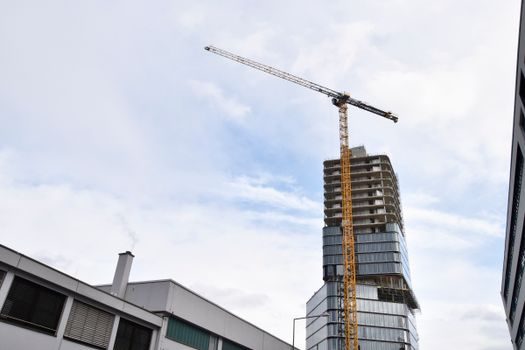
Crane-climbed formwork (PERI CB, Faresin SCREEN, CSC M/L, Scaffco SPF 50) anchors to the previous lift with shoe brackets and is hoisted as a complete unit by tower crane, typically lifting 3–6 m per cycle [S1][S2][S3][S4]. Indicative panel pricing for these crane-climbed systems on Directindustry sits in the USD 65–210/m² range for the formwork face itself, before brackets, platforms and finishing decks are added [S1][S2][S4].
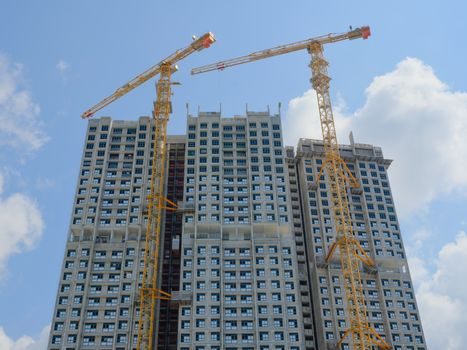
Self-climbing formwork (ACS / SCP / SKE) uses a hydraulic ram and a rail fixed to the structure to lift the entire working deck without a crane, and is specified when wall height exceeds roughly 60–80 m, when crane time is constrained, or when the pour rate demands cycles under 1 day [S5][S6][S8]. Pricing on these systems is quoted per linear meter of wall rather than per m² of panel — typical 2026 reference bands are USD 1,200–3,800 per running meter including the rail, ram, bracket platform, formwork carriage and finishing platform [S5][S6].
Cross-checked against the encyclopedia entry on climbing formwork, the two cost tracks are explained by cycle-time: a crane-climbed cycle requires 30–60 minutes of crane hook time per lift, whereas a self-climbing cycle is decoupled from crane availability and runs on the structure's own hydraulic circuit.
Panel Material, Frame Geometry and Wall Pressure
Frame climbing systems on the 2026 market split cleanly by frame material and facing. CSC's M/L series uses a 100 mm steel frame with 18 mm phenolic-resin-treated plywood facing, supplied in standard 100×300 cm panels with extension panels up to 240×300 cm for monolithic pours [S4]. Scaffco's SPF 50 drops frame weight by using a 5 mm aluminum angle profile, with the published product explicitly aimed at "quick & economical forming" for walls, columns, tunnels, beams, bridge piers, shafts, dams, pillars and cooling towers [S2].
Panel cost per m² is therefore governed by three sub-decisions: frame material (steel 100 mm profile vs aluminum 5 mm angle), facing (phenolic plywood 18 mm vs steel plate), and monolithic-pour panel size (the 240×300 cm CSC panel is roughly 2.4× the face area of a 100×300 cm panel, so handling, crane and labour scale sub-linearly) [S2][S4]. The choice of wall thickness and rebar density then sets the lateral concrete pressure the system must resist, which is the standard sizing input for both CRF and ACS bracket spacing [S7].
Hydraulic, Self-Climbing and Automatic Climbing Subsystems
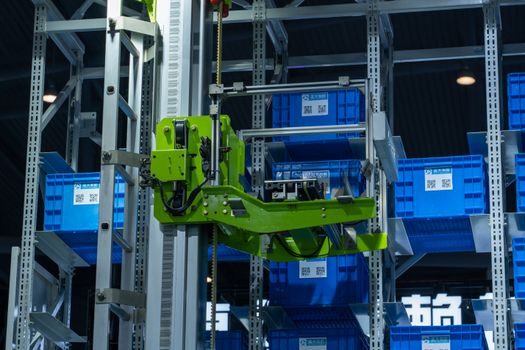
Hydraulic climbing formwork — sometimes marketed as automatic climbing system (ACS) or self-climbing platform (SCP) — comprises a support rail fixable to a surface adjacent to the structure edge, a hydraulic ram that strokes the platform up the rail, and a finishing platform that trails below the pour deck [S6][S8]. PERI, Doka, Hünnebeck, MEVA and RATEC are the four self-climbing product families active on the 2026 Directindustry index; PERI, Doka and MEVA dominate the high-rise core segment, while RATEC supplies magnetic and rail-climbing variants for special geometries [S5][S8].
The kit-of-parts that drives the USD 1,200–3,800/m figure is: rail (typically 3–4 m sections, hot-dip galvanized), hydraulic ram and power unit (electric or diesel, sized 50–200 kN stroke force), bracket platform with formwork carriage and strongbacks, working deck, and trailing finishing platform [S3][S6][S8]. Buyers who attempt to mix-and-match a PERI CB bracket with a non-OEM hydraulic ram almost always invalidate the wind and jacking-load calculations that the OEM stamped under EN 12811 / EN 12812 — see the climbing formwork encyclopedia page for the load-case hierarchy.
Order Size, MOQ and Sourcing Geography
Made-in-China climbing formwork listings in 2026 carry a 100 m² minimum order quantity, with L/C and T/T as the standard payment terms and Qingdao as the typical FOB port [S7]. Domestic Chinese mills such as OKorder-listed suppliers publish a 150,000 m²/month supply capability for aluminum frame systems, which signals the scale at which factory-direct pricing becomes negotiable [S9].
European OEM pricing on Directindustry is listed pre-tax and excludes delivery, customs duties, installation, and activation options, and "may vary by country, with changes to the cost of raw materials and exchange rates" — the standard fine print that pushes effective landed cost 15–30% above the displayed price [S1]. For the cross-comparison with adjacent work-at-height equipment (aluminum ladders, scaffolding frames), the Aluminum Ladder vs Scaffolding 2026 spec cut shows the same delivery- and-activation-surcharge pattern as climbing formwork.
Selection Criteria: CRF vs ACS vs Light Frame Climbing
For a buyer's pre-RFQ screening, three criteria separate the three product families on 2026 commercial terms. Wall height: under 30 m → light frame (SPF 50, M/L); 30–80 m → crane-climbed CB; above 80 m or where crane time is critical → ACS / SCP [S1][S2][S3][S5][S6]. Cycle time target: ≥ 2 days/lift → CRF; ≤ 1 day/lift → ACS. Capex per running meter of wall: USD 200–600 (light frame) vs USD 600–1,500 (CRF) vs USD 1,200–3,800 (ACS), with the spread driven by rail, ram and platform scope [S1][S2][S5][S6].
ACS is not the right answer when wall height is under 30 m — the hydraulic ram and rail kit cannot amortize below roughly 80 m of vertical wall, and the per-meter cost climbs past the CRF line [S5][S6]. Conversely, on a 200 m core where the crane is shared with rebar, MEP and formwork strikes, ACS recovers the cost premium inside 40–60 cycles by freeing the crane entirely [S3][S8].
Failure Modes, Constraints and Limitations
The three failure modes that recur on 2026 climbing-formwork tenders are: anchor pull-out in low-strength concrete (typically below C25/30 at the time of lift), wind loading on the platform during a pour stop, and hydraulic ram synchronisation drift on multi-ram ACS units [S6][S7]. Anchor pull-out is mitigated by deferring the lift until the previous lift reaches the design strip strength; the OEM typically publishes a strength-vs-cycle table tied to ambient temperature [S7].
Wind loading on the platform is the reason finishing platforms are pinned, not just hung — the trailing deck seen on PERI CB and Doka ACS acts as a tie-back mass and as a rebar-storage zone, both of which are part of the certified load case [S3][S8]. Synchronisation drift on multi-ram ACS units is the reason every hydraulic pack ships with a master-slave stroke-monitor and a mechanical lock on each ram; buyers should treat absence of a stroke-monitor as a hard reject on the technical schedule [S6].
Standards, Sourcing Signals and Next Watch
The governing European standards for climbing formwork design and use are EN 12811 (temporary works — performance requirements and general design) and EN 12812 (falsework — performance requirements and general design), with EN 1991 (Eurocode 1) supplying the wind load cases — buyers should confirm the OEM's design report is stamped to these two ENs and to the local Eurocode wind annex [S3][S8]. Chinese factory listings in 2026 still publish against the GB 50214 (combined steel-plywood panel) tolerance band, which is the cross-reference to demand when a project is GB-jurisdiction [S7].
Trackable signals for the next 6 months: PERI, Doka, MEVA and Hünnebeck publish updated ACS cycle-time case studies on completion of the major 2025–2026 high-rise cores in Riyadh, Dubai and Singapore — those case studies reset the capex-per-meter benchmarks that the 2026 Directindustry listings currently use [S3][S5][S8]. Separately, Chinese mills are pushing 150,000 m²/month aluminum frame output into the export channel; if aluminum ingot prices stay flat through 2026-Q3, expect a 5–10% downward move on FOB Qingdao unit pricing for the SPF-class systems [S9].
For component-level specifications, see linear guide, and crossed roller guide.