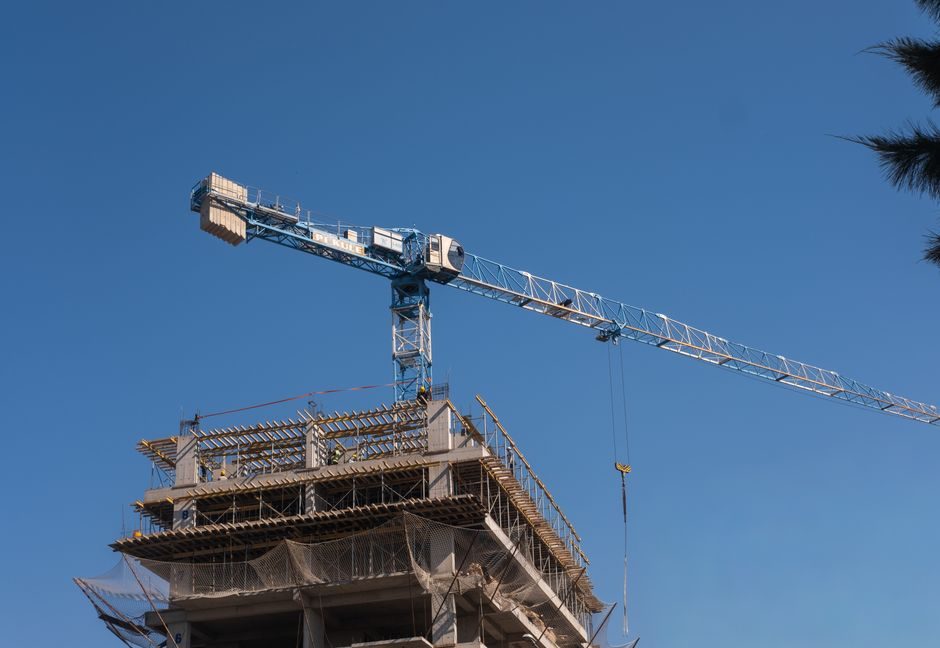
Climbing formwork divides into three operating families: crane-lifted jump form, hydraulic self-climbing formwork (ACS / SCF), and rail-guided automatic systems, with the lift mechanism as the primary differentiator between them [S2].
6061-T6 aluminium alloy is the dominant extrusion-grade material for wall and column formwork panels on core-wall applications, while hot-dip galvanised steel dominates heavy-payload rail-guided systems per current OEM offerings [S1][S3].
Type Classification by Lift Mechanism
Manual crane-lifted climbing formwork — often called "jump form" — depends on the site's tower crane for each cycle and is the lowest-capex option for pours up to roughly 3.0 m per lift, typically running 2-3 floors per week [S2]. Hydraulic self-climbing formwork (ACS / SCF) uses an integrated hydraulic system as the power source, comprising an oil cylinder and two commutators that control the climbing rail and the platform in parallel, removing the cycle from the crane hook entirely [S2].
A third family, sometimes marketed as "automatic climbing," adds a permanent support rail fixable to a surface adjacent to the structure edge, so the formwork panel and the working platform translate together without re-rigging — a configuration positioned for high-rise cores and bridge pylons where re-setting tolerances are tight [S3]. Within ACS, two sub-variants are common: "high grade hoisting steel" frames for higher payload per climb, and "easy access / multifunctional" frames where worker entry geometry and rebar clearance drive the spec [S3].
Material, Capacity, and Section Size
Climbing formwork systems are almost always engineered around 6061-T6 aluminium for the form-facing panels and walers because of the alloy's strength-to-weight ratio and extrudability, with current aluminium climbing systems aimed at core-wall and cooling-tower geometry [S1]. Steel self-climbing variants use hot-dip galvanised finish steel ringlock-compatible components where the climbing force and the suspended scaffold loads push payload past aluminium's working range [S3].
Aluminium ACS panels typically support a fresh-concrete lateral pressure sized for normal-slump mixes at standard pour rates, with the limiting factor usually being the waler deflection rather than the facing sheet itself. Steel rail-guided systems raise the per-lift payload ceiling and the permissible shear-wall thickness, but at a roughly 1.5-2× panel mass penalty that must be carried by the climbing rail. The choice of 6061-T6 vs galvanised steel therefore maps directly onto pour-height, rebar congestion, and crane-availability constraints at the site [S1][S3].
Comparison: Manual Jump vs Self-Climbing vs Automatic Rail
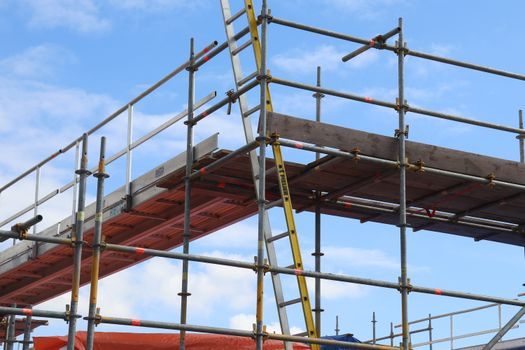
Three decision axes separate the families: crane dependency, cycle time per floor, and payload per climb. A manual crane-lifted jump form needs a crane for every cycle, runs 2-3 floors/week, and is cheapest on a per-m² basis for low-rise cores [S2].
For a 40+-storey core where the crane is committed to rebar and steel erection, hydraulic ACS removes the climbing cycle from the crane hook entirely and is the dominant specification [S2][S3].
Application Fit: Core Walls, Pylons, and Shafts
Core walls in high-rise residential and commercial towers are the single largest application for climbing formwork, followed by cooling-tower shells, bridge pylons, and elevator / stair shafts where the geometry repeats floor-to-floor with little variation [S1]. Self-climbing systems with a "high grade hoisting steel" frame are specified where each cycle carries heavier rebar and embed loads, and "easy access / multifunctional" frames are picked when rebar tying, post-tensioning, and MEP rough-in happen behind the climbing platform and dictate the working-deck geometry [S3].
The 6061-T6 aluminium climbing system supplied on the current market targets both core-wall and cooling-tower geometry, indicating that aluminium is no longer restricted to low-rise wall pours [S1]. For bridge pylon and chimney work, galvanised-steel rail-guided automatic systems dominate because the climbing rail carries both formwork and the suspended scaffold load without intermediate re-anchoring between cycles [S3].
Limits, Failure Modes, and Sourcing Constraints
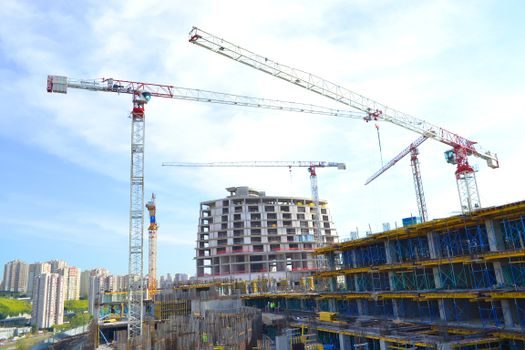
Hydraulic self-climbing formwork has three recurring failure modes: oil-cylinder seal wear on long climbs, commutator synchronisation drift between paired cylinders (which tilts the platform if the two commutators are not recalibrated), and climbing-rail bracket fatigue at the anchorage points when rebar congestion forces the bracket closer to the slab edge [S2]. Aluminium 6061-T6 panels are light enough to ship economically but are soft enough that rebar impact damage to the face sheet is a routine site issue, so panel-face hardness often drives the maintenance budget [S1].
Sourcing for climbing formwork on the open market is structured around the B2B platform model: min order 1 m², payment TT or LC, loading port Shanghai, with monthly supply capability quoted at 10,000,000 m² for the major Chinese aluminium-supply chain, an indication of the scale of available capacity rather than a per-project commitment [S1][S2]. For project buyers, the practical constraint is therefore not unit-area availability but the engineering capacity to detail the climbing sequence, the anchorage pattern, and the wind-load case for the specific tower geometry — work that typically requires a supplier engineering team rather than a catalogue order.
Buyer Selection Criteria and Standards
Specifying a climbing formwork system comes down to five engineering criteria: pour-height per cycle, crane-availability on site, payload per climb (formwork + rebar + embed + working-deck live load), wall-thickness range, and tolerance to wind exposure at the working deck. Pour-height per cycle of roughly 3.0-6.0 m and a tolerance band of ±5-10 mm on the as-built wall are the typical pass-fail thresholds for hydraulic ACS bids on high-rise cores [S2][S3].
Standards governing climbing formwork typically draw on formwork-design codes (commonly EN 12812 for temporary works design and EN 12813 for load-bearing timber formwork elements, with project-specific wind and live-load overrides from the local code) and on the aluminium extrusion spec when 6061-T6 is the structural material [S1]. Buyers should require the supplier to declare the design code used, the partial safety factors on live and wind loads, and the maximum permissible wind speed for pouring vs climbing-only operation. On climbing formwork reference pages, the structural-design load cases are usually the most-cited selection differentiator between manual and self-climbing offers.
For plants that need to monitor structural-condition data on the climbing rail and anchorage points over a long campaign, the same condition monitoring hardware axes used for rotating machinery can be adapted to track bracket-strain drift on the climbing rail. On the batching side of the supply chain, concrete plant TCO drivers set the floor on acceptable cycle-time targets for the climbing system, because a 1-day vs 2-day floor cycle changes the plant's per-m³ delivered cost in a way that often dwarfs the formwork rental line item.
Trackable signals for the next 6-12 months: (1) the aluminium vs galvanised-steel mix in new ACS bids as core walls push taller, and (2) the number of suppliers offering permanent support-rail configurations fixable to the structure edge as a stock item rather than an engineering special [S3].
Detailed specification references: asrs system, and shuttle system.