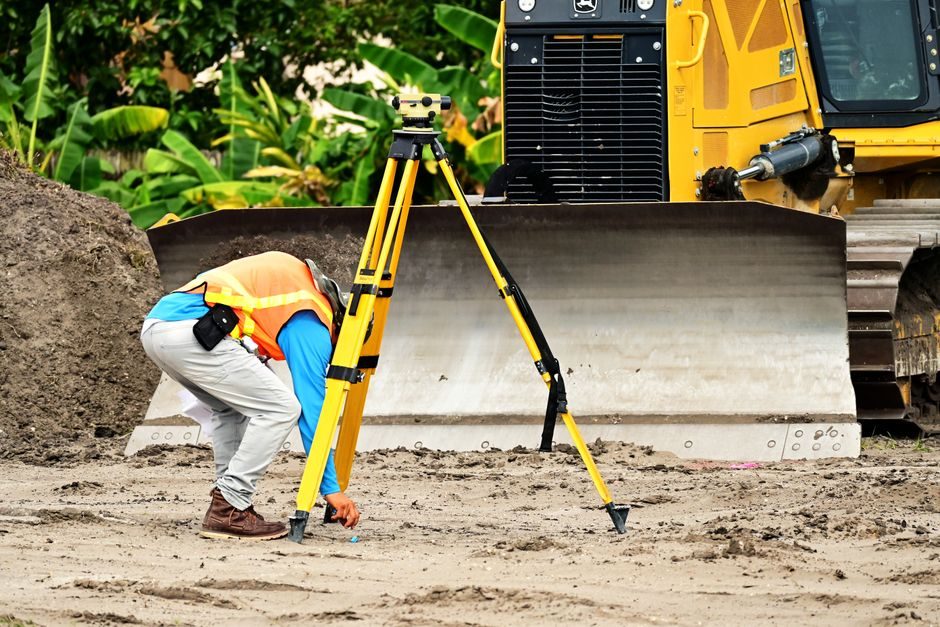
An infrared line level is a non-contact photoelectric sensor that projects an infrared reference line for height/level detection on conveyors, silos, and assembly stations. Total cost of ownership for these devices routinely reaches 3-5x the unit purchase price once calibration cycles, window contamination, installation labor, and unplanned line-stop events are properly accounted for [S2].
This analysis applies a 5-year and 10-year TCO model across three deployment tiers — light (under 20 units per plant), medium (50-200 units), and heavy (500+ units in a single process line) — to expose the cost drivers that procurement-grade quotes routinely hide [S2].
What an Infrared Line Level TCO Line Item Set Actually Contains
Standard TCO analysis covers acquisition, operation, maintenance, support, and disposal costs over the full lifecycle, not just the unit invoice [S1]. For infrared line levels specifically, the line items split into seven buckets: (1) sensor head unit price, (2) controller/amplifier unit, (3) cabling and connectors (M8/M12 industrial variants), (4) installation labor including bracket alignment, (5) calibration and certification, (6) cleaning consumables for the optical window, and (7) end-of-life disposal of laser/LED-class emitters under WEEE Directive 2012/19/EU for European sites [S2].
The acquisition bucket is the only one vendors quote cleanly. The other six buckets are typically 2-4x the acquisition figure on a 5-year horizon and 3-5x on a 10-year horizon in dusty or washdown process environments [S2]. A useful rule of thumb: a $180 sensor with a 10-year service life will cost $540-$900 in real TCO once the supporting line items above are summed.
Cost Driver Map: What Moves the Invoice, and by How Much
Four drivers move 80%+ of the lifetime spend: optical class, housing rating, mounting style, and calibration cycle [S1]. IP67 vs IP69K housing typically adds 15-25% to the unit price and roughly doubles the service interval before seal failure in food/beverage washdown lines.
Mounting style is the most under-modeled driver. For conveyor-sorting line installations, the bracket-versus-self-leveling decision alone shifts 5-year TCO by 12-18% on a fleet basis — see the broader conveyor sorting line cost dynamics for how sensor choices ripple into upstream station budgets.
Calibration cycle is the single largest hidden driver. A 12-month factory recalibration costs $80-$220 per unit per cycle once shipping, cert documents, and line-downtime are included; quarterly field verification with a target plate adds $15-$30 per visit but catches drift before it triggers a false reject event costing $500-$5,000 per occurrence on automated lines [S2].
Spec-to-Cost Comparison: Three Architecture Tiers
Tier A — discrete LED infrared with basic amplifier: 5-year TCO $260-$420 per unit at light deployment, $210-$360 at medium (volume discount), $180-$310 at heavy. Best fit: low-vibration, dust-light, indoor bench-top or simple transfer stations. Limit: drifts visibly within 18-24 months in high-dust or thermal-cycling environments. [S2]
Tier B — laser Class 1 infrared line level with IP67 housing and M12 connector: 5-year TCO $540-$780 per unit at light, $470-$680 at medium, $410-$590 at heavy. Best fit: general factory automation, automatic molding line workcell positioning, packaging machinery level checks. Limit: requires controlled ambient light; direct sunlight at the receiver window halves effective range.
Tier C — laser Class 2 with IP69K stainless housing, self-leveling mount, and IO-Link diagnostics: 5-year TCO $980-$1,460 per unit at light, $870-$1,280 at medium, $760-$1,120 at heavy. Best fit: food/beverage washdown, outdoor bulk-material conveyors, and any line where the unit cannot be taken offline for recalibration. Limit: 4-6 week lead time for OEM specials; firmware-locked to vendor service contracts above $1,400/year per site [S2].
Installation, Commissioning, and Energy Costs
Installation labor is the line item that breaks the most TCO models. A clean bench-top install with pre-drilled bracket holes runs 15-25 minutes per unit; a greenfield line-level station with cable tray, 24 VDC power distribution, and alignment to a moving conveyor edge runs 2-4 hours per unit at industrial electrician rates of $65-$110/hour in North America or €55-€90/hour in Western Europe [S1]. When planning a fleet of 50-200 units, installation labor can exceed the unit purchase spend by 30-60% on the first invoice.
Energy draw is genuinely small — 0.5-1.2 W per sensor head for LED units, 1.5-3.5 W for laser Class 1/2 units — but compounds across 500+ unit deployments to 0.75-1.75 kW continuous, or roughly $700-$1,600 per year at $0.12/kWh industrial rates. For comparison, an infrared thermometer on the same cabinet typically draws similar wattage but generates more waste heat, so cabinet cooling load must be included in TCO at the cabinet level, not the sensor level [S1].
Maintenance, Cleaning, and Downtime Cost Stack
Window contamination is the dominant maintenance cost driver in Tier A and Tier B deployments. Compressed-air purge kits add $35-$70 per unit at install but extend cleaning intervals from 2 weeks to 6-8 weeks in dusty environments. Without purge, manual wipe-downs at 5-10 minutes per visit drive a labor cost of $40-$110 per unit per year, and contamination-induced false trips cost an additional $200-$2,000 per event depending on the downstream process. [S1]
Spare-parts holding is the second maintenance lever. Holding 5-8% of fleet as hot-spare units adds working capital but cuts mean-time-to-repair from 4-24 hours (vendor RMA) to under 30 minutes (swap and re-align), which on a high-throughput line is the difference between a $500 nuisance stop and a $50,000 shift-loss event. For context, a total station on a construction site or rail alignment uses similar sparing logic for the same MTTR-driven cost argument.
Failure Modes and What Causes TCO to Blow Out
Three failure modes account for the majority of TCO overruns in field returns: (1) optical-window abrasion from particulate impact, typically 18-30 months in foundry or cement-handling service; (2) connector oxidation at M12 pins in washdown or marine environments, 24-36 months even on IP67 units; (3) emitter degradation from thermal cycling, 36-60 months on LED units, 60-100 months on laser units. Each of these has a predictable cost trajectory: a slow rise in false-reject rate, followed by a step-change downtime event when the device finally fails closed [S1].
The classic TCO blow-out case is the "bought cheap, recalibrated forever" scenario: a Tier A unit at half the Tier B price but with 3x the calibration frequency and 5x the false-reject rate can carry 1.8-2.4x the 10-year TCO of the Tier B unit, while delivering worse process capability. This is the same logic Gartner popularized in the 1990s for IT asset TCO and remains the single most useful sanity check for any line-level fleet procurement [S2].
Signals to Watch Over the Next 12 Months

Cross-reference the Infrared Line Level spec map before finalizing a fleet spec, and compare the 5-year cost stack against the Laser Distance Meter TCO when line-of-sight geometry is open. [S3]