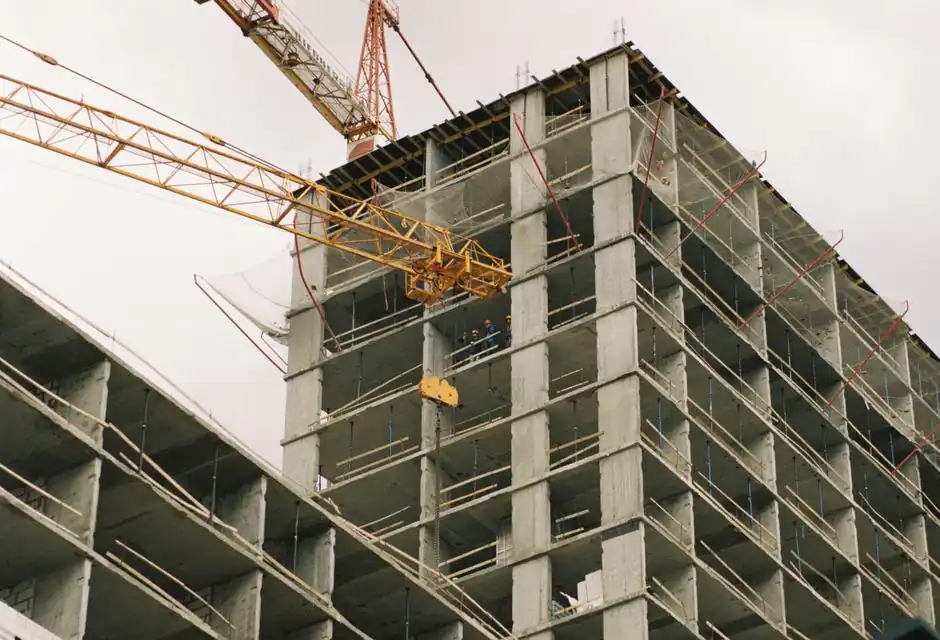
A typical climbing (jump) formwork cycle on a high-rise concrete core runs 3 to 5 days per floor, with self-climbing systems raising one floor height in 30 to 60 minutes once concrete strength permits [S3]. The 2 to 3 day figure quoted by Doka for "sufficient strength to jump" refers to the minimum curing window before repositioning, not the full floor cycle that also includes rebar tying, embed installation, alignment, and pour [S1].
Three equipment variants compete for the same vertical concrete core: crane-climbed (normal jump), guided-climbing crane-lifted, and self-climbing hydraulic. Each trades crane time against capital cost and weather sensitivity, and the cycle-time difference between them is smaller than the difference between any of them and a continuous slipform rig [S2][S5].
Cycle Time Anatomy: What Eats the 3 to 5 Day Floor
The headline 3 to 5 day cycle is the sum of discrete steps, not a single continuous move [S2][S3]. A representative breakdown on a self-climbing core: 12 to 18 hours for rebar tying and embed setting on the upper platform, 4 to 6 hours for form close and alignment, 2 to 4 hours for the concrete pour itself, 24 to 48 hours for cure to stripping strength, 2 to 4 hours for strip and clean, and 30 to 60 minutes for the hydraulic climb to the next level [S3]. Cure dominates the schedule, which is why Doka's 2 to 3 day pre-jump strength figure sets the floor of the cycle even when the climb itself is one hour [S1][S3].
Conventional formwork on the same vertical wall typically loses 10% additional time relative to a jumpform system, according to a comparative study of jump formwork against conventional methods, because stripping, cleaning, and re-positioning are done floor by floor from the ground up rather than from brackets already cast into the previous lift [S4]. For projects where floor slabs follow the core, the limiting factor is often the slab cycle, not the core wall cycle, and faster core cycles produce no schedule benefit until the slab trade catches up [S2].
Equipment Comparison: Crane-Climbed vs Guided vs Self-Climbing
The three climbing formwork variants move the same concrete but differ sharply on what blocks the cycle. A crane-climbed (normal jump) system requires crane availability for every lift, with units individually lifted off the structure and relocated at the next construction level; the limiting factor becomes crane wind limits on exposed high-rise sites [S2][S1]. A guided-climbing crane-lifted system uses the same crane but keeps units anchored and guided by the structure during the lift, which adds safety and control without removing the crane dependency [S2].
Self-climbing systems replace the crane with hydraulic jacks running on rails anchored to the cured concrete, climbing one floor height in 30 to 60 minutes without external lifting equipment [S3]. The trade-off is capital cost and a more complex anchor strategy, typically using sacrificial cones or rails cast into the previous lift, which is exactly the decision mapped in Cast-in anchor plate vs climbing cone anchors for high-cycle cores. On tall buildings where crane time is the contested resource, self-climbing systems are almost always specified despite the higher mobilization cost [S1][S3].
Climbing Formwork vs Slipform: When Cycle Time Diverges

Slipform is not a climbing formwork variant, it is a continuous-pour alternative, and the cycle-time comparison is asymmetric. A slipform rig, typically 4 to 5 feet tall, is filled with concrete at the top while moving slowly and steadily upward on hydraulic jacks 24 hours per day, 7 days per week, and cannot stop without the concrete bonding to the form panels [S3]. Output is measured in feet per day or lifts per week, not in days per floor, and a well-run slipform core can outperform a jumpform core by a wide margin on schedule for simple, repetitive geometry [S1].
The trade-off is geometry tolerance and mix sensitivity. Slipform requires continual adjustment of concrete mixes to suit ambient temperature, with an approximate optimum cast-in-place temperature of 20 deg C, a maximum aggregate size around 22 mm, rounded grain preferred to crushed, and a water-to-cement ratio near 0.5; higher-grade CEM I 42.5 or 52.5 cement is recommended at lower ambient temperatures, and higher CEM III content plus after-treatment at higher ambient temperatures [S1]. Climbing formwork tolerates geometry changes between floors (decreasing stair levels, varying shaft sizes, drop-down utility sections) that would force a slipform rig to stop and reconfigure, which is why automatic jumpform is specified for complex high-rise cores even though its per-floor cycle is slower [S1][S8].
Selection Criteria: Which System Fits the Project
Use this decision map against project constraints, not against cycle time alone. For tall vertical structures with repetitive geometry and no tolerance for pour joints (chimneys, silos, bridge pylons), slipform wins on speed despite the higher planning burden [S1][S3]. For high-rise cores with varying shaft sizes, stair transitions, or architectural finish requirements, automatic self-climbing jumpform is the right call, with the self-climb itself adding under an hour to a multi-day floor cycle [S1][S8].
For mid-rise residential or commercial cores where crane access is reliable and wind exposure is moderate, crane-climbed normal jump form remains cost-effective; the crane is already on site for steel and material lifts, so the marginal cost of using it for form moves is low [S2]. For projects on tight urban sites with limited crane capacity or where weather windows are unpredictable, self-climbing systems convert a weather-dependent crane lift into a scheduled hydraulic operation, which is the dominant reason high-rise contractors pay the premium [S1][S3].
Constraints and Failure Modes
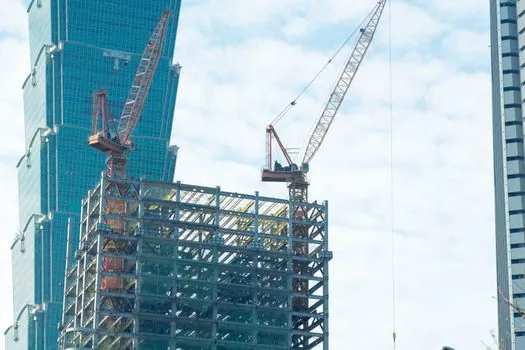
The 3 to 5 day floor cycle collapses only if the limiting step is addressed. Faster cycles have been achieved, but the limiting factor is usually the floor slab construction, which proceeds as a separate process and rarely matches an accelerated core cycle [S2]. A self-climbing form that climbs in under an hour cannot shorten the floor if the slab trade behind it needs 7 days to catch up; the core simply waits, and the form sits idle on its brackets [S2][S3].
Wind, concrete supply, and rebar density are the recurring failure modes. Crane-climbed systems stop when wind exceeds crane limits, which on exposed high-rise sites is a frequent constraint and the explicit reason automatic self-climbing formwork is specified [S1]. Concrete supply interruptions hit slipform hardest because the pour cannot pause without the form locking up, whereas jumpform absorbs a pour interruption by extending cure time on the affected lift without stranding the rig [S3][S1]. Heavy rebar congestion at core walls extends the rebar-tying step, which on a 3 to 5 day cycle is the activity with the most variability, and is the first place to look when a project misses its planned floor cadence.
Standards, Sourcing, and Trackable Signals
Cycle-time claims for climbing formwork rest on manufacturer guidance and field studies rather than a single published standard; Doka, ULMA, Peri, and regional suppliers each publish per-floor cycle benchmarks tied to their specific system geometry [S1][S3][S8]. For procurement, the verifiable specifications are climbing speed (30 to 60 minutes per floor for self-climbing systems), form lift height (typically 10 to 14 ft per pour), concrete strength required before re-positioning (commonly 2 to 3 days, or roughly 10 to 15 MPa depending on mix), and anchor strategy (sacrificial cones versus reusable rails) [S3].
Trackable signals for 2026 procurement: published self-climb cycle times from major OEMs (Doka SKE, ULMA, Peri ACS) have stabilized in the 30 to 60 minute range across the past 24 months, and the industry has not published a faster commercial climb despite ongoing hydraulic development [S3]. The reference cycle of 3 to 5 days per floor for climbing formwork, published by both Doka (April 2025) and independent guides (November 2024), is the figure to anchor any baseline schedule before system selection [S1][S3]. For a deeper look at how the anchor decision interacts with cycle time, see the cast-in plate versus climbing cone comparison.
For the relevant spec sheets and selection criteria, see climbing formwork, time relay, and pressure transmitter.
