Reagent-grade cobalt(II) sulfate heptahydrate (CoSO4·7H2O, CAS 10026-24-1, MW 281.10) is specified at ≥99% assay on a complexometric CoSO4·7H2O basis, with 362 g/L water solubility, pH 4 (20 °C, 100 g/L), bulk density 900 kg/m³, and a melting point of 98 °C — a narrow band that constrains both upstream chemistry and downstream battery-grade use [S2].
The same Sigma-Aldrich EMSURE listing shows impurity ceilings that effectively define the merchant spec: chloride ≤0.001%, total nitrogen ≤0.002%, Fe ≤0.0005%, Cu ≤0.001%, Ni ≤0.005%, Pb ≤0.001%, Ca ≤0.005%, Zn ≤0.005%, Na ≤0.01% [S2]. These limits, not the headline 99% assay, are what a buyer's incoming-CoA review or QC lab has to police on every lot.
Product identity, hazard class, and what the SDS actually says
Cobalt(II) sulfate heptahydrate is classified Acute Tox. 4 (oral), Eye Irrit. 2, Skin Sens. 1, Resp. Sens. 1, Muta. 2, Repr. 1B, Carc. 1B (inhalation), Aquatic Acute 1, and Aquatic Chronic 1, with the GHS signal word "Danger" and German WGK 3 water-hazard class [S2]. Storage class 6.1D applies — non-combustible, acutely toxic Category 3 / chronic-hazard materials — which means segregated, labelled, and double-contained warehousing rather than general chemical storage [S2].
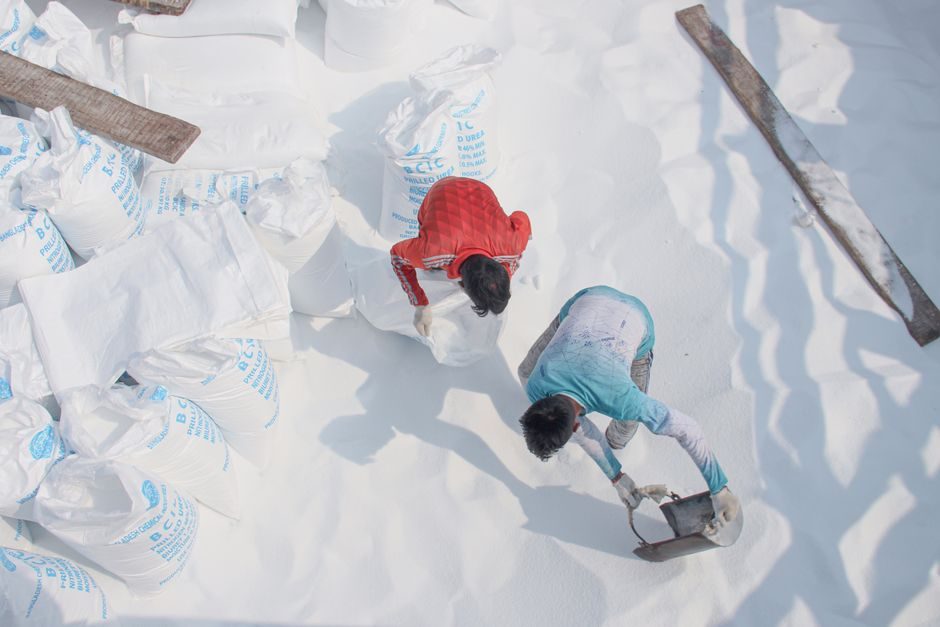
For buyers the practical consequence is that every shipment travels as a regulated dangerous good (UN 3077 / environment-hazardous substance class 9 on most variants) with a 2-30 °C storage window; deviation outside that band risks dehydration of the heptahydrate and silent drift of the assay basis from heptahydrate to monohydrate equivalents [S2]. HDPE bottle packaging, the form used by Sigma-Aldrich's 100 g SKU shipping from Shanghai at ¥1,803.80 with a 2026-09-03 dispatch date, is the de-facto retail pack; bulk 25 kg fibre drums are the industrial norm [S2].
Upstream nodes: how CoSO4·7H2O is actually made
The merchant chain runs from cobalt metal or cobalt(II) oxide/sulfide intermediates, dissolved in sulfuric acid, then crystallised as the heptahydrate. The 362 g/L water solubility figure [S2] is what sets evaporator and crystalliser throughput — high enough that cooling crystallisation, not evaporative to dryness, is the standard finishing step, which is why the 98 °C mp appears in the technical data as a "dehydration onset" marker rather than a true melting operation.
For readers cross-mapping the cobalt chain against a sister material, the nickel sulfate supply chain 2026 spec map follows an almost identical hydrometallurgical logic — metal dissolve in H2SO4, crystallise the heptahydrate, police transition-metal trace ceilings — so QA, packaging, and dangerous-goods procedures are transferable between the two salts with minor edits. Where they diverge is impurity profile: Ni salt buyers police Cu/Co residuals, Co salt buyers police Ni residuals (Ni ≤0.005% is the binding ceiling here [S2]) because residual Ni is the tell-tale that upstream dissolution mixed feedstocks.
Spec bands and the three commercial grades
The supplier matrix in the EMSURE catalogue already encodes the three commercial tiers that a buyer's RFQ has to choose between [S2]:
1. Reagent/analytical grade (EMSURE, 102556) — ≥99% complexometric assay, full trace panel published, solid form, 362 g/L solubility declared; the workhorse for lab, plating-rinse QA, and catalyst prep.
2. ReagentPlus (C6768) — ≥99% general assay, powder form, no published trace panel; used where end-use tolerates looser Cu/Fe/Ni ceilings.
3. Trace metals basis (935751) — ≥99.99%, crystal form, the choice for ICP standards and battery cathode precursor reference work where ppb-level Cu/Fe/Mn directly poison cell performance.
4. Aldrich CPR (CDS004010) — no published assay, crystal form, a catalogue-grade SKU sold for non-critical applications; not for spec-driven procurement.
The point for sourcing: if a quote does not state which of these four tiers it covers, treat it as CPR-class and either requalify or reject — the 2×–10× assay and trace delta between the top three tiers is what makes "99% cobalt sulfate" an unactionable line item on its own.
Selection criteria and who the spec is for — and who it isn't
Specify the heptahydrate EMSURE grade (≥99% complexometric, full trace panel) when the application is analytical standard, plating bath make-up, catalyst precursor, or any use where Fe ≤0.0005% and Ni ≤0.005% [S2] will visibly affect downstream yield. Specify the ≥99.99% trace-metals basis when the cobalt is feeding lithium-ion battery cathode precursor co-precipitation — here, sulfate anion carry-over and Ca/Mg residuals are the binding constraints, not the CoSO4 assay line itself.
Do not specify reagent-grade CoSO4·7H2O for agricultural cobalt supplementation (the Repr. 1B / Carc. 1B inhalation classification [S2] makes occupational exposure a regulatory problem at any scale), and do not specify the technical or industrial 20–21% Co grade for analytical or cathode work — the trace profile is not published and a 1% Cu or Fe slip will fail the CoA review. The 1.95 g/cm³ density and 900 kg/m³ bulk density [S2] are the numbers to use for tank sizing, drum fill, and warehouse load-out planning.
Risk controls: what the supply-chain analyst actually watches

Modern cobalt-sulfate supply risk lives in three places: feedstock origin, trace-metal drift, and hydration loss. On feedstock, the four C's of supply chain management — chain structure, competition, capacity, coordination — are the framework most US/EU procurement teams use to map exposure to a single dominant refiner [S1]. On hydration, the 2-30 °C storage window [S2] is a hard physical constraint: any leg above ~30 °C in the supply chain dehydrates surface crystals and silently shifts the assay basis.
On analyst capability, the 2025 US median total pay for supply chain analysts sits at $107,000/yr per Glassdoor data cited by the Coursera 2026 salary guide, with manufacturing and wholesale-trade services paying above the median [S3]. The reason that matters to a cobalt buyer is that an analyst at that compensation band is the one expected to operate predictive analytics, demand-planning, and supplier-risk dashboards rather than just PO-tracker work, which in turn sets the realistic cost of running a multi-source qualification program across Chinese, Finnish, and Belgian CoSO4·7H2O suppliers.
For QA, the actionable incoming-inspection checks are: visual (uniform pink-to-red crystals, no white powdery surface that would indicate surface dehydration), pH of a 100 g/L solution (target 4 at 20 °C, anything below ~3.5 suggests free sulfuric acid carry-over) [S2], ICP-MS for the eight cation traces (Cl, N, Ca, Cu, Fe, Na, Ni, Pb, Zn) against the published ceilings, and Karl Fischer for any "extra" water that would push the hydration number off the 7H2O stoichiometry implicit in the 281.10 MW and the ≥99% CoSO4·7H2O basis [S2].
Procurement and logistics constraints
The Sigma-Aldrich 100 g SKU shipping from the Shanghai warehouse at ¥1,803.80 with a 2026-09-03 dispatch date is a useful proxy for retail-pack lead time from a China-based reagent distributor into the domestic China market [S2]. Industrial drums of 25 kg typically move on 30–60 day sea freight from China or Africa-origin precursors to EU/US, and the dangerous-goods declaration under UN 3077 (Environmentally hazardous substance, solid, n.o.s., Class 9) adds a fixed cost per shipment that is non-trivial at LCL volumes.
Two practical consequences: (a) the landed cost per kg of CoSO4·7H2O is dominated by Co metal reference price, sulfate-process acid cost, energy for crystallisation/drying, and dangerous-goods freight — not by the assay step, which is why "99%" vs "99.99%" attracts a 5–10× price gap; (b) the storage-class 6.1D / WGK 3 / GHS Cat. 1B reproductive toxicant profile [S2] means a buyer should budget for segregated warehousing, maleic-anhydride-style double containment for spill kits, and an exposure-monitoring plan for any operator handling the open drum.
Signals to track into Q4 2026
Three nodes are worth watching: (1) whether the EMSURE 100 g SKU stays in stock at Shanghai through Q3 2026 — the 2026-09-03 dispatch date is a single point-in-time, not a published SLA [S2]; (2) LME cobalt reference pricing, which sets the floor for any CoSO4·7H2O contract; (3) any tightening of the Ni ≤0.005% and Pb ≤0.001% trace ceilings [S2] by EU REACH or by cathode-active-material customers, which historically gets pushed back into the reagent-grade spec within two to four quarters of any regulatory change.
The underlying component specifications are covered under dc power supply, switching power supply, and industrial ups.