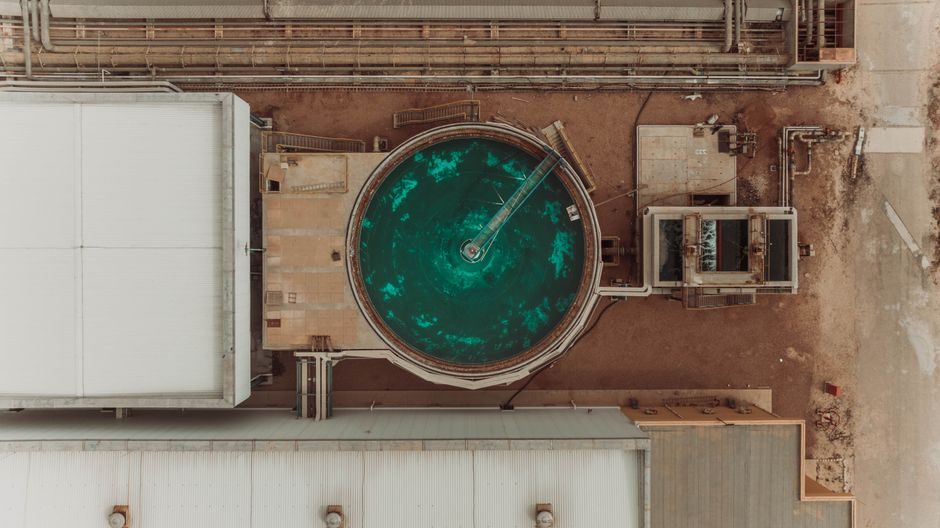
CAS 7786-81-4 (NiSO4, MW 154.76, EINECS 232-104-9) is the baseline identifier any spec sheet must carry, and the 2026 Chinese supplier pool is the largest single source of industrial and battery-grade material [S3]. The hydrated form (heptahydrate, CAS 10101-98-1) and the 6-7-hydrate coexist in catalogs, and the hexahydrate loses all water at 103 °C while the anhydrous salt decomposes to NiO + SO3 at 848 °C — those thermal limits should drive any QA acceptance test, not the marketing claim [S3].
247 Chinese chemical suppliers are indexed for 7786-81-4 on ChemicalBook, concentrated in Shanghai (55), Shandong (44), Hubei (32), Jiangsu (24), and Tianjin (13), with smaller clusters in Zhejiang, Guangdong, Hebei, and Anhui [S3]. Parallel B2B channels show similar density: 322 suppliers matched under "nickel-asia" on Alibaba [S4], and Made-in-China lists a "High Purity Factory Price Industrial Grade" band at US$ 4.00-6.00 per kg with 100 kg MOQ [S6]. Industrial-grade heptahydrate is also resold through ECHEMI by 6 manufacturers and 2 traders, with separate "Industrial Grade" and "Other Grade" filters [S8].
CAS, grade, and what the spec sheet must actually say
The two CAS numbers a buyer sees most often are 7786-81-4 for the parent nickel(II) sulfate and 10101-98-1 for the heptahydrate, with synonyms including nickelous sulfate, sulfuric acid nickel(II), and NiSO4·6/7H2O [S3][S8]. Purity claims on Chinese storefronts range from 99% (Anhui Witop Biotech, 5 g pack) [S3] to 33% Ni (Hebei Yanxi, 1 kg pack) — and those numbers are not interchangeable: 33% Ni is the elemental assay typical of the heptahydrate, while 99% refers to assay of the anhydrous or low-hydrate reagent grade [S3].
Selection should run on three checkpoints: (1) the explicit CAS on the CoA matching the hydrate form on the PO, (2) the assay basis (Ni content vs total sulfate basis vs trace-metals basis), and (3) the impurity envelope — battery-grade cathode precursor lines typically need Cu, Fe, Co, Zn, and Na below single-digit ppm, while electroplating baths tolerate higher traces [S3]. The anhydrous salt is sold in 1-1000 kg packs across multiple Chinese vendors with 99% assay, and the heptahydrate ships in 25 kg or 1 t bags for plating and water-treatment use [S3][S7].
Channel map: who lists what, and what they actually sell
ChemicalBook is the densest single index, with 247 Chinese suppliers across 22 provinces and a "Member" tier of 223 verified vendors [S3]. ECHEMI concentrates on commodity trading — 6 manufacturers plus 2 traders for the heptahydrate, MOQ typically 25 kg or 1 t, and prices track the Made-in-China industrial band [S8]. Alibaba's "nickel-asia" channel aggregates 322 exporters and is heavier on finished nickel metal (cathodes, briquettes, pellets) than on nickel sulfate specifically [S4].
Made-in-China splits the market by price band: the industrial-grade heptahydrate clusters at US$ 4.00-6.00/kg, while higher-purity reagent listings run higher and lower-tonnage listings can drop below US$ 4/kg on bulk negotiation [S6]. The ECHEMI storefront also lists separate "Industrial Grade" and "Other Grade" filter chips, which roughly correspond to plating-grade and reagent-grade material respectively [S8]. go4worldbusiness's adjacent listings — refined nickel 99.8-99.9% Ni to ASTM B39, Nickel 200/201 plate to ASTM/ASME B162/SB162, and a Suzhou-based Ni-Co alloy with 10-60% Co to ASTM B163 / AMS 5666 — are useful as upstream reference points but are not nickel-sulfate products [S2].
Comparison: vendor type vs what the buyer actually needs
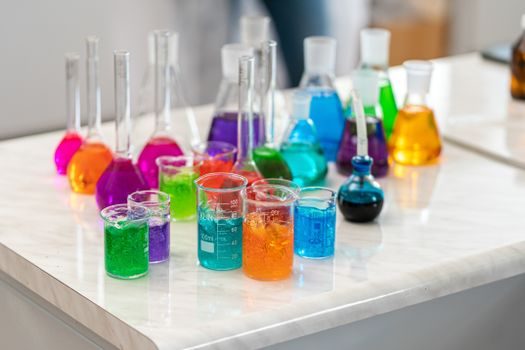
For electroplating shops, an industrial-grade NiSO4·6/7H2O at ~33% Ni from a Trading Company on ECHEMI is usually enough, because sulfate bath chemistry tolerates modest Fe, Cu, and Zn carryover [S8]. For battery-cathode precursor synthesis, the same product fails on trace metals and the buyer should be on the ChemicalBook 99% / 99.99% trace-metals-basis listings from member suppliers [S3].
For water-treatment and nickel-electroplating turnkey projects, Made-in-China's "Nickel concentration" listings pivot toward process equipment and membrane separation rather than the chemical itself — useful if the project is an integrated nickel-removal or nickel-recovery skid [S5]. For research-scale work, 5 g to 1 kg packs at 99% assay from Hefei TNJ or Anhui Witop ship fast and meet standard lab protocols [S3]. For multi-tonne annual offtake, CD Chemical Group's 100-1000 kg pack range and Shandong Zhi Shang's 5 kg standard pack are the typical China-domestic channels, with export logistics usually routed through Shanghai or Tianjin [S3].
Standards, handling, and what can go wrong in QA
Two standards matter at the QA stage. First, the supplier must declare the CAS correctly against the hydrate form: 7786-81-4 for anhydrous, 10101-98-1 for the heptahydrate, and ad-hoc "6-7-hydrate" wording for intermediate hydrates [S3][S7][S8]. Second, the assay basis must be explicit — a 99% "Metals basis" claim on a 99.9985% trace-metals-basis product is the differentiator between reagent-grade and battery-precursor grade, and the buyer's CoA acceptance window should be locked against that basis before the PO is cut [S3].
Failure modes seen on incoming lots: (1) the wrong hydrate delivered against a 7786-81-4 PO because the form was not pinned, which shifts the Ni assay by ~30% absolute and breaks bath concentration calculations; (2) sulfate-chemistry upstream where the nickel alloy reference catalog draws a hard line between nickel metal products (B162 plate, B39 cathode) and the sulfate salt, and a confused PO crosses the streams [S2]; (3) plating-bath drift from a non-declared chloride or ammonia double salt (e.g. (NH4)2SO4·NiSO4·6H2O), which is isomorphous to the Fe/Co/Mg analogs and forms readily if ammonium sulfate is present in process water [S3]. None of these are exotic — they are routine and they all show up in CoA review when the spec was written loosely.
Sourcing workflow for a 2026 industrial buyer
Step 1: lock the CAS and hydrate form on the spec; require the CoA to list both [S3][S8]. Step 2: pick the channel by volume — Made-in-China or ECHEMI for ≤1 t spot buys at US$ 4-6/kg industrial grade [S6][S8], ChemicalBook member suppliers for ≥1 t with multi-vendor RFQ for price discovery [S3]. Step 3: require the assay basis (Ni %, trace-metals basis, or sulfate basis) in writing and tie payment terms to a third-party assay (HCl titration for Ni, ICP-OES for Cu/Fe/Co/Zn) [S3]. Step 4: cross-check the upstream nickel stream — the nickel sulfate upstream feedstock and downstream spec map is the right reference for matching Class I nickel / nickel-briquette feed to a sulfate line, and is consistent with the B39 cathode and B162 plate specs in the go4worldbusiness index [S2].
Two signals worth tracking through the rest of 2026: (a) the Made-in-China US$ 4.00-6.00/kg industrial band holds if LME nickel stays in its current range, and any break below US$ 4/kg is a flag for sub-spec material [S6]; (b) the ECHEMI heptahydrate channel showing 6 manufacturers + 2 traders is the tightest read on real spot liquidity versus the 247-vendor ChemicalBook index, which is dominated by trading-layer listings [S3][S8]. Buyers who need 5-50 t/month of plating-grade material should treat the ECHEMI count as the actionable supply number and the ChemicalBook count as the addressable-supplier ceiling.
Spec-level background on the components involved: pressure transmitter, and flow meter.