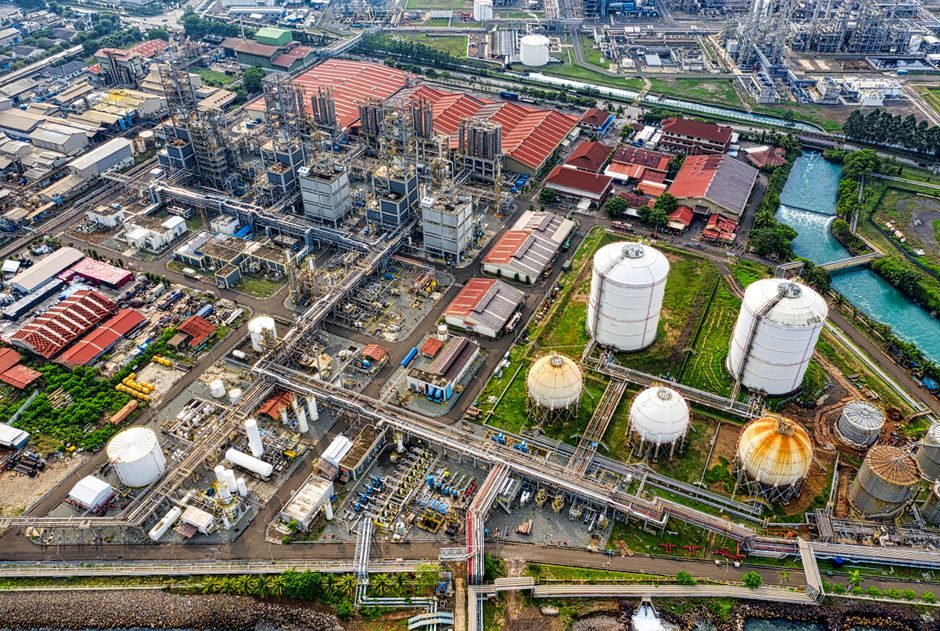
Nickel sulfate (NiSO4) and its hexahydrate (NiSO4·6H2O, CAS 10101-97-0) sit at the convergence of stainless-steel scrap recycling, copper refining by-product streams, and the dedicated laterite-to-sulfate route that feeds lithium-ion battery cathode precursors — Chinese reagent-grade producers were still listing AR bottle units as the standard pack size in July 2026 [S1][S5].
Anhydrous NiSO4 has a molar mass of 154.75 g/mol, density 4.01 g/cm³, melting point above 100 °C and boiling point 840 °C; the commercial hydrate (NiSO4·6H2O, MW 262.85) is the form actually transacted in bulk and is the form the battery industry purchases under tight Co and Cu impurity limits [S2].
Product Forms, CAS Codes, and What Buyers Actually Specify
The market trades three principal solid forms: anhydrous NiSO4 (rare in bulk), nickel sulfate hexahydrate (NiSO4·6H2O, CAS 10101-97-0), and ammonium nickel sulfate ((NH4)2Ni(SO4)2·6H2O) used in electroplating baths — all water-soluble, all derived from either Class I sulfide matte or Class II laterite feed [S2][S5]. Battery-grade spec layers in additional ceilings: Fe ≤ 5 ppm, Cu ≤ 5 ppm, Co ≤ 50 ppm typical for NMC811 precursor, with Na and Mg each capped in single-digit ppm — these are the figures that decide whether a tonne of industrial-grade hexahydrate can be upgraded or must be rejected [S6].
Industrial-grade 99% hexahydrate was listed at $1000-1200/MT FOB by Shijiazhuang-based export channels in late June 2026, packaged in 25 kg bags, while reagent/AR grade moves in bottle units and trades on completely different price logic driven by purity, not by tonnage [S1][S5].
Upstream Feedstock: Matte, MHP, and the Indonesia Laterite Pivot
The critical supply-chain pinch point is not the sulfate crystalliser but the nickel unit that goes into it: roughly 70% of global nickel mine output now originates in Indonesia and the Philippines, with Chinese HPAL (high-pressure acid leaching) projects converting Class II laterite into mixed hydroxide precipitate (MHP, typically 38-42% Ni) that downstream Chinese dissolvers convert into battery-grade NiSO4·6H2O [S6].
The alternative flow — copper refining by-product — yields a nickel-cobalt mixed sulfate that requires separate Fe/Al/Mn removal trains; this route remains relevant for non-battery applications (electroplating, catalysts) where the tighter Co and Cu limits are not binding [S2].
Selection Criteria: Grade, Impurity Ceiling, and Logistics Lane
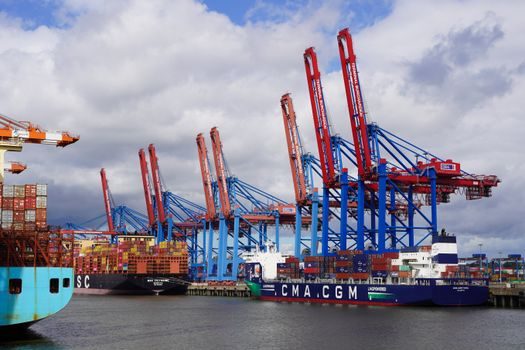
Industrial-grade 99% hexahydrate fits electroplating, catalyst, and dye mordant uses; AR-grade fits laboratory work where a calibrant or analytical reagent is needed; battery-grade is a separate technical commodity sold under long-term offtake contracts, not spot, and is rarely the same physical product line as the echemi-listed tonnes [S1][S2][S5].
Options Compared: Reagent, Industrial-Grade, and Battery-Grade NiSO4
Across the three commercially distinct grades the trade-offs line up clearly: reagent/AR grade delivers the highest analytical purity but is sold in bottle units with pack-size premiums that make bulk substitution uneconomic [S1]. Industrial-grade 99% hexahydrate at $1000-1200/MT FOB is the workhorse for plating lines and chemical synthesis, supplied in 25 kg bags from Shijiazhuang and similar export channels, with 99% assay as the contract floor [S5]. Battery-grade NiSO4·6H2O, sold as solution or crystal under NMC precursor spec, carries a meaningful premium reflecting the Fe/Cu/Co purification train, and pricing is opaque because it is dominated by long-term offtake rather than spot publication [S6].
Use Cases, Limitations, and Failure Modes
Electroplating consumes the largest non-battery share — NiSO4·6H2O dissolved in a Watts bath with nickel chloride and boric acid deposits the bright nickel layer used in decorative and functional finishes, with boric acid buffering pH near 4.0 to prevent Ni(OH)2 precipitation [S2]. Laboratory use as a magnetic-susceptibility calibrant exploits the paramagnetic Ni²⁺ ion and remains a small but persistent demand slice [S2].
The principal failure modes buyers must price in: iron carry-over from upstream laterite leaching (forces additional oxidative hydrolysis and goethite precipitation steps), cobalt bleed-through (problematic for NMC811 because residual Co throws off precursor stoichiometry), and moisture pickup during sea freight that pushes received assay below 22% Ni — a common rejection trigger at Chinese cathode plants [S6].
Standards, Sourcing Signals, and the ASEAN Lane
No single international standard governs commodity NiSO4 the way ISO or IEC governs instrumentation; battery customers enforce in-house ICP-MS impurity panels against precursor-maker specifications, while plating grades reference industry conventions on Ni content and water-of-crystallisation ratios. The Supply Chain Indonesia 2026 exhibition (25-27 November 2026, Jakarta NICE venue) is the most material ASEAN sourcing signal — a Deutsche Messe / CeMAT-backed platform where laterite producers, MHP dissolvers, and downstream sulfate crystallisers will converge for the first regional battery-materials forum of the year [S3].
Trackable signals through the rest of 2026: HPAL Phase 3 commissioning announcements from Indonesian Morowali and Weda Bay projects (each adds 50-100 kt Ni metal capacity that flows downstream as MHP-to-sulfate), and any movement in MHP-payable terms quoted by Chinese dissolvers against LME nickel — a widening MHP-to-LME discount signals a looser sulfate market, while compression signals the tightness that battery buyers are already pricing into long-term contracts [S6]. For buyers evaluating adjacent battery-materials exposure, the lithium hydroxide grade-mix risk map covers the parallel lithium-side pinch point that couples to nickel demand via NMC precursor stoichiometry.
For component-level specifications, see nickel alloy, dc power supply, and switching power supply.