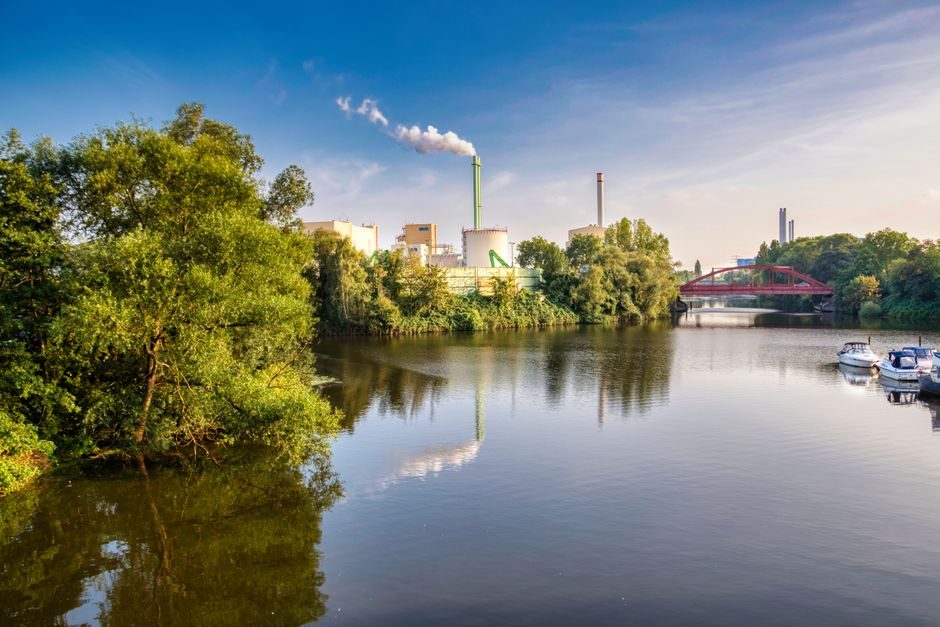
Nickel sulfate hexahydrate (CAS 10101-97-0, formula NiSO4·6H2O, molecular weight 262.85) is the bridge molecule between primary nickel production and the battery-and-plating value chain, with industrial-grade lots trading near $1,000-1,200/MT FOB on spot platforms in 2026 [S1][S7][S8].
Two distinct downstream specifications coexist on the same molecule: a battery-grade feed (≥22% Ni, ≤100 ppb magnetic materials) priced on a DDP China basis by S&P Global Platts, and a plating-grade salt used in electroless nickel, automotive trim, bathroom hardware, aerospace components, and PCB metallization [S1][S6][S8].
Upstream Feedstock Routes Feeding the Nickel Sulfate Stream
Three primary nickel intermediates are routed into nickel sulfate production: nickel matte, mixed hydroxide precipitate (MHP) from high-pressure acid leaching (HPAL) of laterite ore, and Class I nickel cathode from sulfide-ore refining. Nickel Industries (ASX: NIC, A$0.905 share price) has shifted part of its Indonesian rotary-kiln electric-furnace (RKEF) capacity from nickel pig iron (NPI) to nickel matte, holds a 10% interest in the Huayou Nickel Cobalt (HNC) HPAL project supplying MHP, and is acquiring a 46% interest in the Excelsior Nickel Project (ENC) for MHP, nickel cathode, and nickel sulphate output [S3].
Laterite HPAL has overtaken sulfide matte as the marginal feedstock for sulfate because HPAL dissolves nickel (and cobalt) directly into solution, bypassing the dissolution step that matte-route producers must add; sulfide-ore concentrate, by contrast, yields clean cobalt-nickel separation but ships through a smelting-to-matte path. The 2022 Chinese strategy review (Strategic Study of CAE, March 2022) frames nickel sulfate as the "core raw material supporting new energy vehicle power batteries, electroplating, and …" applications, reinforcing the upstream-to-downstream linkage the supply chain is built on [S4].
Downstream Channel 1: Battery-Grade Precursors for EV Cathodes
Battery-grade nickel sulfate feeds the co-precipitation of nickel-cobalt-manganese (NCM) and nickel-cobalt-aluminum (NCA) hydroxide precursors, which are then lithiated into layered oxide cathodes. The S&P Global Platts China Nickel Sulfate DDP China assessment targets min 22% nickel content and max 100 ppb magnetic materials — the spec the market calls "type 2" nickel sulfate — and this benchmark underpins most long-term offtake contracts between precursor makers and nickel producers [S6].
Specifying engineers buying precursor-grade lots should pin four numbers in the COA: Ni content ≥22.00% (basis), magnetic foreign-material content ≤100 ppb, sulfate residue and chloride ceilings set by the precursor reactor's pH/temperature window, and TOC (total organic carbon) — Guanghua Sci-Tech advertises itself as the only Chinese brand controlling TOC, with low organic-impurity content claimed to give faster dissolution in the co-precipitation reactor [S1][S6].
Downstream Channel 2: Electroplating and Electroless Plating

Plating-grade nickel sulfate hexahydrate (green transparent crystals, soluble in water, insoluble in ethanol and methanol, slightly soluble in acid) loses 6 of its 7 waters of crystallization at 103 °C, a useful QA fingerprint for incoming-material identification at plating shops [S8]. Applications span electroplating and electroless plating for automobiles, hardware, bathroom accessories, electronic elements, aerospace components, and printed circuit boards (PCB) [S1][S8].
Plating baths run hot — Watts nickel typically at 45-65 °C with pH 3.5-4.5 — and demand tight control of the hexahydrate's iron, copper, and zinc trace ceilings because those metals co-deposit and shift bath color, ductility, and throwing power. Compare against the merchant data point from ChemicalBook: water solubility 29.3 g/100 mL at the standard reference temperature, pH ≥3.5 for a 20% solution at 20 °C — both useful QA numbers to anchor a plating-grade Certificate of Analysis [S9].
Grade Comparison: Type 1 Plating-Grade vs. Type 2 Battery-Grade
Two product shapes share a CAS but diverge on impurity ceilings: plating-grade nickel sulfate (type 1) is sold as the green hexahydrate or heptahydrate, 98-99% assay, 25 kg PE-bag packaging, optimized for crystal clarity and trace transition-metal control; battery-grade (type 2) is sold against the S&P Platts 22% Ni floor and 100 ppb magnetic-materials ceiling, with tighter control on Co, Cu, Fe, Zn, and Ca that poison cathode synthesis [S6][S7][S8].
Selection hinges on four decision criteria. First, end use — PCB plating and decorative plating accept type 1; NCM/NCA precursor synthesis demands type 2. Second, regulatory ceiling — battery cells face the magnetic-materials 100 ppb cap that plating baths do not. Third, dissolution kinetics — type 2 lots with controlled TOC dissolve faster in the co-precipitation reactor, reducing batch time. Fourth, sourcing risk — type 2 capacity sits behind long-term offtake with precursor makers, so spot availability is thinner than for type 1. The anhydrous form (CAS 7786-81-4, melting point 848 °C, green-yellow orthorhombic crystals) is a specialty intermediate used in catalyst and pigment synthesis rather than the main plating or precursor chains [S5].
Selection Criteria, Standards, and Process-Engineer Pitfalls
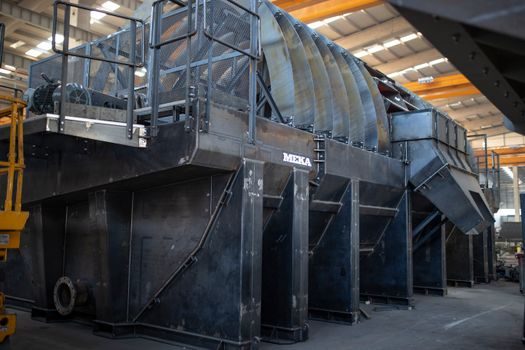
Specify nickel sulfate to end-use spec, not to the cheapest spot price. For plating lines, lock COA on Ni assay (≥22% on dry basis or as hexahydrate equivalent), Fe/Cu/Zn trace ceilings, sulfate/chloride residuals matched to bath chemistry, and the 103 °C dehydration step as an in-house identity test [S8]. For battery-grade offtake, mirror the S&P Platts DDP China type 2 envelope: ≥22% Ni, ≤100 ppb magnetic materials, controlled TOC, and consistent supply against a multi-year contract, because spot substitution across the Indonesia HPAL and Chinese matte-route fleet is harder than the price screen suggests [S6].
Process engineers specifying mixing, dosing, and CIP skids around a nickel sulfate tank farm should be aware of two engineering facts: nickel sulfate is corrosive to standard carbon steel at elevated temperature and low pH, so stainless 316L or rubber-lined tanks are common; and the sulfate anion drives sulfuric-acid dosing in the downstream bath or reactor, so vent scrubbers and pressure transmitter-linked safety interlocks are part of the same spec sheet. Lot-level QA of plating tanks benefits from inline flow-meter feedback tied to dosing pumps, while precursor reactor temperature control typically loops a plc to the jacket valve trim. The upstream/downstream nature of the chain — mining concentrate or MHP into sulfate salt into cathode active material or plated part — means a nickel alloy selection question reappears whenever a sulfate crystallizer or evaporator is specified, because sulfate service at 80-150 °C excludes carbon steel and most 400-series stainless.
Limitations, Failure Modes, and Trackable Signals
The most common downstream failure is magnetic-particle contamination crossing the 100 ppb ceiling in battery-grade lots, which scrapes entire precursor batches and forces re-precipitation — so the magnetic-materials spec is non-negotiable for type 2 buyers [S6]. On the plating side, the heptahydrate's tendency to dehydrate above 103 °C in storage means bag-house humidity and warehouse temperature need engineering control, and incoming-material identity testing at 103 °C is a fast, cheap QC gate [S8].
Trackable signals for 2026 sourcing decisions: the conversion of Indonesian RKEF capacity from NPI to nickel matte (Nickel Industries is the listed proxy), HPAL MHP output from the HNC project, and the ramp of the ENC project's mixed hydroxide precipitate, nickel cathode, and nickel sulphate lines [S3]. For the related alloy and battery-chain coverage, see the stainless steel coil grades and slitting map and the aluminum extrusion profile application map — both cover upstream metal forms that feed adjacent process equipment, while the safety relief valve sizing field guide is the relevant read for sulfate crystallizer overpressure protection.