
End-use demand is dominated by lithium-ion battery cathodes — the EV-battery segment alone accounts for an estimated 40% of global cobalt consumption in 2026, with superalloys, cemented carbides, magnets, and catalysts sharing the remainder [S1]. India Energy Storage Alliance (IESA) data cited in the same study projects the Indian EV-battery supply chain expanding at a 36% CAGR from 2021 to 2026, a trajectory that pulls incremental cobalt demand into South and Southeast Asia [S1].
Upstream Concentration: DRC Dependence and Artisanal Share
The combined effect is a single-jurisdiction risk profile that buyers attempt to hedge through offtake diversification into Indonesia (laterite Ni-Co by-product) and Australia (sulfide and primary producers).
Indonesian nickel-cobalt laterite projects have lifted that country's nameplate cobalt capacity, though recovered cobalt is a by-product of nickel HPAL (high-pressure acid leaching) operations and remains coupled to the nickel price cycle. The DRC's structural share is therefore unlikely to be displaced before 2030 on current project pipelines, and any 2026 supply shock is most plausibly a logistics or policy event, not a new-source substitution [S1].
Midstream Conversion: Refining Geography and Chinese Process Stack
Intermediate conversion (crude cobalt hydroxide to battery-grade cobalt sulfate, and to electrolytic cobalt metal) is concentrated in Chinese refineries, which process a large share of the DRC's hydroxide output under tolling arrangements. A buyer in 2026 evaluating a "non-Chinese" cobalt sulfate supply chain is effectively evaluating a logistics plan: concentrate or hydroxide ships from the Copperbelt, is converted at a Chinese plant, then re-exported to cathode-active material (CAM) lines in Korea, Japan, Europe, or North America [S1].
Verification of origin relies on the Cobalt Industry Responsible Assessment Framework (CIRAF) and chain-of-custody documentation; buyers in the EU additionally face obligations under the EU Battery Regulation (2023/1542), which sets due-diligence and recycled-content thresholds applicable from 2025-2027. The midstream constraint in 2026 is therefore not smelter capacity in the abstract — it is which refineries carry the documentation a downstream OEM requires.
Downstream Spec Trends: Cathode Chemistry and the LFP Substitution Question

Cobalt demand in 2026 is being reshaped by cathode chemistry selection. Nickel-manganese-cobalt (NMC) cathodes, the historical cobalt anchor, are trending toward lower cobalt content (NMC 811 and beyond) and are competing head-on with lithium iron phosphate (LFP) cathodes that contain no cobalt. The LFP share of global EV-battery output has expanded materially in 2024-2025, particularly in entry and mid-range passenger vehicles and in stationary storage, eroding cobalt intensity per kWh of installed battery [S1].
Counter-pressure comes from high-nickel and high-voltage NMC variants that still require cobalt for thermal stability, and from the EV sector's continued use of nickel-cobalt-aluminum (NCA) cathodes in select high-energy-density packs. Net effect: cobalt unit demand per kWh falls, but absolute kWh volumes grow — the relevant silicon wafer sourcing bands and price spreads in 2026 illustrate a similar substitution-and-volume pattern in adjacent battery-grade materials. Cathode makers balancing this tradeoff in 2026 typically run an NMC/NCA backbone for premium cells and an LFP backbone for mass-market cells.
Price Bands 2026: LME Cobalt Reference and Spot Spread Structure
Cobalt pricing in 2026 references the LME cash-settled cobalt contract (minimum purity 99.8% Co, 1-ton lot) with spot premiums in Rotterdam and Shanghai reflecting shape, grade, and delivery form. Battery-grade cobalt sulfate is typically quoted on a contained-cobalt basis as a discount to LME metal; the spread widens when Chinese converter utilization is high and narrows when hydroxide feed is loose. Engineering buyers planning a 2026 offtake should treat the LME-printed price as a marker only — the actual delivered cost of cobalt sulfate or metal into a CAM line in Korea or Germany sits above LME by a freight, insurance, conversion premium, and a premium or discount tied to ESG and traceability documentation. [S1]
Quotation convention: cobalt sulfate (Co ≥ 20.5%) trades as a percentage of LME Co with a typical commercial range that fluctuates with converter utilization; cobalt metal cathodes (99.8% Co, full cathode) command a different premium structure. Round-number targets: LME Co 30-35 USD/lb is the band most often cited in 2024-2026 industry commentary, but specific 2026 levels are not stated in the research material and should be reconfirmed from a live ticker before any commercial commitment.
Selection Criteria for 2026 Cobalt Buyers: A Side-by-Side
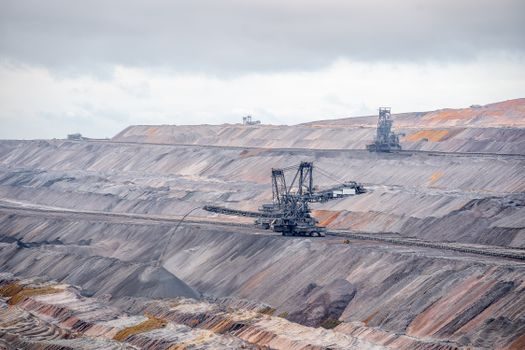
A spec-side comparison of the practical 2026 cobalt options lines up as follows. (1) DRC mine-source (hydroxide to refinery): lowest unit cost at scale, highest jurisdictional and ESG documentation overhead, requires EU Battery Regulation and CIRAF-style chain-of-custody. (2) Indonesian HPAL by-product cobalt: nickel-coupled output, useful for ESG diversification if documentation exists, but cobalt volume is constrained by nickel processing rates. (3) Recycled cobalt (battery black mass, superallood scrap): highest ESG score, lowest primary supply-chain risk, lower volumes and higher per-unit processing cost, expanding through 2026. (4) Russian and Australian primary cobalt: niche, technically clean, often command premium pricing in the West and are subject to jurisdiction-specific sanctions or trade screens. [S2]
Selection gates a 2026 buyer should run, in order: (a) traceable origin and chain-of-custody documentation per EU Battery Regulation 2023/1542; (b) deliverable form (hydroxide, sulfate, metal, cathode) matching the CAM line's process; (c) assay: Co grade, Ni, Cu, Mn, Fe, Zn impurities, sulfate pH and specific gravity for liquid sulfate lots; (d) jurisdiction risk score and sanctions screening; (e) offtake security — index-linked, fixed, or floor/ceiling collar, and credit terms. The battery-supply-chain risk frames in adjacent critical materials show a comparable set of gates (catalyst, plate, membrane) for hydrogen fuel cell sourcing, and the gate structure translates directly into cobalt procurement.
Workforce and Process Implications for 2026
Cobalt supply-chain analysis in 2026 is no longer a procurement function alone; it is a hybrid materials, ESG, and trade-compliance role. The 2026 supply-chain skill set prioritized by industry data analysis includes data analytics, supplier-risk modelling, scenario planning, and chain-of-custody tooling [S2]. Median analyst compensation in 2026 reflects that overlap: U.S. supply-chain analyst roles cluster in the mid-60,000 to mid-80,000 USD range, with senior roles higher and significant variance by industry vertical [S3].
Process engineers interfacing with cobalt supply chains in 2026 should expect to be looped in on two items that historically sat with procurement: the cathode-chemistry substitution rate at the OEM (which sets tonnage) and the recycled-content blend target (which sets the primary-vs-secondary split). For battery- and EV-adjacent critical-material buyers tracking 2026 sourcing in parallel, the rare-earth and silicon-wafer maps use the same risk-gate vocabulary, and a unified supplier-risk dashboard is now the default in larger OEM procurement functions [S2][S4].
Limits of the 2026 Picture and Trackable Signals
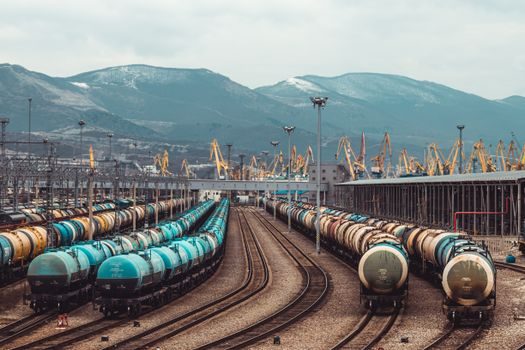
Two constraints bound the current analysis. First, the available research [S1][S2][S3][S4] provides the structural and policy framework but does not pin a 2026-vintage LME cobalt price level, an exact 2026 DRC output number, or a named 2026 cathode-chemistry market share — those require a live market feed. Second, the EU Battery Regulation's recycled-content and due-diligence obligations are stated in the framework but the specific 2026 thresholds for cobalt recycled content should be reconfirmed against the current regulatory text before any compliance claim is made.
Two trackable signals a process engineer can monitor through 2026 to update the picture: (1) the LME cobalt spot curve and Rotterdam vs. Shanghai premium spread (a clean read on midstream tightness), and (2) cathode-mix disclosures from the top 5-10 EV OEMs in quarterly results (the cleanest read on LFP-substitution pace and cobalt unit demand per kWh). A third useful signal is DRC export volume data published by the central bank, which leads the spot price by 4-8 weeks in most 2023-2025 episodes.
For component-level specifications, see dc power supply, switching power supply, and chain conveyor.