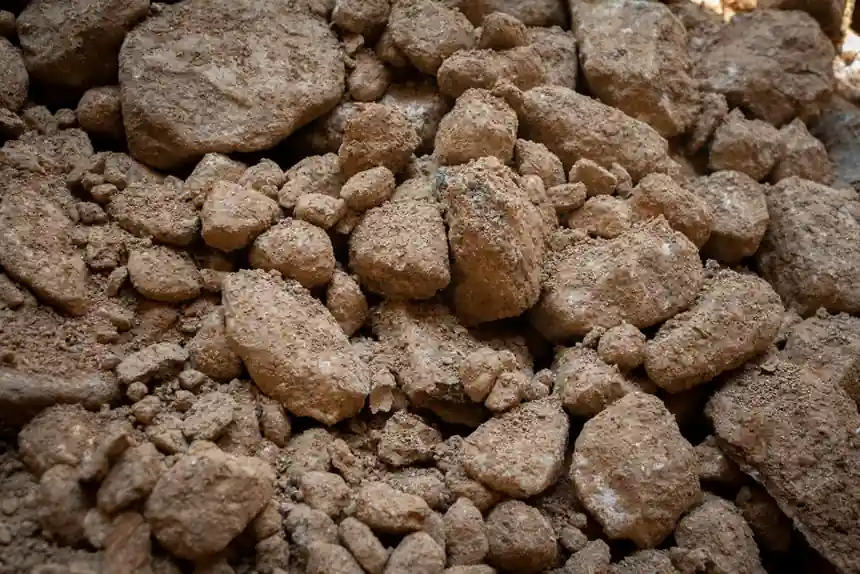
Polyurethane cold box core shooters push resin-coated sand into a core box with compressed air, and the two parameters that define every machine class are shot chamber (sand hopper) capacity and blow pressure at the shooting head [S1].
On commercial cells these two values trade off against each other: laboratory and small jobbing units shoot 10–20 kg of sand at 5–7 bar into modest boxes, while premium automatic machines cover 12–60 L (roughly 15–75 kg of silica sand) at 2.5–4 bar [S1][S5][S6].
What "shot chamber capacity" actually means on a cold box line
The shot chamber is the pressurised sand hopper above the core box, not the storage silo feeding the mixer, and its usable volume sets the maximum single-cycle core weight the machine can deliver without recharging [S1][S2]. The cold box process itself is a two-stage operation in which amine-cured phenolic resin sand is first propelled into the box by compressed air, then hardened with a triethylamine (TEA) or dimethylamine (DMA) vapour purge, so the chamber has to hold enough sand for one full fill plus a small safety margin [S2]. A typical Indian horizontal cold box core shooter is rated at 20 kg per shot with a 7 bar blow pressure for cores in the 10–20 kg weight class [S6]. Mid-range automatic cells, by contrast, publish hopper volumes rather than weights, with the Omega Sinto Premium Series spanning 12–60 L across sixteen model variations for vertically or horizontally jointed core boxes [S5].
Blow pressure: where the 2.5–6 bar window comes from
Blow pressure is the regulated working pressure applied above the sand in the shot chamber, and it is the variable most directly tied to core density, surface finish, and vent loading. Primafond's process guidance places the standard cold box shooting window at 2.5–4 bar, with higher pressures reserved for complex or thin-section cores that resist fill [S1]. The German Foundry Lexicon gives the generic "core blowing" range as 0.2–0.4 MPa, which is 2–4 bar, the same band expressed in different units, and notes that "pouring-blowing" machines (a hybrid blow-then-ram architecture) sit at the upper end when sand flow is poor [S7]. Manufacturer data confirms the spread: Indian jobbing builders publish 7 bar on horizontal cells [S6], while premium European and Chinese equipment cluster at 2.5–4 bar for serial production [S1][S3].
Matching chamber size to pressure: a spec table
There is no single "right" pairing; the engineering trade is chamber volume (kg per shot) versus blow pressure (bar) versus cycle time (s). A useful comparison across the published product data: [S1]
- <b>Small jobbing (1–20 kg cores):</b> 20 kg shot capacity, 7 bar blow pressure, manual clamping, suited to short runs and spare-part cores [S6].
- <b>Mid-range automatic (12–60 L / ~15–75 kg):</b> 2.5–4 bar blow pressure, 16 model variations, horizontal or vertical clamping with optional vacuum, integral gas generator, PLC with up to 400 stored recipes [S1][S5].
- <b>High-tonnage Chinese cells:</b> max sand shooting capacity 30 kg and 40 kg on two published models, core box envelopes 600×500×400 mm and 700×600×400 mm, pattern opening/closing stroke 200–900 mm and 300–900 mm respectively [S3].
The relationship is not linear: doubling chamber volume does not let you halve blow pressure, because vent area, sand flowability, and binder coating all cap the minimum pressure needed to fill before the resin starts to cure. For reference, the cold box process accounts for over 60% of European sand core production, so the 2.5–4 bar window has effectively become the de-facto industrial default [S2].
Process physics: why the 2.5–4 bar window works
The Khan et al. augmented-simulation study of the cold box shooting stage shows that the air-sand stream out of the chamber is a two-phase flow whose momentum, not raw pressure, governs how well sand packs into a vented core box [S2]. Below about 2 bar, the air-sand mixture decelerates inside long or thin sections and leaves unfilled patches; above about 6 bar, the stream begins to erode vent screens and pack sand so hard that amine gas struggles to diffuse through during the cure stage, producing soft centres [S1][S2]. The 2.5–4 bar band is the operating range where flow momentum and vent back-pressure are in balance for the majority of phenolic-resin-coated silica sands. Resin-coated sand also flows more easily than green sand, which is why the same 0.2–0.4 MPa (2–4 bar) range is given in the German Foundry Lexicon as the generic core-blowing pressure for any well-flowing moulding material [S7].
Selection criteria: who needs what
Pick the chamber-pressure pair by core weight and run length, not by headline maximum. For foundries running short batches of 1–5 kg cores with frequent box changes, a 10–20 kg chamber at 5–7 bar is the most flexible choice and matches what Indian jobbing builders offer [S6]. For serial production of 5–30 kg cores, the 30–40 kg shot capacity Chinese cells with 2.5–4 bar shooting and 600–700 mm box envelopes are the workhorse class [S3]. For high-mix, recipe-driven automotive or valve foundries producing cores from under 1 kg up to 60 kg, the 12–60 L premium machines with PLC recipe storage and integral amine/methyl formate/CO2 gas generators are the correct fit [S5]. Foundries considering used equipment should verify that the original shooting unit, gassing unit, amine scrubber, and core box mounting are matched to the targeted chamber-pressure pair, because mismatched peripherals are the dominant cause of rejected cores on second-hand cold box cells [S4].
Limitations and failure modes
Three failure modes dominate when chamber and pressure are mismatched. First, undersized chambers force mid-cycle recharges and add 5–10 s of dead time per shot, which on a 30 s target cycle is unacceptable for high-volume cells [S3]. Second, blow pressure above 6 bar on long, thin cores routinely blows resin off the sand grains and contaminates vent screens, raising amine scrubber load and shortening vent service life [S1][S2]. Third, blow pressure below 2 bar on dense or fine-pitch cores leaves unfilled patches near vents, producing scrap cores that look acceptable externally but fail X-ray or pressure-tightness testing [S2][S7]. The cure stage compounds all three: if the shot is poor, the amine gas cannot redistribute the binder evenly, and the core cures with internal soft zones regardless of gas flow [S2].
Standards, sourcing, and what to verify on the data sheet
No single international standard pins down cold box shot chamber volume or blow pressure; instead, machine builders publish their own ratings and the process community treats 2.5–4 bar as the working window for amine-cured phenolic resin sand [S1][S7]. When comparing data sheets, four numbers must be checked together: maximum sand weight per shot (kg), shot chamber volume (L), regulated blow pressure (bar), and core box envelope (L×W×H mm), because a 60 L chamber with a small box envelope is wasted capacity and a 20 kg machine with a 7 bar rating is overkill for thin-wall cores [S3][S5][S6]. The integrated control package also matters: premium machines store up to 400 recipes and support amine, methyl formate, or CO2 curing from a single gas generator, which lets one cell cover the cold box, CO2, and ester-cured binder families without hardware changes [S5]. Finally, the process control inputs that the simulation study identifies as decisive for core quality are air pressure, shooting time, amine quantity, and curing time, so any data sheet that omits the shooting time and pressure-regulation accuracy should be treated as incomplete [S2].
Trackable signals for the next planning window: OEM releases of larger 60–100 L cold box shot chambers for engine-block and cylinder-head cores, and any new process data linking blow pressure below 2.5 bar to vented-core fill at sub-30 s cycle times. For an applied process view of how blow pressure interacts with fill time, see the blow pressure and fill time optimisation reference, and for the upstream step map covering fill, gas cure, purge, and eject, see the cold box step map. For the broader machine class, the cold box core machine and shell core shooter reference pages sit alongside the shot sleeve entry for die-casting comparators.