
Blow pressure on a cold box core shooter is most commonly set between 2.5 and 4.0 bar (0.25-0.40 MPa), with 3-4 bar identified as the typical optimum for PU-bound silica sand [S4][S7]. Shooters run by the core-blowing principle on flowable shell sand instead operate at 0.2-0.4 MPa (2-4 bar), confirming the 2.5-4.0 bar band as the real-world working window for amine-cured systems [S5].
Fill time is the second variable, and it is set against the first: shorter fill time at the same pressure means higher sand velocity and denser compaction, but also higher kinetic heating, vent-loading, and the risk of soft-ram phenomena on long, thin cores. Optimizing the pair means solving a pressure-versus-duration trade-off per core geometry, not picking a single global number [S1][S2].
Why blow pressure and fill time dominate core quality
Air pressure applied to the sand-binder mixture in the hopper is the only force driving resin-coated sand through the nozzle into the core box during the shooting stage [S1]. If that pressure is too low, sand arrives with insufficient momentum, leading to bridging in narrow sections, under-packed prints, and surface sink after amine gassing. Khan (2025) shows via augmented simulation that the shooting stage and curing stage are tightly coupled, so any deficit in fill density propagates into uneven amine penetration and lower cross-sectional strength [S1].
Fill time is the other half of the same equation: it sets the velocity profile and the effective compaction energy the sand experiences on impact. Reference practice states that "optimum shooting pressure is typically 3-4 bar" and that dwell time of sand inside the machine should be minimized to preserve flowability and avoid pre-cure [S7]. The implication is that the right answer is "highest practical pressure for the shortest practical time", constrained by vent area, core box stiffness, and the resin system's tolerance for shear heating.
Pressure bands and what each band actually does
Three operating bands are visible in published practice for PU cold box cores: a low band of 2.0-3.0 bar for thin-walled or large-area cores where high velocity would erode the box or blow sand out of the vents; a mid band of 3.0-4.0 bar, the documented optimum for general-purpose cores [S4][S7]; and a high band of 4.0-5.0+ bar reserved for dense section cores where maximum compaction is required to prevent gas-related defects [S4].
The Giesserei Lexikon entry for the core-blowing machine family places the lower end even lower, at 0.2-0.4 MPa for flowable dry shell sand in hot boxes at 250-350 deg C, and the cold box core-shooting principle shoots "damp" cold resin mixtures at higher speed into a clamped, hydraulically held core box [S5]. Cold box shooters must clamp the box against the shooting unit because the higher differential pressure would otherwise lift the box off its seat.
Chate et al. (2014) confirm that compaction pressure is a primary factor in sand-drop defects and a secondary factor in blow holes when combined with resin content, gassing time, and purging time; the Taguchi study treats compaction pressure as a tunable alongside amine-side variables rather than a fixed setpoint [S3].
Fill time, vent area, and the sand velocity trade-off
Fill time is rarely quoted in absolute seconds in the open literature; what is published is the linked relationship: higher pressure shortens required fill time for a given core mass, and longer fill time at the same pressure reduces vent loading but allows sand to settle loosely. Process engineers therefore set fill time by pressure-band and vent area, not independently [S2][S7].
The standard core box tooling described in ATHI's reference parts list is the nozzle set, the core box itself, and the vents, and the same trio governs fill-time behavior: nozzle size sets mass flow, box volume sets the target mass, and vent area sets the air-escape ceiling [S6]. A cold box core machine running at 4 bar into an under-vented box will over-pressurize the cavity and crack thin prints; the same box at 3 bar with vents opened will fill cleanly. A shell core shooter, by contrast, runs on the pour-blow principle at 0.2-0.4 MPa because the resin-coated sand there is hot and free-flowing, not a cold damp mix [S5].
Soft-ram versus hard-ram is the practical axis: a soft-ram profile (lower pressure, longer fill) is used on complex water-jacketed cores to keep edges filled without wash, while a hard-ram profile (upper-end pressure, shortest fill) is used on heavy main bearing cores to push density above 1.5 g/cc. The shoot-and-cure webinar notes that "incomplete" shooting is the most common root cause of poor core quality on complex cold box cores, not amine ratio or gas residence time [S2].
Linked process variables: resin, amine, and purge
Blow pressure and fill time are the shooting half of a four-factor Taguchi set; the curing half is amine gassing time and purging time, with resin content as a cross-cutting material parameter [S3]. Setting pressure without checking gassing time wastes energy: a tightly packed core resists amine diffusion, so a shorter fill time must be paired with a longer gassing time, or core centers stay under-cured. Chate et al. (2014) identified these four factors plus fresh-sand percentage and compaction pressure as the dominant drivers of blow holes and sand drops in cold box cores [S3].
The Khan (2025) augmented-simulation study explicitly sequences shooting and curing in a single uninterrupted workflow, with input parameters including "air pressure, shooting time, amine quantity, curing time" [S1]. That parameter list matches what a programmable cold box core machine accepts on its HMI: pressure in bar, shooting time in seconds, amine mass in grams, and cure time in seconds, all recipe-stored per core type. For comparison, hot box core machine recipes substitute box temperature (typically 200-260 deg C) for amine mass, since hot box cores cure by phenolic resin cross-linking rather than tertiary-amine catalysis.
Comparison: shooting, shell-blowing, and pouring-blowing principles

Three filling principles compete inside the broader core shooter category, and pressure bands differ markedly between them [S5]:
1. Core shooting (cold box, damp PU resin-coated sand): high speed, sudden air expansion, both damp and dry mixes, into cold or hot boxes; typical 2.5-4.0 bar, up to 5 bar for dense sections [S4][S5].
2. Core blowing (hot box / shell, dry flowable sand): low pressure 0.2-0.4 MPa into a hot core box at 250-350 deg C, gravity plus light pressure fill [S5].
3. Pouring-blowing (shell, dry Croning sand): mold container is locked to the box, rotated 180 deg, sand falls in and is compacted under additional pressure; hardening time 40-120 s governs wall thickness [S5].
The cold box shooting principle is the only one of the three that depends critically on a tight, repeatable pressure-time profile, because the sand is damp and the box is cold and clamped; the other two rely on heat and free flow for fill, not pressure impulse.
Failure modes tied to the wrong pressure-time pair
Too low pressure, or too long fill time at correct pressure, produces under-rammed cores with low density, edge rounding, and visible sink after amine cure [S1][S2]. Too high pressure, or too short fill time, produces cracked prints, vent-blown sand, and rapid nozzle wear; the box is also at risk of clamp slippage if hydraulic clamping force is not scaled to the differential [S5][S6].
A 2025 best-practice note goes further: sand dwell inside the shooter must be minimized because resin-coated sand sitting in the hopper under residual heat and humidity starts to lose flowability, increasing the effective fill time required and shifting the pressure demand upward [S7]. The Chate et al. Taguchi work ranks the four-factor set by contribution to defects, with compaction pressure typically taking a smaller share of variance than resin content and gassing time, but its interaction with fill time is significant for blow-hole-type defects [S3].
Standards, signals, and what to track next
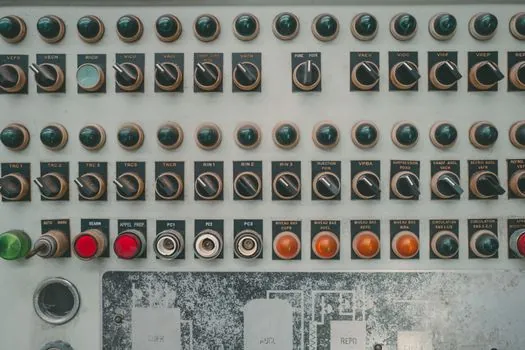
No ISO or ASTM standard specifies blow pressure or fill time values for cold box core shooters; these are OEM-recipe parameters driven by resin supplier data sheets, core box venting design, and the target core weight tolerance. The most concrete citable values in the open domain remain the 2.5-4.0 bar shooting band, the 3-4 bar optimum, and the 4-5 bar high-pressure ceiling for dense section cores [S4][S7]. Foundry-level process control tracks these via the shooter's time relay sequencing the fill, hold, gas, and purge steps, typically with a pressure transducer at the shooting head and a sand-weight check per cycle.
Trackable signals for the next reporting period: (1) wider publication of in-cycle pressure-time traces from MAGMASOFT and similar augmented-simulation tools, which Khan (2025) demonstrates can resolve the shooting-curing interaction in a single uninterrupted workflow [S1]; (2) any update to resin supplier data sheets that shifts the recommended pressure ceiling above 5 bar for next-generation low-emission PU systems; (3) foundry case data on dense-section EV battery housing cores, which are pulling fill time down and pressure up in parallel. For adjacent process detail, see how channel induction furnace salt bath heel design intersects with the same high-cycle repeatable-process engineering discipline.