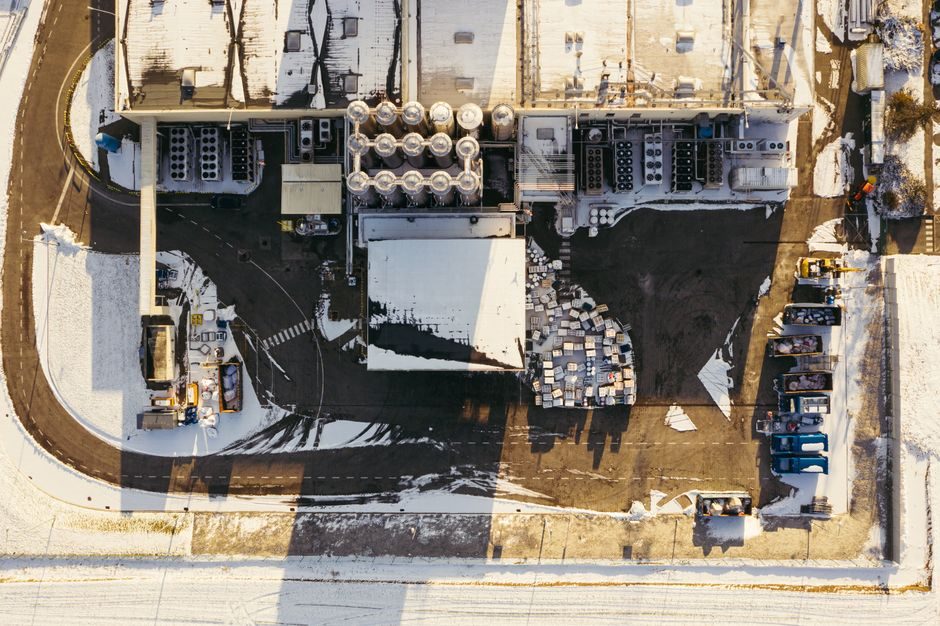
Cold chain equipment manufacturing covers five functionally distinct process blocks: insulated enclosure fabrication, vapour-compression refrigeration assembly, IQF/spiral/tunnel freezing line integration, refrigerated transport box build-up, and biomedical-grade ultra-low temperature storage skids [S3][S5][S7].
Current commercial capacity spans a 200 kg/day to 30 T/day throughput window on standard fluidized-bed and spiral freezers, while biomedical product families operate from -196 °C cryogenic storage up to +8 °C pharmacy refrigeration on a single vendor's catalogue [S5][S7].
Process Block 1 — Insulated Enclosure Fabrication
Refrigerated cabinets and cold rooms begin as polyurethane (PU) foamed enclosures, with injected foam density typically held between 35–45 kg/m³ to balance thermal conductivity (≈0.022 W/m·K) against structural rigidity, while walk-in cold-room panels are commonly produced in 100 mm or 150 mm thicknesses depending on the target temperature class [S3][S4].
Mobile transport boxes for vans, cargo trucks and pickup chassis — quoted at $800–1,000 per set FOB and truck-mounted refrigerated boxes at $1,450–1,570 per set — are fabricated with galvanized or stainless inner liners and use electric-tricycle cooling box variants for last-mile meat and produce delivery [S4].
OEM build-up sequence follows: sheet-metal blanking and bending → PU foam injection between inner/outer skins → hinge and gasket assembly → refrigerant port brazing → vacuum leak test, with the leak test typically run to a 1.0 × 10⁻⁶ Pa·m³/s helium sensitivity before the unit enters the refrigeration circuit assembly line [S3][S7].
Process Block 2 — Refrigeration Circuit Assembly
Refrigeration circuit assembly starts with compressor selection, typically hermetic reciprocating units below 3 kW and semi-hermetic screw compressors from 5 kW upward, followed by condenser, expansion valve and evaporator brazing under nitrogen purge to limit internal oxidation [S3][S5].
Common working fluids across the surveyed product families are R404A for medium-temperature commercial refrigeration and R448A/R449A as R404A drop-in replacements; cascade systems for -80 °C ULT freezers pair a R404A/R449A high stage with a R508B or R23 low stage [S7].
Circuit assembly quality is verified by a 24-hour burn-in under load, with cabinet pull-down time and steady-state temperature drift logged against the OEM spec; biomedical skids additionally pass a 7-day continuous-run test at set-point before serial-number release [S7].
Process Block 3 — IQF, Spiral and Tunnel Freezing Line Integration
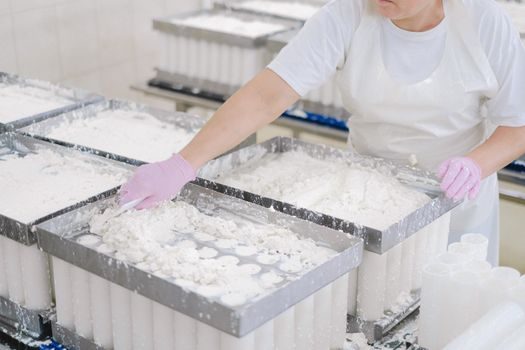
Individual Quick Freezing (IQF) lines for fruit, vegetable, seafood and prepared-food processors are built around three machine classes — fluidized-bed IQF freezers, spiral freezers, and impingement tunnel freezers — with current production capacities spanning 300 kg/h to 5,000 kg/h on a standardized customization base [S3][S5].
Fluidized-bed IQF freezers handle fruits, vegetables and selected aquatic products at 300–3,000 kg/h, with the larger FSLD series quoted at $50,000–$200,000 per line depending on belt width, defrost cycle and stainless-steel food-grade spec [S3].
Double-belt spiral freezers (FSL/FDSL series) target seafood and meat at $60,000–$100,000 per unit; the FDSL2000 double spiral reaches 2,000 kg/h and is sized for industrial dumpling and shrimp processing lines where footprint is the constraint [S3].
Impingement tunnel freezers (FIW series) are the budget-class entry, with the FIW300 unit quoted at $18,000–$20,000 and explicitly marketed for IQF shrimp lines where product thickness is below 30 mm and dwell time stays under 8 minutes [S3].
Process Block 4 — Refrigerated Transport Box Build-Up
Transport cold-box build-up is a separate sub-process from the IQF line, with Weiba Intelligent Cold Chain Equipment (Henan) Co., Ltd. — a Henan-based custom refrigerated-box supplier — listing a refrigerated box for pickup cargo trucks at $800–1,000/set, a customized truck-mounted unit at $1,450–1,570/set, and an electric-tricycle cooling box for meat cold-room storage at $2,600/piece on its 2026 catalogue [S4].
Vaccine cold-box build for human and veterinary use is governed under ISO 13485 medical-device QMS, with one Indian OEM (Blowkings, established 1981 in Kandla SEZ, Gujarat) holding ISO 13485:2003 and EN ISO 13485:2012 certification, plus a CE mark, and shipping to WHO, UNICEF and PAHO procurement programmes [S1].
Containerized cold-room storage — sold as a complete skid with refrigeration and insulation — is offered alongside the van-mounted boxes, with the mobile segment typically rated for -25 °C to +10 °C operation on 12 V DC, 24 V DC or 220 V AC mains, depending on customer spec [S4].
Process Block 5 — Biomedical-Grade Ultra-Low Temperature Storage
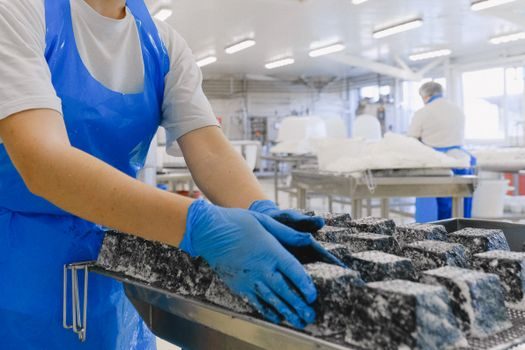
Biomedical cold chain is its own process block, with Haier Biomedical's 2026 product line covering ULT freezers at -80 °C, pharmacy refrigerator/freezers at -20/-30/-40 °C, blood plasma freezers, transport coolers, and a U-Biobank network rated for cryogenic storage down to -196 °C on the same vendor's catalogue [S7].
The U-Vaccine, U-Reagent, U-Blood and U-Laboratory sub-networks each pass through dedicated sample-prep, freeze-dryer and controlled-rate-freezer workstations, indicating that biomedical cold chain manufacturing integrates lyophilization and rate-controlled freezing as upstream process steps, not downstream accessories [S7].
Blood component management, RTMD (real-time monitoring device) analytics and medical-waste disposal equipment are bundled into the same product tree, which means a vendor supplying a hospital blood-bank skid will also be qualified to assemble the -80 °C ULT, +4 °C plasma and ambient-temperature waste-disposal chain on a single QMS [S7].
Selection Criteria — Which Cold Chain Process Block Fits Your Build
For a greenfield frozen-food plant, the decision typically starts at the IQF class: fluidized-bed IQF for particulate product at 300–3,000 kg/h, spiral IQF for dense seafood/meat at 1,000–2,000 kg/h, and impingement tunnel for thin product at 150–750 kg/h [S3].
For vaccine and blood-bank procurement, the deciding spec is the ISO 13485 + CE combination, since WHO/UNICEF/PAHO tenders routinely require EN ISO 13485:2012 certification as a hard gate [S1].
For fleet operators, the selection matrix is duty-cycle, voltage and temperature class: 12 V/24 V DC boxes for last-mile electric tricycles and pickups at -25 °C to +10 °C, 220 V AC skid-mounted cold rooms for distribution hubs, and 380 V three-phase IQF lines for processing plants [S4][S3].
The five blocks also share process overlap with adjacent industrial builds — for example, the compressed-air and pneumatic control lines that drive a spiral freezer's belt tensioners and air-knife defrosts follow the same skidded-controller pattern documented in compressed air smart manufacturing builds, and the multi-stage fabrication flow (blank → assemble → leak-test → burn-in → ship) mirrors the process discipline used in industrial filter manufacturing.
Cold chain enclosures also depend on rigid PU/PIR insulation board installation, and the substrate-by-substrate spec logic for cold-room panels is essentially identical to the field guide for rigid insulation board installation across substrates.
Failure Modes, Constraints and Procurement Watch-outs
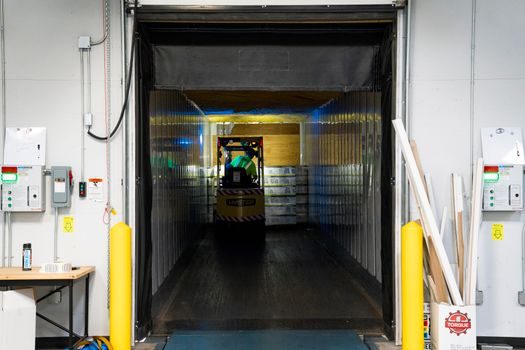
Field failure data from IQF line operators consistently flags three pain points: belt-drive misalignment on spiral freezers, defrost-cycle icing on fluidized-bed IQFs in high-humidity tropical plants, and refrigerant migration in transport boxes left open during loading [S3].
Transport-box buyers should verify the foam-injection density rather than the panel thickness alone, since a 100 mm PU panel injected at 30 kg/m³ will not meet the same U-value as one injected at 40 kg/m³, and Chinese-van-box catalogues rarely publish the density figure on the spec sheet [S4].
Biomedical cold chain buyers should confirm that the vendor's -80 °C ULT and -196 °C cryogenic lines share the same QMS audit, since split-vendor ownership of ULT and cryogenic storage is the most common source of audit non-conformity at hospital tenders [S7].
Watch the next two procurement cycles for: (a) wider roll-out of lower-GWP R448A/R449A conversions in medium-temp commercial refrigeration, and (b) consolidation of biomedical cold-chain QMS audits across ULT, cryogenic and reagent-storage product lines, both of which are visible in the July 2026 vendor catalogues [S3][S7].
For the relevant spec sheets and selection criteria, see additive manufacturing material, anti static equipment, and multifunction process calibrator.