A full main tee roll forming line for 38x24mm suspended-ceiling profiles, with hydraulic decoiler, 18-station Cr12 roll former, servo punching, and 3,600 mm cut-off, lists in the $80,000 to $250,000 ex-works band as of 2026, with high-automation D5-class plants from DALLAN at the upper end [S1][S2][S7].
Main tee is the load-bearing 3,600 mm runner of a 600x600 or 600x1,200 mm exposed grid; cross tees are 600/1,200 mm cross-cut members; wall angle is the L-profile that ties the grid to the perimeter. The three profiles share 70 to 80 percent of upstream hardware (decoiler, leveler, PLC) but diverge on cut length, servo stroke, and packaging, which is why buyers who price them as one SKU are usually surprised at the line total [S1][S2][S3].
Where the money goes: five cost drivers
Raw coil specification sets the floor. Galvanized steel strip at 0.3 to 0.4 mm thickness, the dominant input, runs roughly $620 to $780 per tonne in 2026; pre-painted (color-coated) coil adds a $120 to $180 per tonne paint-line premium, and shifting from DX51 to S280GD yield-grade steel typically lifts raw material cost 8 to 12 percent per tonne [S1][S3]. For a line at 30 m/min forming a 38x24mm tee, coil consumption sits near 1.2 to 1.4 kg per metre, so every $50/t on the coil rolls through to roughly $60 to $70 per kilometre of finished profile.
Tooling material is the second driver. Cr12 (AISI D3) rollers hardened to HRC 55-56 are the Chinese-industry baseline and give 0.05 mm forming accuracy on standard tees [S1][S4]. Upgrading to DC53 or SKD-11 punches (10-station dies in a typical build) raises tooling cost 25 to 40 percent but extends re-grind intervals from roughly 800 to 2,500 tonnes of coil between reworks [S1]. The shaft is normally 45# medium-carbon steel, 40 mm diameter, mounted through a 25 mm side plate machined on all six faces [S1].
Servo vs hydraulic punching is the third, and largest, line-item swing. A hydraulic punching and shearing station rated at 15 kW with EDC24V solenoid valves is the budget configuration and supports stop-and-punch cycles on simpler lines [S1][S3]. A full servo punching station with a 15 kW servo motor and ball-screw positioning, the configuration needed for in-line logo embossing and 600 mm cross-tee cut cycles at the rated 30 m/min, adds 18 to 28 percent to total line cost but cuts changeover time between 38x24 and 32x24 profiles from roughly 45 minutes to under 10 [S1][S4].
Automation tier is the fourth driver, and where most under-quoted budgets blow out. A basic line at $80,000 to $120,000 includes a manual decoiler (1.5 t loading), 18-row roll former, hydraulic cut-off, and a single output table. Adding a powered decoiler with a threading carriage, an automatic stacker, and a cardboard-box packaging cell, the DA5MR-style option for main runners and DA5CT for cross tees documented by DALLAN, lifts price into the $180,000 to $250,000 band before palletising [S2][S7].
Speed rating is the fifth driver, and it is the easiest to over-spec. DALLAN's D5 range runs 10 m/min on the combined D54 line and 31 to 34 m/min on dedicated D57/D58D/D59D lines, with a maximum forming speed of 20 to 30 m/min quoted by KINGREAL on standard main-tee configurations [S2][S3]. Going from 20 to 30 m/min adds roughly 15 to 20 percent to the gearbox, main motor (5.5 kW typical with K-series reducer), and frame cost, and only pays back above roughly 1,200 annual shift hours of actual main-tee output [S1][S2].
Line configurations compared against decision criteria
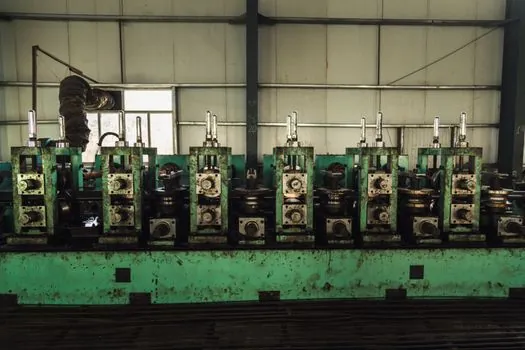
Three reference configurations anchor the 2026 market. The entry-level cross-tee-only Chinese line starts around $5,000 and climbs to $12,000 to $30,000 for mid-range units, but these handle 600/1,200 mm cross tees at 0.2 to 0.4 mm gauge and do not form the 3,600 mm main runner with end-hook embossing [S3][S7]. The mid-tier integrated main-tee plant, KINGREAL's reference build with two 1.5 t manual decoilers, 18 Cr12 roller stations, hydraulic cut-off, and PLC control at 30 m/min, prices roughly $80,000 to $130,000 ex-works and covers main tee at 38x24 or 32x24 mm in 0.30 to 0.35 mm galvanised coil [S1][S3][S4]. The high-tier European D5 line from DALLAN, with separate D59D main-runner and D57/D58D cross-tee roll formers, DA5MR/DA5CT packaging cells, and 30+ year tooling life, sits at $200,000 to $320,000 installed and is the only configuration that ships with documented in-line hook machining for both integral and alloy hook profiles [S2].
On the four criteria that drive a buy decision, cost per metre of finished main tee, changeover time between profiles, packaged yield (good profiles out of input coil), and service life of the forming rollers, the configuration ranking shifts. Cost per metre of finished main tee (38x24, 0.35 mm, 3,600 mm at 30 m/min) is lowest on the mid-tier KINGREAL-class line at roughly $0.018 to $0.024 per metre of finished profile including amortised tooling; changeover is fastest on the D5 at under 10 minutes between 38x24 and 32x24; packaged yield is highest on the D5 because in-line DALLAN-patented hook machining eliminates a secondary notching step that typically loses 1.5 to 2.5 percent of coil to scrap; roller life is comparable at 2,000 to 3,000 tonnes of coil between re-grinds on Cr12 tooling across all three tiers [S1][S2][S4].
Total cost of ownership: purchase price is roughly 55 to 70 percent of the real number
A buyer who focuses on the FOB line price and skips installation, tooling spares, and energy misses 30 to 45 percent of the five-year cost. Installation and commissioning on a main-tee plant runs $8,000 to $22,000 depending on country (China-domestic roughly $4,000, MENA or Eastern Europe roughly $15,000 to $22,000 including translator and on-site electrical), and operator training adds another $2,000 to $5,000 [S4]. A complete spare tool set (Cr12 rollers, SKD-11 punches, shear blades) at line commissioning is 12 to 18 percent of line price, and is the single most common line item dropped by first-time buyers, which then bites at the first coil change.
Energy is the quiet line item. A 20.5 kW total connected load (5.5 kW main motor, 15 kW hydraulic, plus PLC and auxiliaries) at typical 0.55 duty cycle draws roughly 88,000 kWh per year on a two-shift operation, which at 2026 industrial tariffs of $0.08 to $0.14 per kWh across most operating geographies is $7,000 to $12,500 per year, or $35,000 to $62,500 over a five-year horizon [S1]. Maintenance on a Cr12 roller set averages 4 to 6 percent of line price per year including re-grinding, hydraulic oil, and shear-blade replacement, which on a $120,000 mid-tier line is $4,800 to $7,200 per year before any PLC or servo drive event.
For buyers comparing against the broader suspended ceiling production equipment category, the main-tee roll forming line is the highest-cost single cell in the grid but also the highest-leverage: a 1 percent gain in main-tee yield at 30 m/min is roughly 0.012 kg of coil saved per metre, or $7 to $9 per shift hour at current galvanised coil prices.
Who this line is for, and who it is not for
The main-tee roll forming line is the right purchase for a buyer who already has or is building a ceiling-tile pressing line, runs a 600x600 or 600x1,200 mm exposed grid product, and needs 1,500 to 6,000 metres of 3,600 mm main runner per shift, which is the production band where a 30 m/min line is capacity-matched and not over-spec'd. It is also the right call for any buyer shipping to a market that requires pre-painted visible flange (the 24 mm or 15 mm base width of the profile is the only visible face once the ceiling is closed, and pre-coated coil eliminates post-painting) [S1][S2].
It is the wrong purchase for a buyer who only needs 200 to 400 metres of main tee per week, because the line will run below 15 percent utilisation and the per-metre amortised capex will exceed the cost of buying finished main tee from a regional converter. It is also the wrong purchase for a buyer whose product mix is dominated by drywall stud and track profiles with only secondary exposure-grid demand: a stud/track line at the same 30 m/min rating costs 40 to 55 percent of a main-tee line because it does not need the servo punching station or hook-machining tooling.
For cross-tee-only producers, an automatic molding line configured for 600/1,200 mm cross-tee cut lengths and 26x24 or 24x23 mm profile is the lower-cost path: $12,000 to $30,000 buys a working cell, and main tee is then sourced finished rather than produced in-house, which is a defensible model at under roughly 1,200 metres of main runner per month [S3][S7].
Standards, sourcing, and what to verify before signing a PO
There is no single ISO or EN standard that governs the roll forming machine itself, but the finished T-bar profile is typically specified to ASTM C635 (or its regional equivalent) for heavy-duty exposed-grid systems, and the galvanised coil substrate should ship with a DX51 or S280GD mill certificate, with zinc coating mass verified at Z120 to Z275 g/m squared depending on interior versus humid-service ceilings [S1][S3]. Buyers in EU markets should also confirm REACH and CE conformity on the pre-painted coil, since the visible 24 mm flange is the only finished face the end user sees. For buyers integrating a downstream conveyor sorting line for tile pressing, the main-tee cut tolerance at 3,600 mm should be specified at plus or minus 1.0 mm, which is the band where DALLAN D59D and KINGREAL 18-station Cr12 lines both hold without servo correction [S1][S2].
Lead time from Chinese OEMs in 2026 is 45 to 75 working days ex-works for a mid-tier main-tee line, plus 15 to 25 days for sea freight to MENA, West Africa, or South America and 30 to 40 days to Europe or the US East Coast. Commissioning slots at the buyer's site add 7 to 14 days. Total project timeline from PO to first saleable coil is therefore 70 to 130 days, and any vendor promising under 45 days total is either shipping from stock (which means a non-customised coil width and decoiler size) or skipping the FAT, which is a documented risk vector on roll forming equipment above $100,000 [S4].
For buyers weighing OEM selection against the cost of ownership, the practical signal to track is whether the vendor provides a documented roller-regrind schedule tied to a tonnage counter, not a calendar interval; the vendors that do, including KINGREAL, DALLAN, and the higher-end of the Chinese mid-tier, also tend to stock the Cr12 spares the buyer will need within the first 18 months. One more trackable signal for the next sourcing cycle is aluminium coil pricing, since some exposed-grid buyers are substituting 0.35 mm aluminium for the 0.30 mm galvanised pre-painted flange to cut visible-face corrosion in coastal projects, and any sustained move below roughly $3,200 per tonne aluminium would shift the cost stack for pre-painted main-tee coil in 2027.