
Forestry haul roads, skid-trail repairs, and plantation access tracks are not highway jobs, and they should not be sized like one: a 265 kW compact cold milling machine with a 1.0–1.3 m drum width and 330 mm (13 in) maximum milling depth is the practical baseline for full-lane reclamation on engineered forestry routes, per Wirtgen's W 100 Fi / W 130 Fi class published in September 2026 [S3].
For partial-depth patching, de-rutting, and tied-in repairs on narrow plantation tracks, the small milling machine class at 45–160 kW (60–215 hp) with 350–800 mm drum widths covers roughly 80% of forestry work, with the W 50 Ri, W 60 Ri, and W 100 Ri sitting in that envelope [S3]. Skid-steer cold planer attachments, by contrast, cap out near 130–230 mm milling depth and 330–1,200 mm widths, and are best treated as spot-fix tools, not production milling assets [S5].
Why the forestry envelope differs from highway milling
Forestry milling jobs run on unpaved or chip-sealed corridors with cross-fall, soft subgrade, and 3–4.5 m lane widths, which is why the global market is shifting toward compact units: large milling machines in the 14 ft 5 in (4.4 m) width class are engineered for motorway surface removal, not single-lane plantation roads [S3][S6]. Industry guidance published in 2025 explicitly positions cold planers above 350–400 hp with 2.1 m+ drums for highway, runway, and large parking-lot reclamation, while smaller milling machines are framed for patchwork, partial-depth removal, and tight-corridor work [S5][S6]. A 1.0 m (W 100 Fi) or 1.2 m (W 120 Fi) compact unit therefore overlaps both worlds, which is why rental fleets and forestry contractors gravitate to that band [S3].
Forestry also has to absorb the cost of reclaimed asphalt pavement (RAP) logistics: in a remote cutblock, millings usually become on-site road base, not trucked-out aggregate, so drum choice (standard ECO, fine milling, or micro-fine) controls whether the material can be re-laid without further crushing [S5]. The market context supports this: the cold milling machine segment was valued at $4.8 billion in 2025 and is projected to reach $8.1 billion by 2034 at a 6.0% CAGR, with the large-machine class holding 42.3% product share but compact and small classes driving volume growth in emerging regions [S4].
Class, power, and width map for forestry selection
Match three numbers before you match a brand: engine power (kW/hp), milling width (mm or ft/in), and maximum milling depth (mm or in). The Wirtgen catalogue dated 3 September 2026 shows the small class running 45 kW / 60 hp up to 160 kW / 215 hp with widths from 350 mm (14 in) to 1.2 m (3 ft 11 in) and depths of 100–300 mm, the compact class running 265–313 kW (355–420 hp) with widths 1.0–1.5 m and depths up to 330 mm, and the large class pushing past 14 ft 5 in width for full motorway passes [S3]. Forestry buyers should treat the small-to-compact transition (around 160 kW / 215 hp, 1.0 m width) as the upgrade gate, because that is where machine weight crosses roughly 14.7 t (32,500 lb) and transport permits get expensive on rural forestry corridors [S3].
A second filter is the comparison framework itself. On four decision criteria that matter in forestry (maneuverability on narrow tracks, ability to mill flush to edge obstacles, RAP sizing control, and rental availability), small wheeled rear-loaders score 3 of 4; compact front-loaders score 2 of 4; and skid-steer attachments score 1 of 4 because they cannot sustain production milling on hauls longer than 30 m without severe operator fatigue [S2][S5]. United Construction & Forestry's August 2025 rental guidance reaches the same conclusion: Wirtgen-class small and compact units dominate rental fleets because the right rear wheel can be swiveled inwards for flush-edge milling, a feature that is decisive against roadside stumps and culvert heads [S2][S3].
Drum type and tooling: where forestry drifts off the highway spec sheet
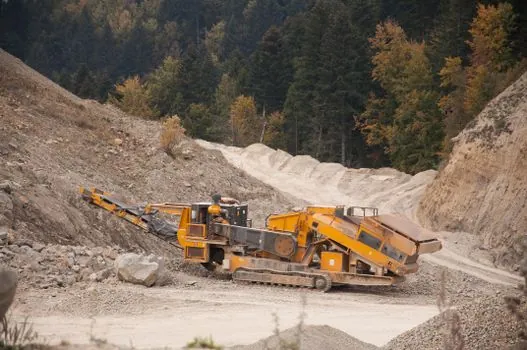
Standard ECO cutter drums ship with most machines and suit asphalt and lightly bound bases, but forestry haul roads often sit on compacted gravel or stabilized native soil where a fine milling drum produces a more uniform 0–8 mm RAP gradation that compacts directly as running surface [S3][S5]. A micro-fine drum is generally wasteful on forestry work because the resulting fines have no second use on-site and create dust during dry-season operation. Pick tooth spacing based on the layer you intend to remove: 15 mm standard pitch for partial-depth asphalt patching, 8 mm fine pitch for surface texturing before chip-seal, and 18–20 mm coarse pitch for full-depth reclamation where the millings become sub-base [S3][S5].
Drum wear also costs more in forestry than on highway work because abrasive granite and basalt fines accelerate pick loss, so any total cost of ownership comparison should price picks at 0.8–1.2 picks per square meter of milled surface, which is the realistic consumption envelope on a 1.0 m drum doing 330 mm passes at 265 kW [S3]. Operators should also plan for two pickup conveyors on forestry sites because the front-loader compact class can discharge to either side, enabling direct loading into on-site haul trucks without a transfer loader [S3].
Operating envelope, transport, and site constraints
Forestry corridors typically allow 3.5 m of vertical clearance and 4.0–4.5 m of width between windrows, so a 1.0 m compact cold milling machine at 20 t operating weight is the upper practical limit for in-corridor milling without dismantling bridge rails [S3]. The W 100 Fi at 44,092 lb (≈20 t) and W 120 Fi at 46,297 lb (≈21 t) both fit a standard lowboy within 3.0 m deck height, which matters when the nearest asphalt plant is 80 km away and millings must leave the site daily [S3]. A 45 kW small miller (W 35 XRi) at 10,252 lb can be hauled on a 5 t equipment trailer behind a forestry service truck, which is why rental fleets carry it for spot fixes [S2][S3].
Two failure modes are specific to forestry work. First, soft subgrade causes the milling drum to "dip" beyond the depth gauge setting if the operator runs too fast; Wirtgen's LEVEL PRO automatic depth control, fitted to the W 100 Fi and above, holds a ±5 mm tolerance on grade and is worth specifying on any unit above 200 kW [S3]. Second, dust from dry-season milling in pine plantations creates a fire ignition risk at the drum housing; water spray dust suppression is standard on the compact class and should be a hard specification on any forestry procurement [S3][S5].
Standards, sourcing, and what to ask the dealer
There is no forestry-specific milling machine standard; instead, procurement should reference the OEM's published working width and depth data (the Wirtgen catalogue is dated 3 September 2026 and remains the authoritative current spec sheet for that brand [S3]), and confirm the unit's CE operating weight figure, which is the figure used for road-going transport permitting in North America and Europe. Buyers should ask for measured fuel burn at rated load (a 265 kW compact class typically consumes 35–45 L/h under continuous milling), and an OEM-issued pick-and-drum wear curve for abrasive granite subgrade, which is the single largest variable cost on a forestry job [S3][S5].
Two signals to track through the rest of 2026: the 6.0% CAGR forecast to 2034 implies sustained compact-class production, which tends to keep rental rates flat rather than spiking, and the Asia Pacific region's 38.2% 2025 market share signals continued OEM capacity expansion in small and compact machines, which is where forestry buyers sit [S4]. Pair that read with the related forestry wheel loader selection map for the support fleet, and the forestry road roller specs for the compaction pass that follows the milling drum; the cold milling machine itself is catalogued at cold milling machine selection.
Detailed specification references: cold chamber machine, and cold box core machine.