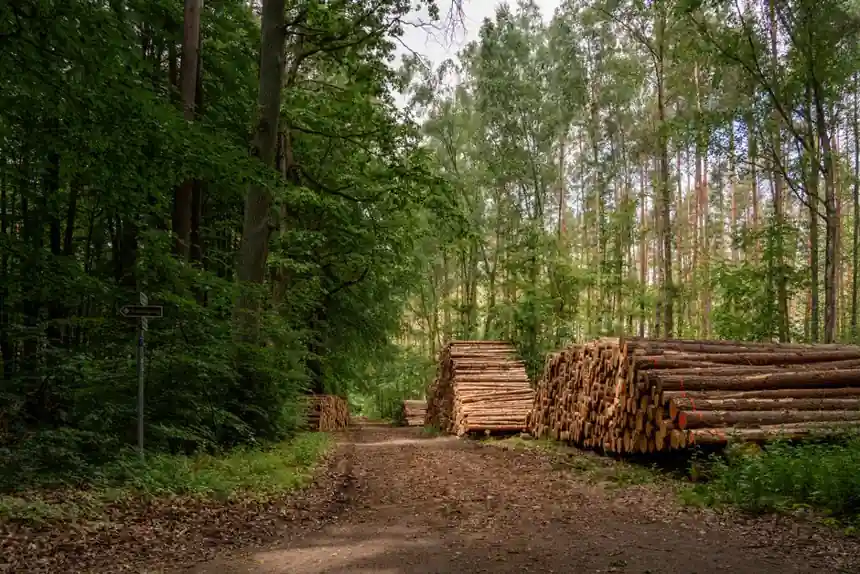
Forestry haul-road construction is one of the harshest duty cycles a compactor ever sees: low-bearing root-mat subgrade, slash-laden fill, gradients that regularly exceed 15%, and a contractor base running small crews far from a parts depot. Selecting a road roller for this work is not the same exercise as picking one for highway asphalt, and the 2026 guidance from Sany, Hengwang, and New Holland converges on the same conclusion: a vibratory single-drum unit in the 4.5–12.5 t operating-weight class, fitted with a padfoot shell option and a dual-amplitude vibratory pump, is the workhorse specification [S2][S3][S5].
The granular choice narrows further once ground pressure and traction are quantified. Cohesive forest soils (clay with organic content, silty till over bedrock) refuse density under a smooth drum and demand sheepsfoot or padfoot projection, while granular logging-yard surfaces respond to high-frequency vibration. New Holland's V110PD published spec, 105 hp net, 12,560 kg operating weight, 32 mm drum wall thickness, and padfoot kit option, is the upper end of the relevant class for main spur-road construction [S3]. Hengwang's 4.5 t single-drum reference sits at the lower end for branch road and landing-pad work, where a 4500 kg operating weight delivers enough ground pressure for subgrade without over-compacting the woody fill [S5].
Why a Smooth-Drum Tandem Roller Is the Wrong Default for Forestry
A double-drum tandem roller produces a surface-smoothness result, not a deep-consolidation result, with typical centrifugal force of 20–60 kN aimed at 25–80 mm asphalt lift thicknesses [S5]. Forestry roads are unbound aggregate or native-soil structures, and the roller energy has to reach 200–400 mm down to knit the root mat into a stable platform. Smooth-drum static compaction relies on dead weight alone, and a 4 t tandem delivers roughly 40 kN of linear load, well under the 50 kN floor that industry guidance marks as the threshold for medium-depth soil lift density [S5].
The other penalty is drum surface contact on wet, slash-contaminated fill. Smooth steel drums hydroplane on damp clay and skate over protruding root wads, leaving laminations that pump out under the first log truck. The smooth-drum roller class retains a place only on the finished rock-cap wearing course after the subgrade has been built up, and most forestry contractors skip that step entirely because grading alone produces an acceptable running surface.
Single-Drum Vibratory vs Padfoot: Choosing the Right Shell
The padfoot (sheepsfoot) drum and the smooth vibratory drum are not competing products, they are interchangeable shells on the same machine, and forestry work needs both. Hengwang's selection matrix maps the drum type to the soil: padfoot for cohesive clay, vibratory smooth for granular, with a 50–150 kN typical force window for soil and 20–60 kN for asphalt lifts [S5]. Sany's 8-type taxonomy adds the practical view, that padfoot projections break internal soil bonds, then withdraw to walk-out, leaving a surface that still needs a final smooth-drum pass to seal [S2].
On a forestry spur road, the sequence is padfoot in lifts of 200–300 mm of native fill, then a smooth vibratory pass for surface density, then a multi-tire pneumatic rubber-tire roller for the kneading seal. The pneumatic tired roller (PTR) is the third leg of the stool, and Hengwang's guidance assigns it explicitly to the surface-seal pass after the steel drum has done its work [S5]. Skipping the PTR leaves a permeable surface that sheds aggregate into the ditches under the first wet season.
Operating-Weight, Engine Power, and Drivetrain Floor for Forest Terrain
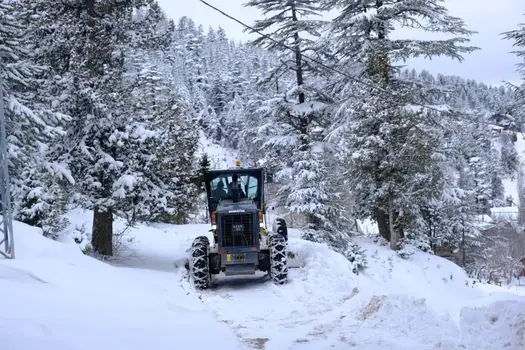
Forestry sites impose two non-compaction demands on the roller: grade-holding ability and underbody clearance over root mats and slash. Hengwang's mid-range reference calls out 36.8 kW engine output as the floor for a 4–5 t machine, sized to keep vibration frequency stable on inclines [S5]. New Holland's V110PD, a 12.5 t dual-amplitude single-drum unit at 105 hp, fits the upper end where contractors are building main spurs designed to carry loaded log trucks year-round [S3].
Drivetrain layout matters as much as the headline weight. Hydrostatic front-drum plus rear-wheel drive is the standard for the 4–6 t class, while larger 10–12 t forestry-spec machines move to dual hydrostatic drum drive to hold a 30%+ grade under full vibration load. The New Holland specification sheet calls out a 37-degree turning angle and dual drum-drive as the headline traction features, exactly the package a steep, switchback-heavy spur road requires [S3]. Crossed roller guide bearings, not the tapered roller bearing type, are the typical fitment inside the vibratory pump eccentric because the shaft sees reversing side loads as the amplitude setting changes from low to high.
Selection Criteria Comparison: Four Roller Configurations Against Forestry Demands
Below is a criteria-based comparison of the four configurations actually seen on forestry jobs, scored against the three demands that drive the choice: deep-lift density, grade holding, and slash-tolerant drum surface.
Configuration / Operating weight / Centrifugal force / Best fit in a forestry network. Single-drum vibratory with padfoot shell (4.5–12.5 t, 50–150 kN, high amplitude): subgrade and main spur fill lifts, the default pick [S3][S5]. Double-drum tandem (2–14 t, 20–60 kN, high frequency): asphalt finishing only, not used on unbound forest roads [S2][S5]. Pneumatic tired roller (8–25 t, kneading action, no vibration): surface seal on finished rock cap, the third pass after the steel drum [S2][S5]. Static smooth-drum (1–4 t, dead-weight only, no vibration): trench backfill and sidewalk work, undersized for forestry haul roads [S1][S2].
Safety, Guarding, and ROPS/FOPS for Off-Road Forestry Operation
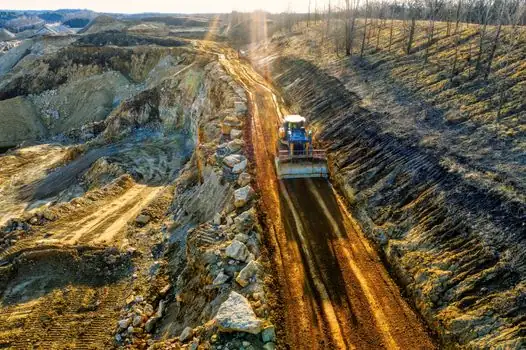
Forestry sites expose the operator to falling limbs, side-slope rollovers, and low-haze dust from slash burning, so ROPS (Roll-Over Protective Structure) and FOPS (Falling-Object Protective Structure) are non-negotiable on any roller above 4 t. Hengwang's selection guide flags operator comfort and safety alongside productivity, and New Holland's product page lists comfort and safety as a tier-one feature group on the V110PD, a deliberate call-out for the high-debris, high-grade environment [S3][S5]. A forestry-spec machine should also have a sealed cab with HEPA-grade dust filtration, a forestry-rated branch screen on the windshield, and slope sensors that warn the operator before the side-slip angle crosses the 25-degree threshold where most single-drum rollers lose traction. A forestry roller chain drive on the vibratory pump, instead of a belt, is the standard hardening step for the dust-laden environment; abrasive slash dust accelerates belt wear by a factor of three or more in field reports.
Use Cases and Failure Modes on Real Forestry Projects
Three real forestry scenarios cover the selection space. First, a new main spur 5 km long over silty-clay till: a 12 t class single-drum padfoot, dual-amplitude vibratory, dual hydrostatic drive, ROPS/FOPS cab, expected productivity around 200–300 m of finished road per shift in native fill [S3]. Second, a branch road or landing pad 200–400 m long, sandy or rocky subgrade: a 4.5 t single-drum smooth vibratory, 36.8 kW engine floor, single hydrostatic drive, productivity around 80–120 m per shift [S5]. Third, a final wearing-course compaction on a rock-capped spur: a pneumatic tired roller, no vibration, kneading seal pass, deployed after the steel drum has done the deep work [S2][S5].
The three failure modes that consistently show up on under-spec machines are over-compaction of the woody fill (a too-heavy roller crushes the slash layer and creates a soft pocket that pumps out), under-compaction of the clay lift (a smooth drum with no padfoot leaves laminations), and thermal/visibility shutdowns on cab-less units in summer slash-burning operations. Sany's guide and the Typhon selection factors both underscore matching the machine to the soil and project scale, the most common procurement error is buying one roller class and trying to run the entire network on it [S1][S2]. For contractors running a mixed fleet, the wheel loader selection logic for agriculture and landfill transfer-station spec map articles cover the support-machine side of the same fleet economics question, and the rough-terrain forklift class VII selection map covers the log-handling side that the roller feeds into.
Limitations, Sourcing, and Trackable Signals for the 2026 Buying Cycle

Two hard limits bound the forestry-roller spec. First, no vibratory roller under 4 t is suitable for main-spur work, the linear load is too low to consolidate beyond 150 mm of lift, and the small-frame machines are not stable on 20%+ grades. Second, no smooth-drum-only roller should be the sole compactor on a cohesive-soil spur, the density result will not survive a wet season, and re-work costs more than the roller premium [S1][S5]. The standardisation side is light in the public sources: ISO 3471 covers ROPS, ISO 3449 covers FOPS, and ISO 5006 covers operator visibility, but none of the research material cites a specific forestry-only compaction standard, so spec sheets are written against the general civil-engineering roller baseline [S3].
Trackable signals to watch in the next two quarters: OEM publication of forestry-specific duty-cycle ratings, dealer-network expansion in the southern US, Nordic, and southeast-Asian pulpwood regions, and revisions to the 4.5 t single-drum price band as Chinese OEMs (Sany, XCMG, Liugong) push deeper into the forestry segment. The Typhon and Sany guides published between July 2024 and April 2026 agree on the same specification envelope, which is the strongest signal that the market has converged on the 4.5–12.5 t single-drum padfoot configuration as the 2026 default [S1][S2][S5].