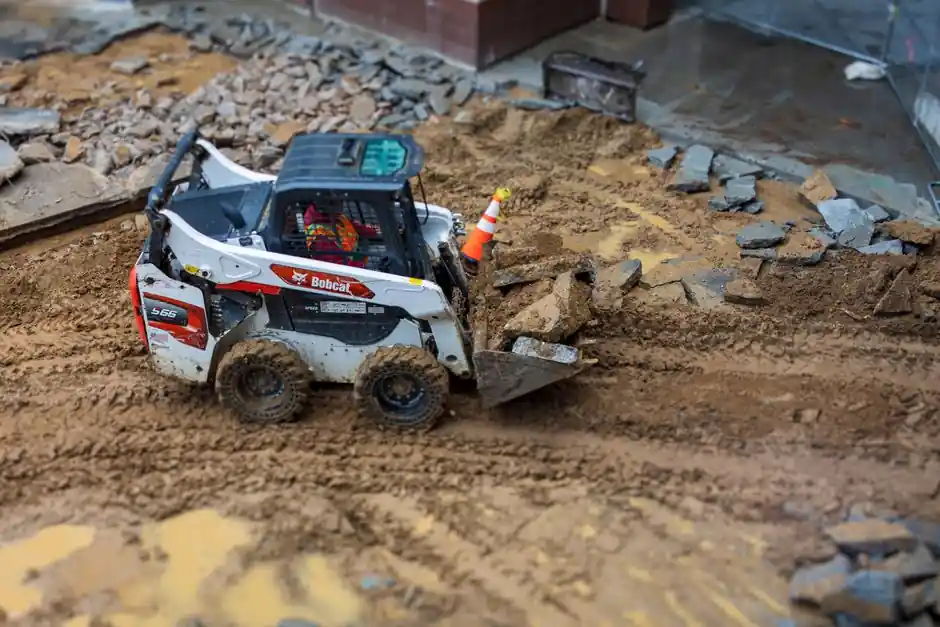
Forestry wheel loader selection in 2026 is driven by four engineering axes: operating weight class (typically 12 t to 30 t+), engine power band, lift capacity at full reach, and grapple or boom reach envelope, per active dealer listings reviewed in early September 2026 [S1].
Forestry-specific machines differ from construction wheel loaders in three measurable ways: reinforced forestry guarding (FOPS/OPS), higher-pressure auxiliary hydraulics for grapple rotation, and heavier counterweights to offset long-reach boom geometry, all of which show up in the same dealer data set [S1][S4].
Operating weight and machine class bands observed in 2026 inventories
Compact forestry handlers such as the 2025 GreenTec TH3 list at 95 kW (127 hp) with a 12.8 m (42 ft) tree-handler reach, targeting narrow-row arborist and roadside clearing work [S1]. Mid-range dedicated log loaders cluster around the 15 t class, where users report 260 L/min main hydraulic flow at only 140 to 160 bar (2,030 to 2,320 psi), a low-pressure/high-flow signature typical of gear-pump forestry plumbing [S2]. Heavy mill-yard and landing loaders in current dealer stock range from 275 hp to 375 hp diesel with lift capacities quoted at 25,000 lb, 100,000 lb, and 146,000 lb, and a Cat-class Volvo D6J 6-cylinder turbo diesel listed at 184 hp for a 31 t class handler [S1]. The same source lists a Liebherr LH 50M (2021 build) at 3,927 hours and a Liebherr A934B material handler at 9,100 hours, giving a working data point for two mid-life forestry conversion candidates on the September 2026 market [S1].
Engine power, hydraulics, and the mulcher-drive problem
PTO-driven forestry mulchers are commonly rated for 450 to 550 rpm at the input shaft, and pairing one to a wheel loader's auxiliary hydraulic circuit requires matching motor displacement to available pump flow, with the limiting variable being oil temperature rise rather than peak pressure [S2]. For a 15 t industrial loader producing 260 L/min (70 gpm) at 140 to 160 bar, the practical approach is a hydraulic motor sized to keep absorbed power in the 60 to 80 kW range, well below the 1,000 rpm mark where gear motors start to cavitate on low-pressure circuits [S2]. The general rule of thumb shared in operator forums is that a mulcher rotor wants tip speeds in the 40 to 60 m/s range, so once motor displacement and pump flow are matched, the gear-up ratio (not the motor alone) sets the working rpm window [S2]. Forestry-class hydraulics on purpose-built log loaders (Liebherr, Cat, John Deere) run at 250 to 350 bar continuous working pressure, which is materially above the 140 to 160 bar ceiling on commodity industrial loaders, and this gap is the most common reason mulcher pairings overheat or stall [S1][S2].
Grapple, boom reach, and the lift-vs-stability trade-off
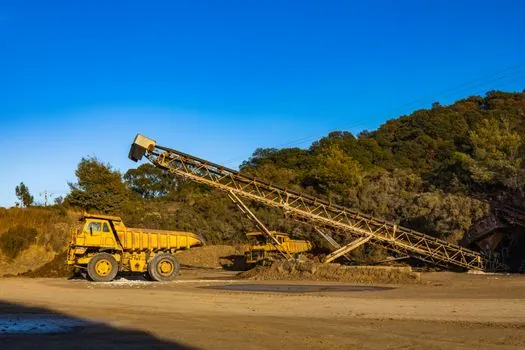
A 36 ft boom with live heel and a 52 in grapple on a self-propelled carrier in the September 2026 inventory illustrates the reach envelope typical of yard loaders, where extra factory counterweight is often fitted to recover lost tip capacity at full extension [S1]. Lift capacity on dedicated forestry log loaders is commonly expressed in two figures: pin-on at ground level, and at maximum reach, with the latter typically 25 to 40% of the former, a ratio that any procurement spec should require vendors to quote separately [S1][S4]. A 25,000 lb capacity entry in dealer stock versus a 146,000 lb entry in the same listing is not a fourfold productivity gain, it is a fourfold shift in machine class, with corresponding changes in tyre size, ground pressure, and transport permits, so the selection matrix should start with the heaviest log the operation will ever cycle, not the average log [S1].
Wheels, tyres, and terrain envelope
Forestry tyre selection is not a cosmetic choice, and OEM-supplied forestry wheels are engineered as a matched set with rim diameter, flange thickness, and bead-seat profile different from construction Loader L3 patterns [S5]. Forestry wheels are designed for equipment including skidders, forwarders, and log loaders, with chain clearance, sidewall cut resistance, and a lower recommended operating inflation pressure than equivalent-size L3 construction tyres, which directly affects ground pressure on soft forest soils [S5]. The articulation joint and high ground clearance cited as standard on forestry wheel loaders only deliver on their terrain promise when tyre choice matches the soft-soil or rocky-site envelope, otherwise the chassis articulation works against tyre flex and the machine plows rather than rolls [S4][S5].
Comparison: compact, mid-range, and heavy forestry loader classes
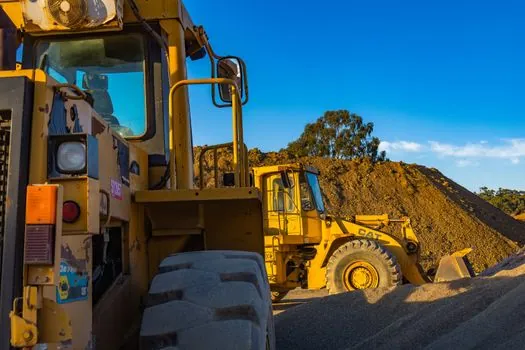
Across the three machine classes visible in the 2026 used market, a 95 kW compact handler with 12.8 m reach suits municipal and arborist work, a 15 t 260 L/min mid-range machine suits farm and light-logging mulching but is hydraulically marginal for heavy mulcher drives, and a 275 to 375 hp class machine with 100,000 lb+ lift and high-pressure hydraulics is the right answer for dedicated mill-yard or landing work [S1][S2]. A direct line-by-line view: compact class 95 to 130 hp, reach 10 to 13 m, lift up to ~10,000 lb, low hydraulic flow and pressure, best for tree care and roadside work; mid class 150 to 220 hp, reach 10 to 14 m, lift 20,000 to 50,000 lb, mid hydraulic pressure, suitable for log handling but marginal for high-power mulching; heavy class 250 to 400 hp, reach 12 to 18 m, lift 80,000 to 150,000 lb+, high-pressure 250 to 350 bar hydraulics, dedicated mill-yard, landing, and large-log operations [S1][S2]. This is the same selection logic used for agricultural wheel loaders and road construction wheel loaders, where machine class is set by the heaviest single-cycle load, not by average duty [S1].
Limits, failure modes, and what forestry loaders cannot do
Forestry wheel loaders are not substitutes for tracked feller bunchers on wet or steep slopes, and any operation planning to work slopes above 25 degrees should specify a tracked carrier or a swing machine rather than a wheeled loader, per the terrain-versatility claims of OEM forestry marketing [S4]. The hydraulic pairing failure most often reported in practice is overheating when a low-pressure industrial loader is asked to drive a high-demand attachment, a problem that no amount of motor selection will fix if the pump cannot sustain flow at the required pressure, so the design rule is to size attachments to the loader's hydraulic curve, not the other way around [S2]. Used inventory also shows that mid-life machines at 9,000 to 15,000 hours (Liebherr A934B at 9,100 hours, Husky Brute 1988 build) need hydraulic pump and swing-motor rebuilds before deployment, so residual-hour counts under 5,000 hours are a reasonable used-buying gate [S1].
Standards, sourcing, and what to ask a vendor
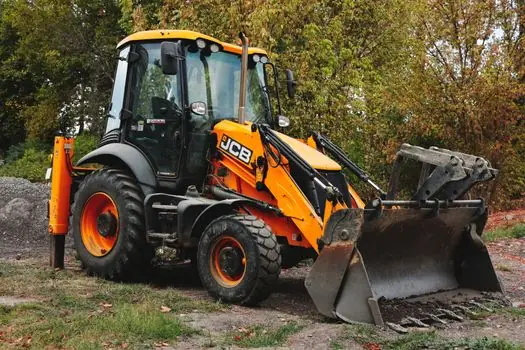
Forestry guarding in North America commonly references SAE J231 JAN81 for falling-object protective structures (FOPS) and SAE J1040 APR86 for operator protective structures (OPS), while European forestry machines are typically certified to EN 474-1 with the forestry addendum, though buyers should confirm the exact clause cited on the data plate rather than assume compliance [S4]. For machine selection on a road construction fleet or an agricultural loader fleet, the same weight-class rules apply but the guarding and tyre spec differ, so cross-application transfers should be treated as rebuilds, not redeployments [S1]. Buyers should request three numbers in writing: lift capacity at maximum reach (not just at ground level), continuous hydraulic flow at the aux circuit in L/min, and FOPS/OPS certification reference, then cross-check against any used-hour and serial data the listing provides [S1][S4][S5].
Trackable signals to watch in the next quarter: dealer inventory hours and asking prices on Liebherr LH 50M-class and Barko 495RTC-class machines (the September 2026 sample shows 3,927 hours on a 2021 LH 50M and 18,331 hours on a new-in-stock Barko 495RTC), and any OEM announcement of a higher-pressure (300 bar+) hydraulic option on mid-range 15 t forestry loaders, which would close the gap that currently makes mulcher pairing marginal at that class [S1][S2].
Spec-level background on the components involved: backhoe loader, and skid steer loader.