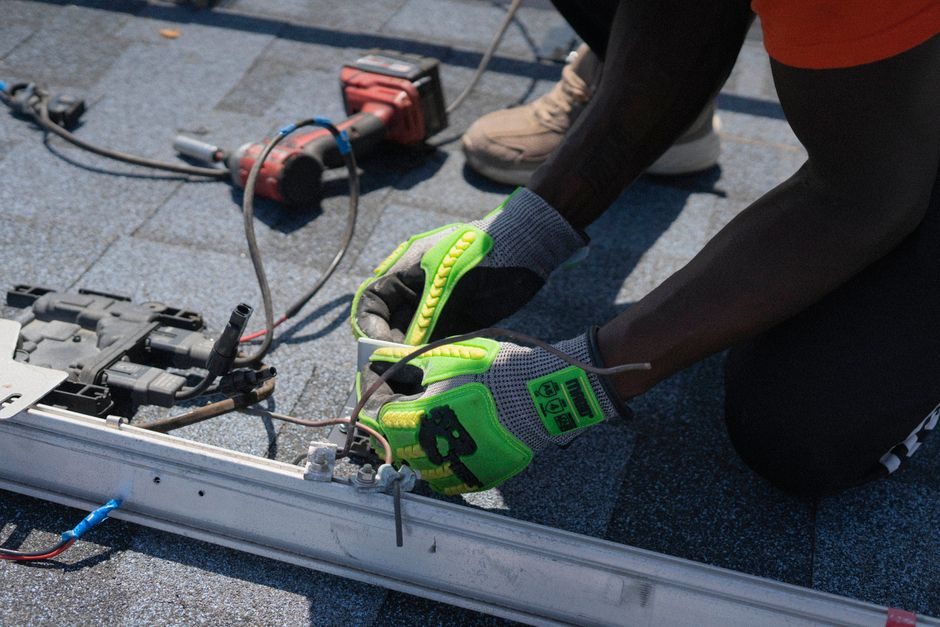
An on-line infrared combustible gas detector with a 0–100%LEL measuring range, flameproof housing, and 4–20 mA or bus signal output is used in petroleum, chemical, refining, and gas transmission industries [S1].
The same datasheet defines the operating envelope electrical contractors must design around: DC 24 V ±25% supply, –40 °C to +70 °C, ≤95%RH non-condensing, 86–106 kPa working pressure, IP54 housing, M20×1.5 cable entry for φ6–φ8 mm cable, ≤110 mA peak current, and 1 km maximum host-to-detector run [S1]. A separate Chinese supplier listing confirms a parallel model (DAP31-21X1) in the same explosion-prevention / gas-alarm category, indicating the form factor and the function are broadly standardised across vendors [S3].
Sensor Type and Detection Range: Catalytic Combustion vs Infrared
The Titan-series OEM datasheet specifies a catalytic-combustion sensor as the default cell, with 0%LEL–100%LEL as the full measurement span and a basic error of ±5%LEL across that span [S1]. Infrared (NDIR) point detectors are listed as an alternative in the same product family, which matters for electrical work because IR cells resist poisoning from silicone vapours, leaded petrol, and H₂S — three contaminants routinely present during switchgear maintenance in refineries.
Selection hinges on the gas of interest: catalytic combustion is the cheaper, broader-spectrum cell for general hydrocarbon service (methane, propane, pentane, gasoline vapour); infrared is the safer pick when the calibration gas is known (typically methane or propane) and the environment contains sensor poisons. For electrical work in a confined space where battery charging or generator exhaust is also a concern, dual-cell or dual-path instrumentation should be evaluated per site hazard analysis.
Explosion-Proof Rating and Electrical-Work Compliance
The reference detector carries Ex d IIC T6 Gb, meaning flameproof enclosure, gas Group IIC (hydrogen, acetylene, carbon disulphide — the most easily ignited group), and a maximum surface temperature of 85 °C (T6) [S1]. For electrical-work hot-work permits inside Zone 1 areas, this is the minimum rating most European and IECEx-aligned permit authorities will accept.
Two practical constraints follow. First, the flameproof joint thread is M20×1.5; only certified Ex d cable glands may be used, and the gland seal must match the φ6–φ8 mm cable OD window specified [S1]. Second, the enclosure is IP54, not IP66 — fine for indoor skid rooms and sheltered outdoor cabinets, but a poor choice for open-deck marine or wash-down food-grade locations, where the specification must be raised. See the related combustible gas detector selection map for mining operations for the higher-IP / Group I (methane) variant typically specified in coal-mine headings.
Output Signal and Wiring Architecture
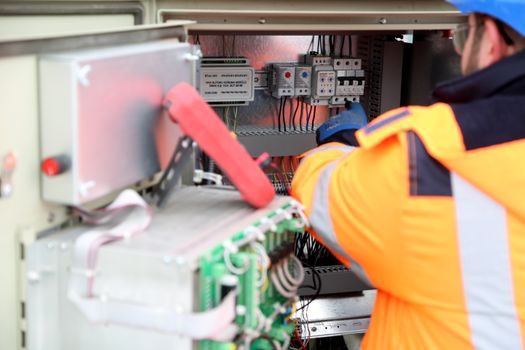
The reference unit supports both bus-mode (two-wire / four-wire) and 4–20 mA current loop on the same terminal block, with an RS485/power-bus variant at 9600 baud over a 1 km maximum trunk length [S1]. This dual-output arrangement is the practical reason these detectors survive in brownfield electrical upgrades: existing 4–20 mA cabling to a DCS or PLC can be retained, while new RS485 daisy-chains handle multi-drop polling from a gas-alarm controller.
Electrical contractors should plan for three wiring rules. (1) Use shielded twisted pair for 4–20 mA loops longer than 200 m, and ground the shield at the controller end only. (2) RS485 trunk requires 120 Ω termination at both ends and a maximum of 32 nodes per segment. (3) The DC 24 V ±25% tolerance window is wide enough to share a PSU with solenoid valves and alarm beacons, but the inrush spike of a strobe can drag a 110 mA detector below its brown-out threshold — a separate PSU feed is the safer design.
Alarm Thresholds, Response, and Calibration Workflow
The datasheet defines a two-level alarm with factory defaults: low alarm 25%LEL (adjustable 1–25%LEL) and high alarm 50%LEL, with ±3%LEL alarm-setpoint error, >75 dB(A) buzzer at 1 m, and alarm-light visibility >20 m in darkness [S1]. Response time T90 is under 30 s, which meets the typical plant requirement for a fire-and-gas (F&G) detector on a 30 s or 60 s logic-solver scan.
Calibration is performed by IR remote against a known calibration-gas concentration — a useful feature for electrical work because the unit does not need to be opened in a classified area, preserving the Ex d certification. The sensor service life is rated at 1 year minimum, which sets the maintenance interval: bump-test monthly, span-calibrate every 90 days, and replace the cell at 12 months or sooner if the span drift exceeds ±10%LEL. This is the kind of routine that should be written into the electrical-contractor's LOTO and hot-work permit before the first detector is energised.
Operating-Environment Limits and Failure Modes
Four environmental limits govern field reliability: temperature –40 °C to +70 °C, humidity ≤95%RH non-condensing, pressure 86–106 kPa, and supply DC 24 V ±25% [S1]. Outside these windows the cell output drifts and the ±5%LEL basic-error spec no longer holds. Condensing humidity kills catalytic-combustion cells outright; for tropical or coastal sites, specify a hydrophobic sinter and a heater on the detector head.
The most common failure modes seen during electrical-work maintenance are: (1) cable-gland seal failure letting water into the flameproof enclosure and tripping the IP54 limit, (2) sensor poisoning from silicone sealant or RTV used by the electrical crew during cable termination, (3) span drift after exposure to >100%LEL gas (a common event when a gas blanket is released for maintenance), and (4) loss of 4–20 mA loop current because the shield is grounded at both ends and the resulting ground loop injects noise above the 4 mA zero level. Each of these has a known cause and a known fix; logging the failure mode against the detector's serial number is the only way to retire the bad batch.
Selection Comparison: Catalytic vs Infrared vs Solid-State
Across the three sensor chemistries commonly offered for electrical-work LEL monitoring, the decision matrix comes down to four criteria: poison resistance, selectivity to methane vs heavier hydrocarbons, response time T90, and unit cost. [S1]
Catalytic combustion (the Titan reference cell) is the lowest-cost option with T90 <30 s, broad-spectrum response to C1–C8 hydrocarbons, but poor poison resistance to silicones, lead, and sulphur [S1]. Infrared (NDIR) costs roughly 2–3× catalytic, T90 typically 15–25 s, excellent poison resistance, but is selective — the wrong calibration gas gives a large under-read. Solid-state / MOS cells sit between the two on cost, with T90 often >60 s and high cross-sensitivity to humidity, which makes them a poor fit for outdoor electrical work in humid climates. For most electrical-contractor applications on a defined gas list, catalytic combustion with a documented bump-test regime remains the pragmatic choice; switch to IR when the cell will sit in a known poison atmosphere.
Standards, Markings, and Sourcing Checklist
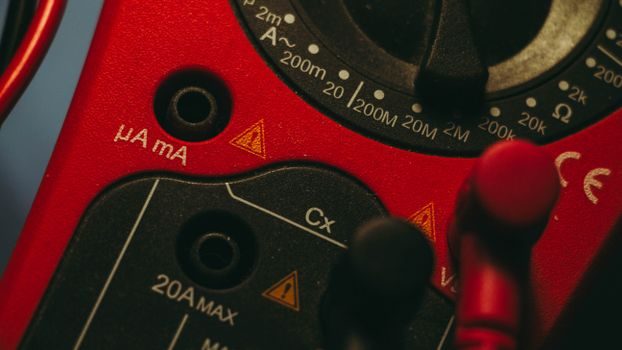
The Ex d IIC T6 Gb marking on the reference detector aligns with the IEC 60079-0 / IEC 60079-1 flameproof-enclosure series for Group IIC electrical apparatus in Zone 1 areas, and is the direct technical basis for ATEX category 2 (formerly Category 2) equipment under the EU framework. For North-American sites, the equivalent listing is Class I, Division 1, Groups A–D (or Class I, Zone 1, AEx d IIC T6 Gb under the IEC-based scheme), with the certifying body being a Nationally Recognised Testing Laboratory (NRTL) such as UL, CSA, or FM. [S1]
Before signing the procurement PO, an electrical contractor should verify: (1) the Ex marking matches the classified-area drawing, (2) the cable gland is Ex d-certified and the cable OD falls inside the φ6–φ8 mm window, (3) the calibration-gas cylinder is available locally with traceability certificate, (4) the supplier can provide an IECEx Certificate of Conformity (CoC) or ATEX EU Type-Examination certificate for the exact model and serial-number range, and (5) the response-time, alarm-threshold, and basic-error specs are stamped on the nameplate rather than buried in a brochure.
Track these signals over the next procurement cycle: any change to the IEC 60079-1 revision status that tightens the flameproof-joint tolerance below M20×1.5, any tightening of the –40 °C to +70 °C window by competing vendors, and any move by major DCS vendors to drop 4–20 mA support in favour of Ethernet-APL or IO-Link on the gas-detector segment — all three would force a re-spec of the detector fleet within the next 24 months.
For component-level specifications, see combustible gas detector, aerial work platform, and aerial work truck.