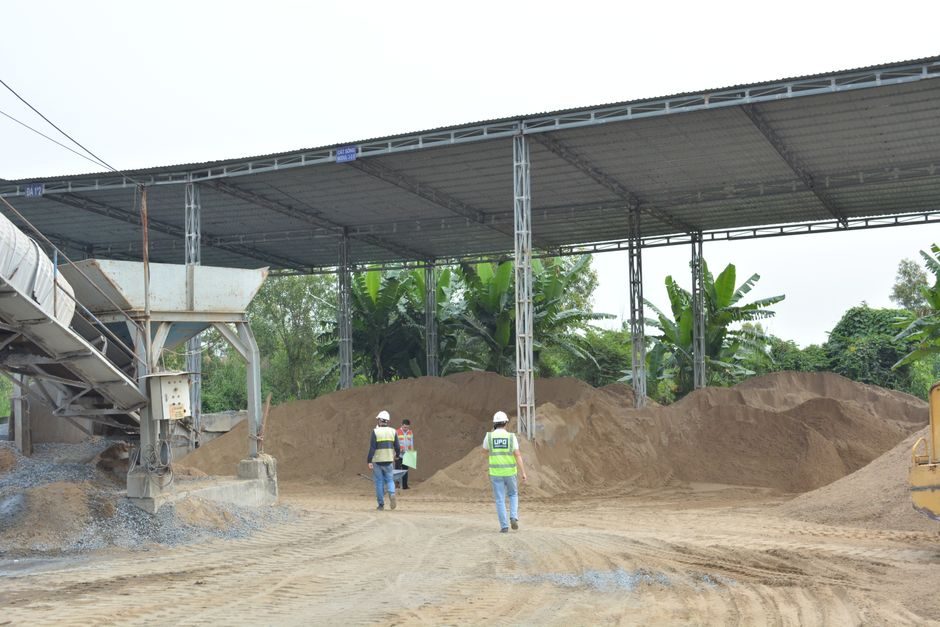
Compact 20-30 m³/h mobile units on a twin-axle bogie are listed from US$10,000 on the used Chinese wholesale market in June 2026, while a new 60 m³/h stationary skip-type plant such as the SANY HZS60G-ECO typically lands in the US$80,000-150,000 FOB band [S3][S5].
For a contractor weighing a 25 m³/h mobile fibo intercon B1800 against a 60 m³/h PROMAX C60 SNG L compact stationary line, the total installed budget — civils, cement silos, screw conveyors, control cabin, admixture and concrete admixture tanks, plus the concrete vibrator array at discharge — sits at roughly 1.8-2.5× the bare skid price [S1][S2].
Price Bands by Plant Class (June 2026)
Used 20-45 m³/h mobile batching plants in China are quoted in a US$10,000-100,000 window, with XCMG and Shandong Dom units clustering at US$10,000-45,000 per set for single-piece MOQ orders, while higher-hour or two-axle packaged units push to US$60,000-100,000 [S5].
New compact stationary lines in the 60 m³/h class — the PROMAX C60 SNG L "plug-and-play" and the SANY HZS60G-ECO skip-configuration — are advertised in the US$80,000-150,000 FOB range, with the HZS60G-ECO positioned for lower civil-work cost by replacing inclined-belt conveying with a skip hoist [S1][S3].
For a full read on output, mixer, mobility and price trade-offs, the concrete batching plant buying guide 2026 walks the same capacity brackets in more depth; the figure that most surprises first-time buyers is that the mixer alone — twin-shaft compulsory or planetary — typically absorbs 18-25% of the new-plant ticket [S1][S3].
What Drives the Sticker: Configuration Levers
Output is the single largest cost multiplier. Doubling capacity from 30 m³/h to 60 m³/h does not double price — Chinese compact-stationary data shows a 1.7-2.1× uplift because aggregate bins, weighing hoppers, the concrete batching plant mixer and the control system all scale in fixed steps rather than proportionally [S1][S2][S3].
Mobility is the second lever. A mobile B1800-class plant on a joint twin-axle bogie trailer with 25-45 m³/h output carries a 25-40% premium over an equivalent-capacity stationary plant because the chassis, on-board generator and foldable aggregate hopper all add welded-steel cost that a fixed plant skips [S2].
Configuration choices that swing the ticket by 10-30% include: skip hoist vs inclined-belt aggregate feeding (skip is cheaper on civils, faster to install), number of cement silos (one 100-tonne silo adds roughly US$8,000-15,000), admixture tank count, hot-water or steam injection for cold-weather pours, and the upgrade from manual to fully automatic PLC control with batch printing [S3][S6].
New vs Used: When the Used Market Wins
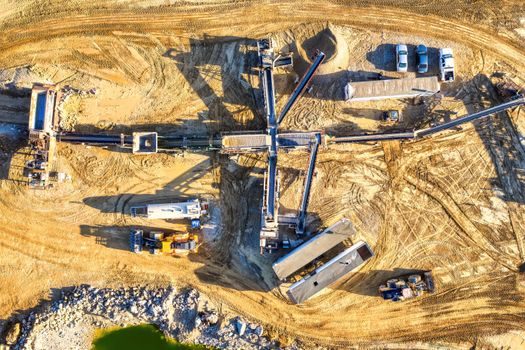
Used Chinese-market plants in the 20-30 m³/h range list at US$10,000-30,000 per unit, often with 1-unit MOQ, and are typically rebuilt with new liners, new weighing load cells and recalibrated moisture probes before resale [S5].
Used gear pays off when (a) the project is under 18 months, (b) the site can tolerate 4-6 weeks of commissioning slack, and (c) the buyer has access to a local service agent for the control system and mixer shaft seals [S5].
Used gear loses to new when the project requires a 12-month warranty, third-party financing, or compliance documentation for an owner who audits safety files — a new SANY HZS60G-ECO or PROMAX C60 SNG L ships with full FAT records, CE/ISO documentation and patented shaft-end sealing data that a rebuilt unit cannot match [S1][S3].
Comparison: Mobile vs Compact Stationary vs Full Stationary
Across the three common configurations at the 30 m³/h benchmark, a side-by-side reads as follows. A fibo intercon B1800 mobile plant on a twin-axle bogie delivers 20-30 m³/h, includes a pan mixer, integrated twin-aggregate hopper and two feed belts in one towable package — list price roughly US$35,000-90,000 new depending on options [S2].
A compact stationary "plug-and-play" 60 m³/h line such as the PROMAX C60 SNG L trades the towable chassis for faster installation, lower transport cost per metre, and higher steady-state output at the cost of on-site civils and a foundation slab — list price band US$80,000-150,000 new [S1].
A full stationary inclined-belt or skip plant in the 90-120 m³/h class adds 30-50% to the compact-stationary ticket for larger aggregate bins, longer belt runs, a planetary or larger twin-shaft mixer, and dual cement silos; installed cost for this class routinely clears US$250,000-450,000 once civils and automation are included [S3][S4].
Hidden Costs Most Buyers Underestimate
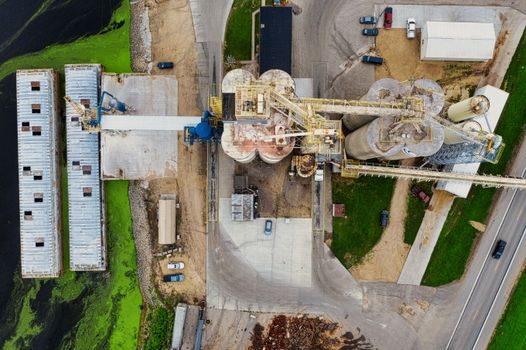
Electrical infrastructure (transformer, cable run, generator backup, control cabin HVAC) adds another 5-10%; admixture dosing, water treatment for concrete admixture storage, and aggregate heating for cold-climate sites add a further 3-8% [S4][S6].
Spare-parts stocking is the silent line: rebuild kits for the twin-shaft mixer (liner plates, shaft seals, paddles), one spare screw conveyor, two load cells and a set of concrete vibrator heads typically represent 4-7% of the plant value but prevent the multi-day stoppages that eat margin on a pour-driven contract [S4][S6].
Sourcing Channels and What to Verify
Three sourcing channels dominate the 2026 market: Chinese OEM-direct or dealer (Haomei, SANY, XCMG, Luton, PROMAX, fibo intercon) at FOB pricing with 30-60 day lead times; Western dealers and rebuilders (Erie Strayer dealers such as Fonte & Company) at installed pricing with 4-8 month lead times; and the used-equipment wholesale channel on Made-in-China and ECVV, where single-unit MOQ and tier-1 audit status matter more than headline price [S4][S5].
Verification checklist before wiring a deposit: ISO 9001 quality system on the manufacturer, CE or equivalent marking for European deployment, audited-supplier status on B2B platforms, documented mixer shaft-end sealing (a frequent failure point on skip plants), and a clear warranty clause covering the structure (12 months), wearing parts (3 months), and the control system (12-24 months) [S3].
One specification to pin down in writing is aggregate bin count and live capacity — a "60 m³/h" plant with two aggregate bins behaves very differently from one with four, because the latter supports simultaneous sand-and-stone batching and keeps the mixer fed at design rate [S2][S3].
When a Batching Plant Pays Back vs When It Does Not
A batching plant pays back when concrete volume on a single project exceeds roughly 20,000 m³, when the project life exceeds 18 months, or when the contractor runs three or more sites within a 100 km radius of a single plant location — dealer-side case data from Erie Strayer resellers cite these thresholds for switchover from ready-mix supply to in-house production [S4].
It does not pay back for short-duration pours under 5,000 m³, for projects in dense urban cores where zoning and noise rules push civils cost above equipment cost, or for contractors who lack a dedicated plant operator — a twin-shaft compulsory mixer is unforgiving of misscheduling and admixture mistakes [S4][S6].
Trackable signals for the rest of 2026: Chinese OEM price revisions on 60 m³/h compact stationary lines following Q2 steel-cost movements, and any new CE/EN 206-1 documentation packages bundled with compact plug-and-play units aimed at the European small-contractor segment [S1][S3][S4].