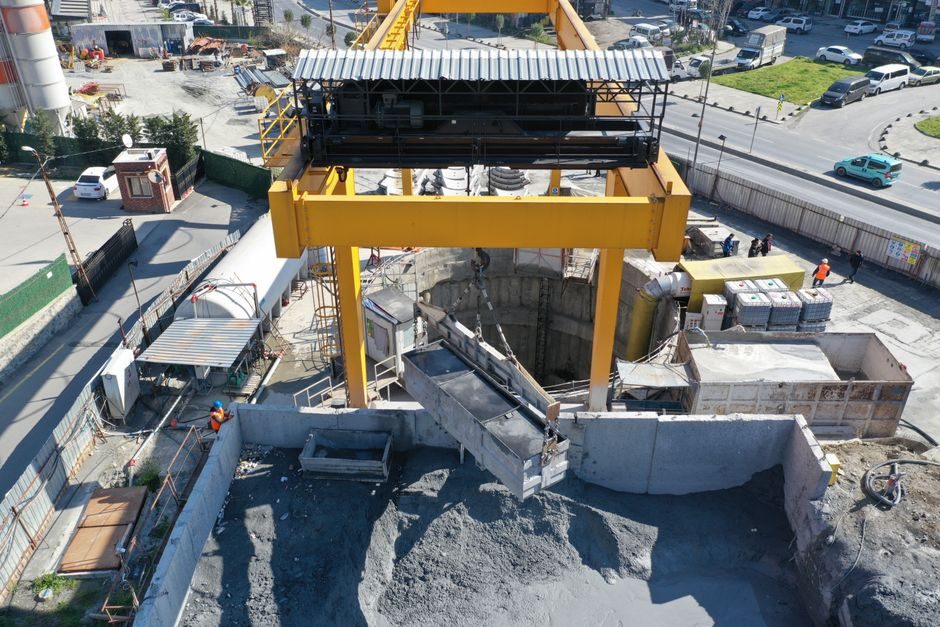
A 2026-spec compact stationary concrete batching plant covers 30 m³/h (ELKOMIX-35 Quick Master) to 60 m³/h (Promax C60 SNG) with 1×40' OT container transport footprint [S1][S2], while the broader HUITE stationary range runs 25–210 m³/h [S3]. Price discovery on Made-in-China clusters US$18,000–140,000 per set (MOQ 1 set) for fixed ready-mix lines shipping from Shandong/Zhejiang [S7], and a 90 m³/h HZS unit in Guangdong lists US$75,000–110,000 per piece (MOQ 1) [S5].
Buying a batching plant is a 7–10 year capex decision tied to site-mix contracts, so the trade-offs are not "brand vs price" but "rated output vs realistic output, twin-shaft vs planetary, bolted-plant vs containerised-plant, and FOB terms vs CIF site terms". The market is dominated by Chinese OEMs (Promax, ELKON via Turkey, HUITE, Yueshou, Hamac, Recolte) with a few European brands; 2026 sourcing runs heavily through Made-in-China and Alibaba category pages [S5][S6][S7][S8].
Stationary vs Mobile vs Compact: Output and Footprint Tiers
Three mobility classes split the 2026 market. Stationary plants (60–210 m³/h) are bolt-down installations for large ready-mix yards; HUITE's 2026 catalogue covers HZS25 to HZS210, and a 90 m³/h HZS unit on Made-in-China lists US$75,000–110,000 FOB Shanghai [S3][S5]. Mobile plants (25–120 m³/h) mount on a wheeled chassis for road projects, typically 1–2 trailer loads [S3]. Compact plants (30–60 m³/h) are designed for containerised shipping — ELKON's ELKOMIX-35 fits inside 1×40' OT container at 30 m³/h [S2], and Promax's C60 SNG ships plug-and-play at 60 m³/h with a "low transportation cost" claim [S1].
Compact 30 m³/h class and 60 m³/h class also differ on containerisation. A 1×40' OT footprint for a 30 m³/h line is a clear shipping-cost advantage for export buyers, while 60 m³/h compact lines require 2–3 containers typically [S1][S2]. For projects under 50,000 m³/year, compact plants are commonly specified; above 150,000 m³/year, stationary becomes the lower unit-cost option [S3].
Mixer Selection: Twin-Shaft, Planetary, Single-Shaft
The mixer is the heart of the plant, and 2026 OEM catalogues still default to three types. Twin-shaft compulsory mixers dominate 60+ m³/h lines and the HZS series, delivering 30-second mix cycles and handling 150–180 mm aggregate [S3]. Planetary mixers are specified for dry-mortar, self-levelling screed and specialty mortar, with paddle-type single-shaft and double-shaft non-gravity options also available from specialty mortar OEMs [S4]. Drum mixers are now mostly limited to sub-25 m³/h budget mobile units [S3].
Aggregate size dictates mixer type: 80–100 mm aggregate is comfortable in a planetary or single-shaft; 150–180 mm aggregate needs a twin-shaft [S3]. For ready-mix concrete (C25–C60), twin-shaft is the 2026 default [S1][S3]. For dry mortar and self-levelling underlayment, planetary or paddle single-shaft is correct — the mortar-line category is distinct from structural concrete and is supplied by different OEMs [S4].
Capacity Sizing: Convert m³/h to Annual Volume
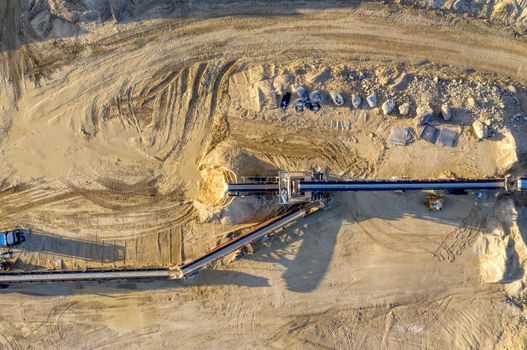
Rated output is a marketing ceiling, not a real-world number. A 60 m³/h compact plant at 85% utilisation, 8 h/day, 25 working days/month, delivers roughly 10,200 m³/month — about 122,000 m³/year [S1][S2]. A 90 m³/h HZS at the same duty delivers about 183,000 m³/year; a 210 m³/h flagship from HUITE's range can theoretically clear 427,000 m³/year [S3][S5].
Match capacity to peak-month demand, not average. Civil contractors running one bridge pour per week (300–800 m³ per pour) usually spec 90–120 m³/h mobile; ready-mix suppliers running daily fleets usually spec 120–180 m³/h stationary [S3]. Plants below 30 m³/h are rare in 2026 except for precast yards and remote mine-site use [S2].
Price Bands and MOQ on 2026 Sourcing Channels
Direct-from-OEM pricing on Made-in-China (June 2026) shows clear bands: HZS90 at US$75,000–110,000 per piece MOQ 1 [S5]; fixed/stationary lines from US$18,000 (small fixed) to US$140,000 (higher-spec) per set MOQ 1 [S7]. Alibaba category listings reinforce a US$18,000–140,000 corridor for stationary batching plants, with FOB terms, 30–60 day lead time after deposit [S6]. Yueshou's MOQ is 1 set with T/T payment terms [S8].
Ship-from region also moves price. Shandong (Weifang) hosts fixed-plant OEMs (Hamac, Yueshou, Recolte) clustering US$18,000–140,000 FOB [S7][S8]; Shanghai is the export hub for HZS-series sellers at US$75,000–110,000 FOB [S5]. For related hauling equipment cost bands, the 2026 truck-mounted concrete pump price guide breaks down the boom-pump and line-pump cost side. For aggregate-handling power drives, the AC motor buying guide covers the IE2/IE3 motor class that most 2026 batching-plant panels specify.
Selection Criteria: Who a Concrete Batching Plant Is For
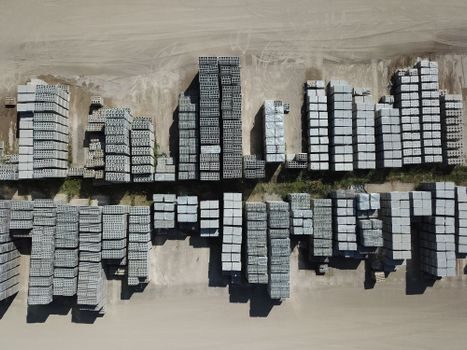
Stationary (60–210 m³/h) fits ready-mix suppliers, precast yards and large infrastructure contractors running more than 150,000 m³/year and owning the land for a 10+ year install [S3]. Compact (30–60 m³/h) fits project-based contractors and export contractors who relocate every 2–3 years and need 40' OT container logistics [S1][S2]. Mobile (25–120 m³/h) fits road, bridge and dam contractors needing frequent site moves with no permanent foundation [S3].
A concrete batching plant is NOT for: small DIY contractors under 5,000 m³/year (a towable mobile mixer is cheaper), owners without three-phase power (most plants need 100–400 kVA), and buyers who cannot fund a concrete foundation pad (stationary lines require 30–60 days civil works before commissioning) [S1][S3]. For plant support equipment, the stepper motor buying guide covers the small-drive steppers used in batching-weighing screw gates and silo-level indexing.
Standards, Certification and Compliance Gates
For European-bound plants, CE marking under the Machinery Directive 2006/42/EC is the baseline gate; for hazardous-area zones (cement silos with bag-house filters), ATEX category 1 or 2 dust-zone rating on the filter and silo-top level instruments is commonly required. For oil-and-gas or marine concrete pours, NACE MR0175-compliant mixers and aggregate bins are specified for sour-service environments. ISO 9001 on the OEM side is the de-facto quality gate, and most 2026 Chinese OEM data sheets reference GB/T 9142 (concrete mixer standard) and GB 10172 (batching plant standard) [S3][S4]. Buyers should request a CE/ATEX declaration, not just a generic ISO certificate, and confirm the mixer serial-plate rating matches the contract m³/h figure (some OEMs rate mixers at a higher "peak" cycle than the continuous-duty m³/h) [S3].
Limitations, Failure Modes and Sourcing Red Flags
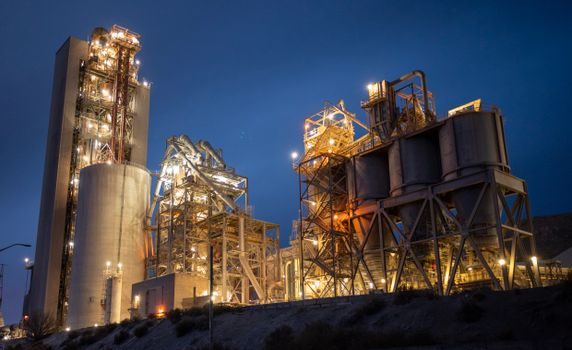
Three failure modes dominate 2026 warranty claims. First, twin-shaft gearbox failure under hard aggregate — confirm the gearbox is a brand-name (Flender, Rossi, SEW) and not an OEM-private-label [S3]. Second, silo bag-filter clogging in humid climates — request a reverse-pulse jet filter with a 30 m²+ filter area per 100 t silo, not a manual shaker [S3]. Third, weighing-system drift — a load cell on every aggregate bin, cement screw and water meter is the 2026 baseline; plants still using volumetric water metering should be avoided for C30+ structural concrete [S1][S3].
Sourcing red flags include: no published kVA power draw, no silo volume in tonnes, no published weigh-scale accuracy (the 2026 norm is ±1% for cement, ±2% for aggregate and water), and no published mixer cycle time. Alibaba and Made-in-China listings without these four numbers should be treated as incomplete data sheets [S5][S6][S7]. The V-ribbed belt guide helps spec the drive belts on the mixer and screw-conveyor motors, which are common wear items on a 2026 plant.
Track these signals over the next 60–90 days: (1) updated FOB price lists from HUITE/Promax/ELKON Q3 2026 catalogues [S1][S2][S3], (2) lead-time bulletins from Shandong OEMs as container freight settles into the post-peak Q3 window [S7][S8], and (3) new CE/ATEX declaration language on Alibaba listings — listings that publish a real Machinery Directive 2006/42/EC declaration in 2026 are the safer buys [S5][S6].
For component-level specifications, see linear guide, and crossed roller guide.