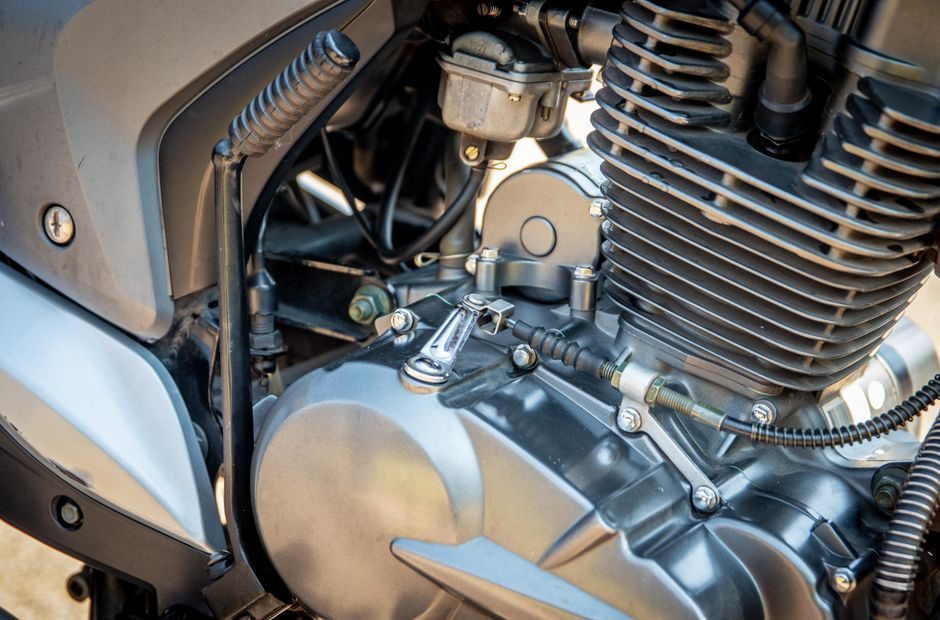
Electric motor systems are estimated to consume 46% of global electricity, which is exactly why IE3 became the EU regulatory floor for motors rated 0.75-375 kW on 2023-07-01 and IE4 the tier spec writers reach for next on continuous-duty pumps, fans and conveyors [S1][S2].
Industrial AC motors on the open market now cluster into four families — single-phase induction (fractional kW), three-phase squirrel-cage induction (workhorse 0.06-630 kW), wound-rotor/slip-ring (heavy-start cranes, mills) and synchronous reluctance or permanent-magnet units (IE5-class efficiency) [S1][S2]. For most plant-floor buyers, the three-phase squirrel-cage induction motor in an IE3 or IE4 frame remains the default line item, with a documented manufacturer base of more than 155 suppliers and 880 cataloged models across the 2026 industrial directories [S2].
IE Efficiency Class and Payback Math
IE3 became the EU minimum-efficiency tier for 0.75-375 kW 2/4/6-pole single-speed motors on 2023-07-01 under regulation (EU) 2019/1781, with IE4 the next step up and IE5 reserved for synchronous reluctance or permanent-magnet builds [S1]. A 75 kW IE2-to-IE4 retrofit typically loses 15-20% of input losses and pays back inside 2-3 years on machines that run 4 000+ hours a year, which is why continuous-duty pumps, fans and compressors are the first candidates to upgrade.
Spec writers should compare nameplate efficiency at 100%, 75% and 50% load, not just the headline full-load number, because many centrifugal loads spend 70% of their time in the 50-75% load band.
Mounting, Frame Size and Mechanical Footprint
Foot-mount (B3), flange-mount (B5), face-mount (B14) and combined foot-flange (B35) are the four IEC 60072-1 frame configurations buyers will see on every catalog page, with B3 and B5 covering 80%+ of industrial-pump and gearbox integrations [S1]. Shaft height (56, 63, 71, 80, 90, 100, 112, 132, 160, 180, 200, 225, 250, 280, 315, 355 mm) is the binding dimension — once the shaft height is fixed, the bolt pattern, shaft diameter and pilot diameter are all defined by the standard and cannot be re-cut by the supplier.
Frame 80-132 mm covers 0.55-7.5 kW (2-pole and 4-pole) and is the sweet spot for machinery OEM integrations; frame 160-280 mm covers 11-90 kW; frame 315-355 mm covers 110-630 kW. Buyers who need a metric-to-NEMA adapter should insist on a 56C, 143TC or 145TC NEMA C-face kit from the motor maker rather than a third-party adapter, because C-face pilot runout tolerance is tighter than foot-mount shaft alignment will tolerate.
Enclosure, IP/IC Code and Duty Cycle
IP55 TEFC (totally enclosed, fan-cooled) is the default enclosure for general-purpose indoor industrial use and is what 90%+ of 3-phase catalog stock ships as; IP65 or IP66 is required for outdoor, wash-down or food-grade lines, and IP23 drip-proof is acceptable only inside clean, weather-protected electrical rooms [S1][S2]. IC code (IC410 / IC411 / IC416 / IC418 / IC611 / IC81W) tells the cooling story — IC411 surface fan-on-shaft for the standard TEFC, IC416 auxiliary forced ventilation for low-speed VFD operation below 20 Hz, and IC418 shaft-mounted blower for the same low-speed continuous-duty case.
Duty cycle is the second-decimal code that VFD-fed applications get wrong: S1 (continuous) is the default rating, S2 short-time (10/30/60 min) is acceptable for crane and hoist duty, S3 intermittent periodic (e.g. S3 25% = 4 min on / 12 min off) governs valve actuators and indexing tables, and S6 continuous periodic with load-and-speed change governs the conveyor class. Specifying S1 on a cycle that is actually S3 40% derates the motor's thermal headroom by 15-25% and either shortens winding life or forces an oversized frame.
Single-Phase vs Three-Phase Supply and VFD Pairing
Single-phase 230 V 50 Hz is the default only for fractional kW (0.06-2.2 kW) farm, HVAC and light-commercial loads; three-phase 380-415 V 50 Hz (or 220-240 V / 380-480 V 60 Hz) is mandatory from 0.75 kW upward because single-phase starting current on a 3-phase frame is destructive to the utility supply [S1][S2]. For VFD pairing, modern AC motors with inverter-rated insulation (typically a 1 600-1 800 V peak phase-to-phase winding rating on 480 V supplies) survive dV/dt of 1-3 kV/µs; older standard-insulation motors fed by long cable runs need a sine filter or dV/dt reactor, otherwise bearing currents and corona discharge fail the windings inside 18-24 months.
Buyers evaluating servo drive vs AC motor pairings should treat the AC induction motor as the right answer above 3-5 kW on continuous duty, and the servo the right answer below that threshold on dynamic positioning, fast indexing or closed-loop torque control — the cost crossover has not moved materially since 2024.
Brake, Encoder and Special-Build Options

AC brake motors add a spring-set, electrically-released disc brake on the non-drive end-housing, sized 4-80 Nm of static holding torque for 0.06-7.5 kW frames, and are the default for hoist, gate, theatre-elevator and vertical-axis conveyor duty where the load must hold if power fails [S1]. The brake release is 24 V DC, 110 V AC or 220 V AC; specifying the wrong release voltage is the most common field-return cause, not a winding failure.
Encoder and feedback add-ons — incremental 1 024-2 048 ppr, absolute single/multi-turn, resolver or Hiperface — are typically fitted to a fan cowling or end-bell as a non-standard build, which adds 1-4 weeks to lead time and 8-25% to price. The procurement gate: order encoders from the motor maker, not a third party, so the mechanical shaft tolerance, coupling alignment and IP rating are guaranteed together rather than argued in the field.
Selection Gates and a Criteria Comparison
Three-phase squirrel-cage induction is the lowest-cost, longest-lead-time, widest-service-network choice; brake motors add a holding brake at a 15-30% premium; inverter-duty VFD-paired units add insulation and blower at a 10-20% premium; synchronous reluctance/PM motors hit IE5 at 30-50% premium with a 4-12% efficiency upside. Against four decision criteria: [S1]
1) Cost per kW (lower is better): 3-phase induction < brake motor < VFD-duty induction < SynR/PM IE5.<br/>2) IE efficiency class: induction IE2-IE4 vs SynR/PM IE5.<br/>3) VFD / low-speed continuous: standard induction needs derate below 20 Hz, VFD-duty IC416 / IC418 does not, SynR/PM handles 1:10 constant-torque natively.<br/>4) Holding / safety brake: only AC brake motors and PM motors with detent torque cover this — standard induction does not.
For most plant buyers, the full selection checklist is laid out in six spec gates; the six are efficiency class, mounting, enclosure, duty cycle, supply/VFD pairing and feedback/brake. A useful companion decision is the servo vs stepper comparison for the fractional-kW dynamic-positioning cases where an AC motor is the wrong tool.
Procurement Pitfalls and Sourcing Signals to Track
Lead times on frame 280-355 mm (75-630 kW) IE3/IE4 stock units ran 16-30 weeks through 2024-2025 and into early 2026 because copper and silicon-steel supply chains have not fully normalized; a confirmed 2026 stock position from named distributors (ABB, Siemens, WEG, Nidec, TECO) is the single most reliable indicator to anchor a build schedule [S1][S2]. Counterfeit copper-rotor and re-IE2-labelled motors resurfaced in 2025 in second-tier channels, so EU buyers should require the IE3/IE4 rating stamped on the nameplate and cross-referenced with the EU CE declaration of conformity under regulation 2019/1781.
Trackable signals for the next 60-90 days: (a) EU motor regulation 2019/1781 secondary tier widening from 75-200 kW to 0.75-1 000 kW, expected to land before end-2026 — buyers with frames outside the current scope should not overspec IE3 stock now; (b) the 2026 Hannover MEB trade fair (April 2026) cycle typically opens 4-6% pricing concessions on frame 160-280 mm IE4 stock; (c) Chinese exporter catalogs (Chang Yih and 5-7 others) show renewed 2026 activity on 0.4-22 kW IEC frames, worth RFQ-ing for non-ATEX, non-North-American builds where the 8-12-week lead-time delta is decisive [S3].
For component-level specifications, see ac motor, linear guide, and crossed roller guide.